
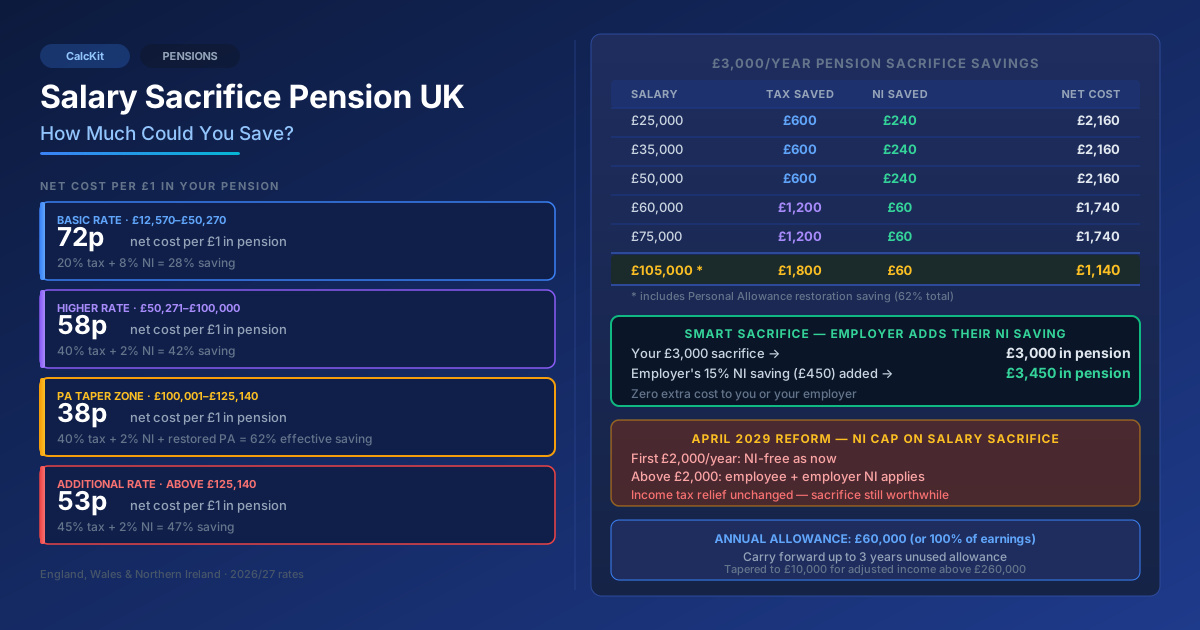
A basic rate taxpayer needs to spend only 72p to put £1 into their pension through salary sacrifice. A higher rate taxpayer spends 58p. Someone earning just above £100,000 — where the personal allowance is being withdrawn — spends as little as 38p. These numbers are not widely understood, and they matter because they change how pension contributions feel, in practice.
This guide focuses on pension salary sacrifice specifically: what each pound actually costs at different salary levels, how SMART contributions work, the threshold traps worth knowing, and what the April 2029 reform actually means for your contributions.
For a broader overview of all salary sacrifice types — electric cars, cycle to work, childcare — see Salary Sacrifice Explained.
💰How pension salary sacrifice works
In a standard pension arrangement, you contribute from your net pay or your employer deducts contributions before you receive your salary. With salary sacrifice, you agree with your employer to formally reduce your gross salary by the contribution amount. The employer then pays an equivalent amount into your pension directly.
The outcome is the same pension contribution — but because your contractual salary is now lower, you pay income tax and National Insurance on a smaller number.
Standard pension vs salary sacrifice — £40,000 salary, £2,400 annual pension contribution (6%):
| Standard Pension | Salary Sacrifice | |
|---|---|---|
| Gross salary | £40,000 | £40,000 |
| Pension contribution deducted | — | £2,400 |
| Taxable salary | £40,000 | £37,600 |
| Income tax paid | £5,486 | £5,006 |
| Employee NI paid | £2,234 | £2,042 |
| Net take-home pay | £29,880 | £30,152 |
| Pension contribution | £2,400 | £2,400 |
The salary sacrifice arrangement leaves this employee with £272 more in their pocket each year while maintaining the same pension contribution — because the same £2,400 now attracts no income tax or NI deduction.
What it actually costs per £1 in your pension
This is the number most salary sacrifice guides don't show clearly. Your net cost per £1 of pension contribution depends on your marginal income tax rate and your NI rate.
Net cost per £1 = 1 − (Income Tax Rate + NI Rate)
| Salary Band | Tax Rate | NI Rate | Combined Saving | Net Cost per £1 |
|---|---|---|---|---|
| £12,570–£50,270 (basic rate) | 20% | 8% | 28% | 72p |
| £50,271–£100,000 (higher rate) | 40% | 2% | 42% | 58p |
| £100,001–£125,140 (PA taper zone) | 40% | 2% | 62%* | 38p |
| Above £125,140 (additional rate) | 45% | 2% | 47% | 53p |
*In the £100k–£125,140 taper zone, each £2 sacrificed also restores £1 of personal allowance that was previously being taxed at 20%, creating an effective 60% income tax rate on that income — see below.
These are the rates for England, Wales, and Northern Ireland. Scottish taxpayers have different income tax bands (19%, 20%, 21%, 42%, 45%, 48%) but the same NI rates — Scottish higher and top rate taxpayers save more per £1 than their rUK counterparts at equivalent incomes.
Worked examples at every salary level
Assuming a £3,000 annual pension salary sacrifice (£250/month):
| Annual Salary | Tax Saved | NI Saved | Total Saving | Net Cost of £3,000 Pension |
|---|---|---|---|---|
| £25,000 | £600 | £240 | £840 | £2,160 |
| £35,000 | £600 | £240 | £840 | £2,160 |
| £50,000 | £600 | £240 | £840 | £2,160 |
| £60,000 | £1,200 | £60 | £1,260 | £1,740 |
| £75,000 | £1,200 | £60 | £1,260 | £1,740 |
| £105,000* | £1,800 | £60 | £1,860 | £1,140 |
*At £105,000, the £3,000 sacrifice also restores £1,500 of personal allowance (worth £600 in tax). Total saving: £1,200 + £600 + £60 = £1,860. Net cost of a £3,000 pension contribution: £1,140.
Use the calculator for any salary and contribution amount:
💰SMART salary sacrifice — when your employer's saving goes into your pension
Standard salary sacrifice saves your National Insurance. Your employer also saves National Insurance — 15% of the amount sacrificed, charged on employer contributions above the £5,000 secondary threshold. Some employers share this saving with employees by routing it into their pension. This is sometimes called SMART (Save More And Reduce Tax).
Example — £3,000 annual salary sacrifice:
| Standard Sacrifice | SMART Sacrifice | |
|---|---|---|
| Your pension contribution | £3,000 | £3,000 |
| Employer's NI saving (15%) | £450 | £450 |
| Employer adds NI saving to pension | No | Yes |
| Total pension contribution | £3,000 | £3,450 |
| Net cost to you | £2,160 | £2,160 |
| Net cost to employer | Same | Same |
Under SMART, both parties end up better off (or at least no worse off) while the total pension pot grows by an additional £450 — without anyone paying more than they would have otherwise.
Not all employers offer SMART — it requires the employer to explicitly choose to share their NI saving rather than retain it. It's worth asking HR or your pension provider whether your scheme uses SMART contributions. If they don't currently offer it, the employer saves real money by not doing so — the argument for setting it up is that it costs the employer nothing and improves employee pension outcomes.
The £100,000 personal allowance trap — and how salary sacrifice solves it
If your salary falls between £100,000 and £125,140, your Personal Allowance is being withdrawn — at a rate of £1 for every £2 earned above £100,000. The allowance is fully withdrawn at £125,140. This creates an effective 60% income tax rate on income in this band (40% income tax + 20% effective rate on the withdrawn allowance).
Salary sacrifice pension contributions reduce your adjusted net income — the number HMRC uses to calculate Personal Allowance withdrawal.
Example — salary of £108,000, £8,000 salary sacrifice:
- Without sacrifice: taxable income £108,000 → PA withdrawn by £4,000 → PA £8,570 → effective 60% on £8,000 bracket
- With £8,000 sacrifice: adjusted net income drops to £100,000 → full PA of £12,570 restored
- The £8,000 sacrifice saves: £3,200 (40% income tax) + £160 (2% NI) + £1,600 (restored PA worth 20% × £8,000) = £4,960
- Effective saving rate: 62% — meaning you pay just 38p per £1 in pension
Anyone earning between £100,000 and £125,140 who is not using salary sacrifice to bring their income below £100,000 is paying the highest marginal tax rate in the UK and leaving significant money on the table. For more on how personal allowance withdrawal works, see UK Income Tax Bands 2026.
The Child Benefit charge — the £60,000–£80,000 trap
If you or your partner receives Child Benefit and either of you earns between £60,000 and £80,000, the High Income Child Benefit Tax Charge (HICBC) applies — clawing back 1% of Child Benefit for every £200 of income above £60,000. Above £80,000, the full Child Benefit is clawed back.
Child Benefit is worth approximately £1,331/year for the first child and £881 for each additional child (2026/27 rates). A household with two children receives approximately £2,212/year — which is clawed back entirely if either parent earns above £80,000.
Salary sacrifice pension contributions reduce your adjusted net income for HICBC purposes — the same way they work for personal allowance withdrawal. Sacrificing enough to bring adjusted net income below £60,000 avoids the charge entirely.
Example — salary £75,000, two children:
- Current HICBC: income £15,000 above threshold, charge = 75 × 1% × £2,212 = £1,659/year clawed back
- After £15,001 salary sacrifice into pension: adjusted net income drops to £59,999, HICBC = £0
- Additional saving from sacrifice (40% tax + 2% NI): £6,300
- Total combined benefit: £7,959/year from £15,001 of pension contributions
Annual allowance and carry forward
You can contribute up to £60,000 per tax year in total pension contributions (including employer contributions) — or 100% of your earnings if lower. Salary sacrifice contributions made by your employer count as employer contributions, so they don't eat into your personal allowance separately — but they do count toward the total £60,000 annual allowance.
Carry forward
If you haven't used your full annual allowance in the previous three tax years, you can carry forward the unused portion and contribute more than £60,000 in a single year. Carry forward requires that you were a member of a registered pension scheme during those years — you don't need to have been contributing, just a member.
Example — carry forward catch-up:
| Tax Year | Allowance | Contributions | Unused |
|---|---|---|---|
| 2023/24 | £60,000 | £10,000 | £50,000 carry forward |
| 2024/25 | £60,000 | £12,000 | £48,000 carry forward |
| 2025/26 | £60,000 | £15,000 | £45,000 carry forward |
| 2026/27 | £60,000 | + up to £143,000 (£60k + £50k + £48k + £45k unused) | — |
Carry forward is particularly useful for people with variable income (the self-employed, commission earners, directors) who receive a large bonus or dividend and want to shelter it from tax.
The carry forward strategy doesn't apply if you've triggered the Money Purchase Annual Allowance (MPAA) — which kicks in when you start drawing flexibly from a defined contribution pension. Once the MPAA is triggered, your annual allowance drops to £10,000 and carry forward is not available.
Tapered annual allowance for high earners
If your adjusted income (including employer pension contributions) exceeds £260,000, your annual allowance is tapered down by £1 for every £2 above the threshold, to a minimum of £10,000. For most salary-sacrifice pension users this isn't relevant, but high-earning partners and directors should check before making large contributions.
Once you know how much you want to contribute, use the savings calculator to set a monthly target and timeline.
🐷The April 2029 reform — what it means for your pension
From 6 April 2029, the National Insurance exemption on pension salary sacrifice will be capped at £2,000 per year. Amounts sacrificed above £2,000 will attract both employee and employer Class 1 NI.
This is a significant change for anyone contributing more than £2,000/year via salary sacrifice — but income tax relief on pension contributions remains completely unchanged.
Impact at different contribution levels (from 2029):
| Annual Sacrifice | NI-exempt | Above Cap | Extra Employee NI Cost | Extra Employer NI Cost |
|---|---|---|---|---|
| £1,000 | £1,000 | £0 | £0 | £0 |
| £2,000 | £2,000 | £0 | £0 | £0 |
| £3,000 | £2,000 | £1,000 | ~£80 (8%) | ~£150 (15%) |
| £5,000 | £2,000 | £3,000 | ~£240 (8%) | ~£450 (15%) |
| £10,000 | £2,000 | £8,000 | ~£640 (8%) | ~£1,200 (15%) |
Approximate NI rates assumed (at 2026/27 rates; may differ in 2029). Employee NI at 8% applies up to £50,270; 2% above.
What this means practically:
- Contributions up to £2,000/year: no change — full NI saving continues after 2029
- Contributions above £2,000/year: the NI saving on the excess disappears, but the income tax saving (20%, 40%, or 45%) still applies in full
- The reform reduces the advantage of salary sacrifice above £2,000 but does not eliminate it
For someone sacrificing £5,000/year as a basic rate taxpayer: from 2029, the net cost rises from £3,600 (28% saving on all £5,000) to approximately £3,840 (28% saving on £2,000 + only 20% tax saving on remaining £3,000). Salary sacrifice remains worthwhile; it just becomes slightly less advantageous at higher contribution amounts.
When salary sacrifice pension is NOT the right choice
Salary sacrifice is not always the right option. Four specific situations to know:
1. You're about to apply for a mortgage. Lenders base affordability on your post-sacrifice salary. If you're earning £50,000 but sacrificing £5,000, lenders see £45,000. On a 4.5x income multiple, that reduces maximum borrowing by £22,500. Consider reducing or pausing sacrifice during the application period.
2. Your post-sacrifice salary approaches the National Minimum Wage. Salary sacrifice cannot reduce your pay below the National Minimum Wage (£12.71/hour for 21+ year olds in 2026/27). For part-time or lower-paid employees, check that the sacrifice doesn't breach this floor.
3. You're about to take maternity, paternity, or shared parental leave. Statutory Maternity Pay (SMP) and similar statutory payments are calculated on your Average Weekly Earnings in the 8 weeks before the reference period — which is your post-sacrifice salary, not your original salary. Reducing your contractual salary via sacrifice also reduces statutory pay. If enhanced maternity pay is based on salary, check your contract.
4. You're self-employed. Salary sacrifice requires an employment contract. Sole traders, partners, and freelancers cannot use it. Self-employed people contribute to pensions directly and claim tax relief via Self Assessment — the process is different but can achieve a similar income tax saving. See Self-Employed Tax UK 2026/27 for how pension relief works for sole traders.
How to set up salary sacrifice with your employer
- Check if your employer offers it. Ask HR or your pension provider whether your scheme uses salary sacrifice. Most medium and large employers do; smaller employers may not have set it up yet.
- Agree a sacrifice amount. You and your employer sign an addendum to your employment contract specifying the new lower salary and the pension contribution the employer will make on your behalf.
- Choose net pay or relief at source. With salary sacrifice, contributions are made before tax — so they work automatically with net pay arrangement schemes. If your scheme uses relief at source (HMRC adds basic rate tax relief), salary sacrifice may not work in the same way. Check with your pension provider.
- Review your payslip. Your payslip should show your new, reduced contractual salary. If it still shows your original salary with pension deducted as before, the sacrifice hasn't been set up correctly.
- Update your tax code if needed. Salary sacrifice changes your taxable income, which may lead HMRC to adjust your tax code. See 1257L Tax Code Explained if your code changes unexpectedly.
Frequently Asked Questions
Can I change my salary sacrifice amount mid-year?
Yes, subject to your employer's policy. Most employers allow changes at set points in the year (often April, or quarterly). Some allow monthly changes. The contractual salary adjustment needs to be formally documented each time — it's not enough to just tell payroll.
Does salary sacrifice pension affect my State Pension?
Your State Pension is based on your National Insurance record — specifically, whether you have enough qualifying years (35 years for a full State Pension). NI contributions are paid on your post-sacrifice salary. If salary sacrifice reduces your earnings below £6,396/year (the Lower Earnings Limit), you stop accruing NI credits toward your State Pension. For most earners this isn't a risk — the NMW floor typically prevents sacrifice taking pay that low — but it's worth knowing for very low-paid workers or part-time arrangements.
Is employer salary sacrifice pension contribution taxable?
No. Employer pension contributions made via salary sacrifice are not taxed as earnings — they go straight into the pension untaxed. There is also no Benefit in Kind charge on employer pension contributions (unlike most other employer-provided benefits). This is one reason pension sacrifice is so tax-efficient compared to receiving a pay rise of equivalent value.
What if I leave my job — does salary sacrifice continue?
Salary sacrifice is a contractual arrangement, so it ends when you leave. Your pension pot remains yours, governed by the pension scheme rules. Any unvested employer contributions (in schemes with vesting periods) may be lost if you leave before the vesting period ends — check your scheme's terms.
Last updated July 2026. Figures reflect 2026/27 UK tax rates. The April 2029 salary sacrifice NI reform is confirmed by HMRC as of the date of writing — specific rates in 2029 may differ. Carry forward rules and the tapered annual allowance change regularly — verify the current limits at gov.uk/pension-annual-allowance before making large contributions. This guide provides general information, not personal financial advice — consider speaking to a regulated financial adviser before making significant pension decisions.