
James earns £52,000 and contributes £400 per month to his workplace pension through relief at source. He knows the government tops up his contribution — but he assumes his employer's payroll handles everything. It does not. Basic rate relief (20%) is claimed automatically by his pension provider. But the extra 20% higher-rate relief on the portion above £50,270 must be claimed by James himself via Self Assessment. He has never filed one. That unclaimed relief has been sitting with HMRC for three years.
He is not unusual. HMRC estimates that around 1.5 million higher-rate taxpayers are in exactly this position.
This guide covers the full picture: exactly what you are owed at each income level, how the three delivery methods work, the 60% effective relief available in the personal allowance trap zone, and the precise steps to claim what HMRC owes you.
🏦What pension tax relief actually is
When you pay income tax, you are taxed on your gross earnings before putting money into a pension. Pension tax relief corrects this: it effectively lets pension contributions be made from pre-tax income. The government refunds the income tax you paid on that money — either directly to your pension pot (relief at source) or by never deducting it in the first place (net pay or salary sacrifice).
Rates for 2026/27:
| Your income | Tax rate | Relief rate | You pay in | Government adds | Total in pension |
|---|---|---|---|---|---|
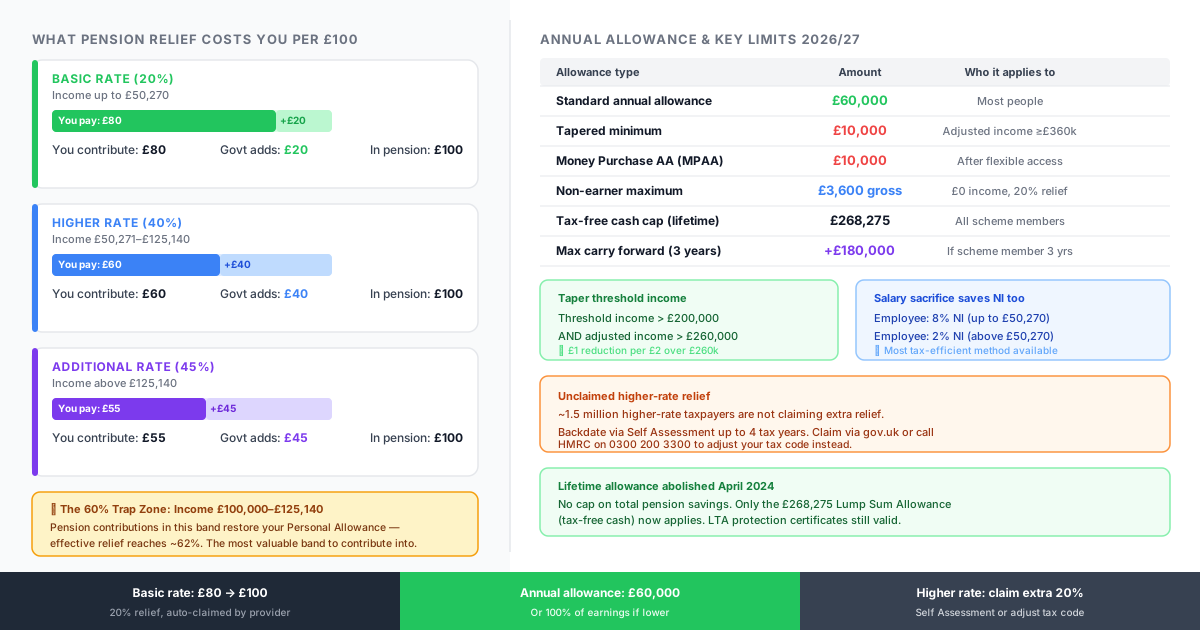
| Up to £50,270 (basic rate) | 20% | 20% | £80 | £20 | £100 |
| £50,271–£125,140 (higher rate) | 40% | 40% | £60 | £40 | £100 |
| Above £125,140 (additional rate) | 45% | 45% | £55 | £45 | £100 |
Scottish taxpayers pay different income tax rates but still receive pension tax relief at UK basic rate (20%) automatically. The extra relief for Scottish higher/advanced/top rate taxpayers must be claimed via Self Assessment and is calculated based on Scottish rates.
The annual allowance — the maximum pension contributions that qualify for relief — is £60,000 or 100% of your UK earnings, whichever is lower, for 2026/27.
How relief is delivered: three methods
Your employer's scheme determines which method applies. The method affects your take-home pay and how much action you need to take.
1. Relief at source
You contribute from your net (post-tax) pay. Your pension provider claims 20% basic rate relief from HMRC and adds it to your pot automatically — usually within 6–10 weeks of your contribution.
Higher rate taxpayers must claim the extra relief themselves. Only 20% is added automatically. If you are a higher rate taxpayer, you are owed an additional 20%. If you are an additional rate taxpayer, you are owed an additional 25%. See How to claim higher-rate relief below.
Most workplace pensions from providers like Nest, The People's Pension, and many SIPPs (Self-Invested Personal Pensions) use relief at source.
2. Net pay arrangement
Contributions come out of your gross pay before income tax is calculated. You never pay tax on that money in the first place — so there is nothing to claim back. Basic, higher, and additional rate taxpayers all receive full relief automatically through payroll.
The tradeoff: if your earnings fall below the personal allowance (£12,570), you receive no tax relief in a net pay scheme because you are not paying income tax. From April 2024, HMRC has a statutory obligation to pay a top-up directly to low earners in net pay schemes — it is paid annually by HMRC directly, not through your pension provider. If you earn below £12,570 and are in a net pay scheme, you may need to contact HMRC to ensure you are registered for this top-up.
Many large employer schemes run net pay.
3. Salary sacrifice
You agree to reduce your contractual salary and your employer contributes the equivalent amount directly into your pension. Because your salary is lower, you pay less income tax and less National Insurance.
This is the most tax-efficient method for most people. You save:
- Income tax at your marginal rate
- Employee National Insurance at 8% (earnings between £12,570–£50,270) or 2% (above £50,270)
Your employer also saves 15% employer National Insurance on your sacrificed salary. Some employers pass part or all of this saving back to you as additional pension contribution.
Salary sacrifice saving at different salary levels (2026/27):
| Gross salary | Monthly sacrifice | Tax saved | Employee NI saved | Total monthly cost to you | Pension contribution |
|---|---|---|---|---|---|
| £30,000 | £200 | £40 | £16 | £144 | £200 |
| £45,000 | £300 | £60 | £24 | £216 | £300 |
| £55,000 | £400 | £160 | £8 | £232 | £400 |
| £80,000 | £500 | £200 | £10 | £290 | £500 |
Higher rate savings at £55,000 and £80,000 apply to contributions above the higher rate threshold. Employee NI above £50,270 is 2%.
Note: salary sacrifice is not available to all employees. It cannot reduce your cash earnings below the National Minimum Wage. It may also affect salary-linked benefits such as mortgage applications, life cover multiples, and statutory maternity/paternity pay (which are calculated on contractual pay, not sacrificed pay).
💰The 60% effective relief zone: £100,000–£125,140
This is the most valuable — and most overlooked — use of pension contributions for mid-to-high earners.
When your income exceeds £100,000, your personal allowance (£12,570 for 2026/27) reduces by £1 for every £2 earned above £100,000. It disappears entirely at £125,140. In this band, you are effectively paying 60% income tax — 40% higher rate income tax plus losing £1 of personal allowance (worth 40p in tax) for every £2 earned.
A pension contribution in this band restores your personal allowance, giving you an effective relief rate of 60%.
What it means in £:
| Adjusted income | Pension contribution | Income tax saved | NI saved* | Effective relief rate |
|---|---|---|---|---|
| £110,000 | £10,000 | £6,000 | £200 | ~62% |
| £115,000 | £15,000 | £9,000 | £300 | ~62% |
| £120,000 | £20,000 | £12,000 | £400 | ~62% |
| £125,140 | £25,140 | £15,084 | £503 | ~62% |
Employee NI at 2% above £50,270.
How it works: At £110,000, your personal allowance is reduced by £5,000 (the amount above £100,000 divided by 2), leaving you with a £7,570 allowance. A £10,000 pension contribution brings your adjusted income down to £100,000 — full personal allowance restored. HMRC taxes that £10,000 at 40% (£4,000) but restoring the £5,000 personal allowance saves another £2,000 (£5,000 × 40%), for a total saving of £6,000 — 60% effective relief on the £10,000 contribution.
If your employer operates salary sacrifice, the employer NI saving on top can push the combined saving even higher.
🏛Annual allowance: how much can you contribute?
The annual allowance for 2026/27 is £60,000 (or 100% of UK earnings if lower). This covers:
- Your own contributions
- Your employer's contributions
- Any third-party contributions on your behalf
If you exceed the annual allowance, you must pay an annual allowance charge — income tax on the excess at your marginal rate. You declare this on Self Assessment.
The 100% earnings cap: If you earn £30,000, you cannot contribute more than £30,000 in total (including employer contributions) and claim relief. Non-earners have a separate £3,600 gross limit (see below).
Tapered annual allowance for high earners
High earners face a reduced annual allowance. Two income tests both need to be met:
Threshold income: Your income before pension contributions (salary, dividends, rental income etc.) — must exceed £200,000.
Adjusted income: Threshold income plus all pension contributions (including employer) — must exceed £260,000.
If both tests are met, the annual allowance reduces by £1 for every £2 of adjusted income above £260,000, down to a minimum of £10,000 (reached when adjusted income hits £360,000).
| Adjusted income | Tapered allowance |
|---|---|
| £260,000 or below | £60,000 (no taper) |
| £280,000 | £50,000 |
| £300,000 | £40,000 |
| £320,000 | £30,000 |
| £340,000 | £20,000 |
| £360,000+ | £10,000 (minimum) |
Employer contributions count toward adjusted income. If you receive a large employer contribution, check whether the taper applies before making additional personal contributions.
Money Purchase Annual Allowance (MPAA)
Once you access a defined contribution pension flexibly — such as by entering drawdown or taking a lump sum — your annual allowance for money purchase (defined contribution) pensions falls to £10,000. This is the Money Purchase Annual Allowance.
What triggers the MPAA:
- Entering income drawdown (flexi-access drawdown)
- Taking an Uncrystallised Funds Pension Lump Sum (UFPLS)
- Taking a pension annuity with certain income flexibility features
What does not trigger it:
- Taking a tax-free lump sum only (if the remaining funds go into a standard annuity or drawdown without flexibly accessing income)
- Taking a small pots lump sum (under £10,000, maximum three pots)
The MPAA cannot be increased by carry forward. If you are planning to return to employment after accessing a pension, factor in the MPAA before making further contributions.
Carry forward: contributing more than £60,000
Carry forward allows you to contribute above the £60,000 annual allowance by using unused allowance from the previous three tax years — as long as you were a member of a registered pension scheme in each of those years.
Rules:
- You must use the full current year's allowance (£60,000) first
- You can then carry forward unused allowance from 2025/26, 2024/25, and 2023/24
- Your total contributions cannot exceed your UK earnings in the current tax year
- You must have been a member of a registered pension scheme (not necessarily contributing) in each carry-forward year
Annual allowances for carry forward:
- 2025/26: £60,000
- 2024/25: £60,000
- 2023/24: £60,000
Maximum carry forward available (if you made no contributions in prior years): £180,000 on top of the current year's £60,000 = £240,000 total.
Worked example:
| Year | Allowance | Contributions | Unused |
|---|---|---|---|
| 2023/24 | £60,000 | £10,000 | £50,000 |
| 2024/25 | £60,000 | £15,000 | £45,000 |
| 2025/26 | £60,000 | £20,000 | £40,000 |
| 2026/27 | £60,000 | £60,000 | — |
After fully using 2026/27, Sarah can contribute an additional £135,000 using the three years of unused allowance (£50k + £45k + £40k), as long as she has sufficient UK earnings. Employer contributions count toward the total.
Carry forward is commonly used by business owners paying themselves a large dividend in a good year, or professionals receiving a bonus that pushes total income well above the normal annual allowance.
How to claim higher-rate relief
If your scheme uses relief at source and you pay income tax at 40% or 45%, you are owed extra relief that your pension provider does not claim for you. This is the money most people miss.
What you are owed:
- Basic rate (20%) — claimed automatically by your provider ✓
- Extra 20% for higher rate — you must claim ✗
- Extra 25% for additional rate — you must claim ✗
Method 1: Self Assessment tax return
- Register for Self Assessment at gov.uk/register-for-self-assessment (if not already registered)
- Include your total gross pension contributions in the "Pension Contributions" section of your return
- HMRC calculates the extra relief and pays it as a refund — usually by bank transfer within 2–4 weeks of filing
- You can backdate claims for up to four previous tax years (to 2022/23 if filing in 2026/27)
If you have never filed Self Assessment, registering specifically to claim pension relief is legitimate and common. Include all years you have missed.
Method 2: Adjust your PAYE tax code
Call HMRC on 0300 200 3300 and tell them your annual pension contribution amount. HMRC will amend your tax code to reflect the additional relief — reducing the tax deducted from your monthly pay. This spreads the relief across the year rather than giving you a lump sum.
Worked example — James, £52,000 salary:
- Higher-rate income: £52,000 − £50,270 = £1,730 above the basic rate threshold
- Annual pension contribution (gross): £4,800 (£400/month, basic rate claimed by provider)
- Higher-rate portion of contribution: the £4,800 contribution reduces taxable income to £47,200 — below the threshold
- Extra relief owed: £4,800 × 20% = £960 per year (or £80/month if adjusted via tax code)
If James has missed this for three years, he can claim £2,880 in a single Self Assessment filing.
💷Non-earners: the £3,600 gross rule
You do not need to earn an income to benefit from pension tax relief. Non-earners — including children, stay-at-home parents, and the unemployed — can contribute up to £2,880 net (£3,600 gross) per year to a personal pension. The pension provider claims 20% basic rate relief from HMRC regardless of whether you paid any income tax.
This works for:
- A spouse or partner who does not work
- Children (parents can contribute on their behalf)
- Someone between jobs or on a career break
Over 18 years from birth: Contributing £2,880 net per year to a child's pension (growing at 5% annually) would accumulate approximately £90,000 before they turn 18 — entirely from contributions of £51,840 net, with the rest coming from relief and growth.
The scheme must use relief at source. Net pay and salary sacrifice are not available to non-earners.
Self-employed pension tax relief
If you are self-employed with no employer scheme, you can contribute to a personal pension or SIPP and claim relief through Self Assessment.
How it works:
- Make contributions to your personal pension or SIPP during the tax year
- Your pension provider automatically claims 20% basic rate relief and adds it to your pot
- If you pay higher or additional rate tax, claim the additional relief on your Self Assessment return
- Your pension contribution reduces your adjusted net income, which also affects any Child Benefit High Income Charge calculations
The annual allowance (£60,000 or 100% of earnings) applies in the same way as for employed people. Trading profits count as UK earnings for this purpose.
If your profits are volatile year to year, carry forward (above) is particularly useful for self-employed people who have a high-income year and want to make a large one-off contribution.
What happened to the lifetime allowance?
The pension lifetime allowance — which previously limited the total pension you could build up to £1,073,100 — was abolished from 6 April 2024. There is no longer a limit on the total value of pension savings you can accumulate.
What still applies:
The Lump Sum Allowance (LSA) caps the total tax-free cash you can take across all pension schemes at £268,275 for 2026/27. Any tax-free lump sum you take uses up part of this lifetime allowance. Above the cap, lump sums are taxed as income.
If you hold a lifetime allowance protection certificate — Fixed Protection, Enhanced Protection, Individual Protection 2016, or another variant — these still apply and may entitle you to a higher lump sum than £268,275. Check with your pension provider before taking any lump sum.
Making the most of pension tax relief
Six things to check this tax year:
1. Are you claiming higher-rate relief? If your income is above £50,270 and your scheme uses relief at source, check whether you have filed Self Assessment. If not, you may have unclaimed relief going back four years.
2. Are you in the £100k–£125,140 trap? If your adjusted income falls in this range, a pension contribution returns up to 62% effective relief. Consider increasing contributions specifically to bring your adjusted income to £100,000 or below.
3. Could salary sacrifice save you National Insurance? If your employer offers a salary sacrifice scheme, you save both income tax and NI on contributions. This typically gives you 28% total saving at basic rate (20% tax + 8% NI) versus 20% through relief at source.
4. Have you used carry forward? If you had years with unused allowance from 2023/24 to 2025/26 and have high earnings this year, carry forward lets you contribute substantially more than £60,000 in a single year.
5. Does your non-working partner have a pension? Contributing up to £2,880 net to a non-earner's pension adds £720 in government relief — essentially free money.
6. Are you close to the MPAA? If you have accessed pension funds flexibly, your future contribution allowance is £10,000 — not £60,000. Plan accordingly before making large contributions.
Frequently asked questions
What is the annual allowance for pension contributions in 2026/27?
The annual allowance is £60,000, or 100% of UK earnings — whichever is lower. This covers your contributions, your employer's contributions, and any third-party contributions. Higher earners above £260,000 adjusted income face a tapered allowance reducing to £10,000.
Can I get tax relief on pension contributions if I am a non-taxpayer?
Yes. Non-earners can contribute up to £2,880 net (£3,600 gross) to a relief-at-source pension. The pension provider claims 20% basic rate relief from HMRC automatically. This applies even to children — parents can open a junior SIPP on their behalf.
How far back can I claim pension tax relief?
You can claim unclaimed higher-rate relief for up to four previous tax years. In the 2026/27 tax year, you can claim back to 2022/23. Claims are made via Self Assessment. If you have not yet registered, you can do so specifically to reclaim this relief.
Does pension tax relief affect my Child Benefit?
Yes. Pension contributions reduce your adjusted net income, which determines whether you pay the High Income Child Benefit Tax Charge. If your income is between £60,000 and £80,000, pension contributions may reduce or eliminate the charge. If your income is above £80,000 without pension contributions, sufficient contributions could bring it below the threshold.
What is the difference between relief at source and net pay?
In relief at source, you contribute from net (post-tax) pay and the provider claims 20% back from HMRC. In net pay, contributions come out before tax is calculated — so you never pay tax on that money. Both deliver full relief eventually for most earners. The key difference: net pay schemes give no relief to those earning below the personal allowance (unless they claim HMRC's top-up since April 2024), while relief at source pays 20% relief to everyone including non-taxpayers.
Can I contribute to both a workplace pension and a private pension?
Yes. You can contribute to multiple pension schemes simultaneously. The annual allowance (£60,000) applies across all your pensions combined. There is no restriction on the number of schemes. If both your workplace pension and your private pension use relief at source, you claim any higher-rate excess on your Self Assessment return once, covering all schemes.