
Your colleague mentions they are getting a brand new electric car for £280 a month and paying almost no tax on it. Someone else at work says they have been putting £600 a month into their pension and it is only costing them £430. You nod along and quietly wonder what you are missing.
What you are missing is salary sacrifice. Or more specifically, how it actually works and whether it is worth doing for your situation.
This guide covers both.
💰What salary sacrifice actually is
Salary sacrifice is a formal agreement between you and your employer where you accept a lower gross salary in exchange for a non-cash benefit. The key word is gross. Your salary drops before tax and National Insurance are calculated, which means HMRC takes a smaller slice — and you keep more of the total package.
It is not a loophole. HMRC explicitly approves certain benefits for salary sacrifice, and the list includes pensions, electric cars, cycle to work schemes, and workplace childcare. Each one has its own rules, limits, and tax treatment.
The mechanics are straightforward. Your employer amends your employment contract to reflect the lower salary. From that point, the benefit is paid for out of your pre-tax pay instead of your net pay. You end up with a lower gross salary on paper but higher overall value from your package.
How the tax saving works
Here is the part most people find confusing, so let us go through it carefully.
When you earn £40,000 and sacrifice £3,000 for a pension, HMRC treats your income as £37,000. You pay income tax and National Insurance on £37,000, not £40,000. You also still receive the £3,000 worth of pension contribution — just routed differently.
For a basic rate taxpayer in 2026/27, every £1 sacrificed saves:
- 20p in income tax
- 8p in employee National Insurance (on earnings between £12,570 and £50,270)
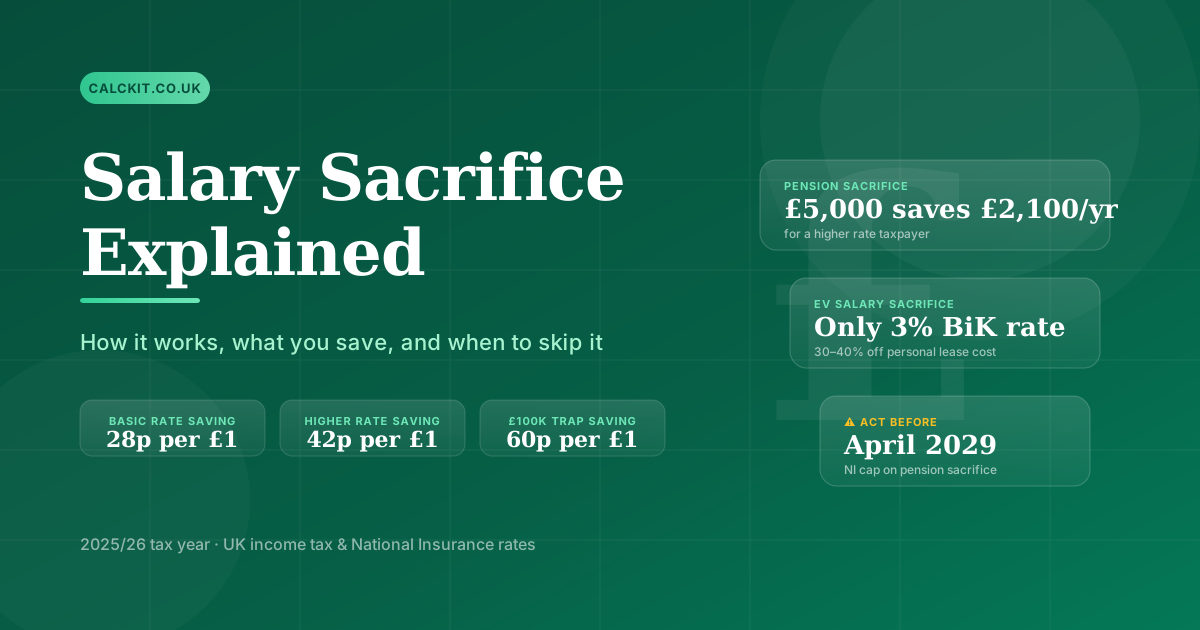
- Total: 28p saved per £1 sacrificed
For a higher rate taxpayer (earnings above £50,270), every £1 sacrificed saves:
- 40p in income tax
- 2p in employee National Insurance
- Total: 42p saved per £1 sacrificed
That means a higher rate taxpayer sacrificing £5,000 into their pension saves £2,100 per year. A basic rate taxpayer doing the same saves £1,400. You are essentially getting a 28–42% discount on whatever you are sacrificing for.
💰What the savings look like at different salary levels
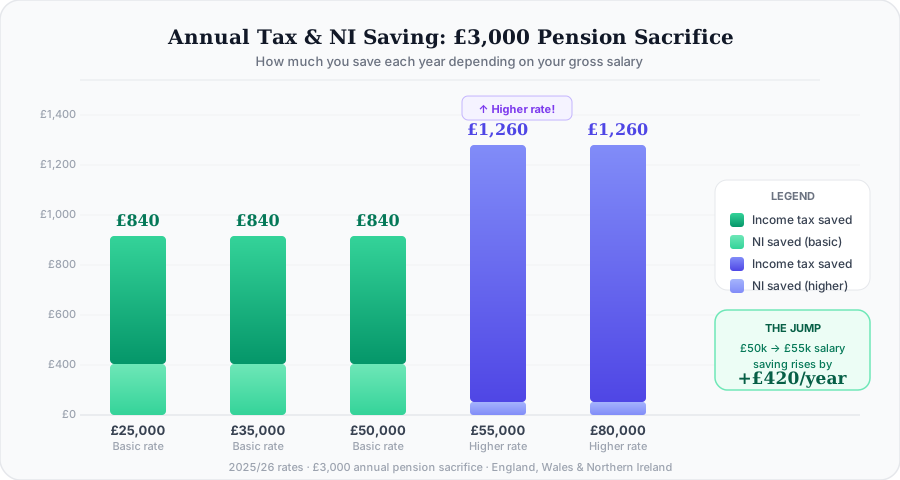
Most salary sacrifice guides give you one worked example and call it a day. Here is what the numbers actually look like across a range of salaries, assuming a £3,000 annual pension sacrifice:
| Gross Salary | Annual Sacrifice | Your Tax Saving | Your NI Saving | Total Annual Saving | Monthly Saving |
|---|---|---|---|---|---|
| £25,000 | £3,000 | £600 | £240 | £840 | £70 |
| £35,000 | £3,000 | £600 | £240 | £840 | £70 |
| £50,000 | £3,000 | £600 | £240 | £840 | £70 |
| £55,000 | £3,000 | £1,200 | £60 | £1,260 | £105 |
| £80,000 | £3,000 | £1,200 | £60 | £1,260 | £105 |
The jump between £50,000 and £55,000 happens because the higher rate band starts at £50,270. Once any part of your sacrifice crosses that boundary, the tax saving rate doubles.
Your employer also saves 15% employer National Insurance on the amount you sacrifice. On a £3,000 sacrifice, that is £450 per year. More on that in a moment.
The schemes that are actually worth using
Not all salary sacrifice schemes are equal. Some are genuinely excellent. Some are barely worth the admin.
Pension — the most valuable scheme by far
Pension salary sacrifice is the workhorse. It is available through most employers, has a high contribution limit (up to £60,000 per year or your full salary, whichever is lower), and attracts the full 28–42% tax relief. If your employer offers it and you are not using it, you are leaving real money behind.
One nuance worth knowing: when your employer pays into your pension via salary sacrifice, it counts as an employer contribution rather than an employee contribution. This matters for some defined benefit schemes where employer and employee contributions are treated differently. Check with your pension provider if you are unsure.
Electric car salary sacrifice — the second biggest win
An EV through salary sacrifice is taxed on its Benefit in Kind (BiK) value rather than the gross lease cost. The BiK rate for fully electric cars in 2026/27 is just 4% of the car's P11D value. For a car worth £35,000, that is £1,400 of taxable benefit. At 20% tax, you pay £280 a year in BiK tax — roughly £23 a month. Road tax is normally built into the lease cost; if you buy a car privately instead, see our car tax (VED) guide for what you'd pay.
Compare that to leasing the same car personally: you would pay from net income, getting no tax relief at all. The effective saving is typically 30–40% of the personal lease cost, sometimes more for higher rate taxpayers.
🚗The BiK rate is rising — 4% from April 2026, 5% from April 2027. It is still excellent value, but less exceptional than it is right now. If you are considering an EV through salary sacrifice, the case for acting before April 2026 is real.
Cycle to Work
The Cycle to Work scheme lets you get a bike and cycling equipment through your employer, paid for via salary sacrifice. Standard limit is £1,000, though some employer schemes allow higher amounts. You save 28–42% on the cost and spread the payments over the hire period. At the end, you purchase the bike at fair market value — typically 3–7% of the original cost.
It is a legitimate saving if you need a new bike. It is not worth contorting your commute around just to access the scheme.
Childcare vouchers and workplace nurseries
The employer-contracted nursery scheme (where your employer directly contracts with a nursery) is genuinely valuable and not widely understood. If your employer has a contracted arrangement, you can fund childcare through salary sacrifice with no cap and no BiK charge.
Standard childcare vouchers were closed to new entrants in 2018. If you joined after that date, Tax-Free Childcare is the alternative — that is a government top-up scheme, not strictly salary sacrifice.
The £100,000 trap — and how salary sacrifice fixes it
This is the section most salary sacrifice guides either skip entirely or bury at the bottom.
If your income exceeds £100,000, your personal allowance (the amount you earn before paying any income tax) starts to reduce. For every £2 you earn above £100,000, you lose £1 of personal allowance. By £125,140, your personal allowance is gone completely.
The consequence is a marginal tax rate of 60% on earnings between £100,000 and £125,140. Not 40%. Not 45%. Sixty pence in every pound goes to HMRC in that band.
Salary sacrifice pension contributions reduce your taxable income back below the threshold. A £10,000 pension sacrifice on a £108,000 salary does not save you 40p per £1. It saves you 60p per £1 — because every pound below £100,000 also restores £0.50 of personal allowance, and that restored allowance was previously taxed at 20%.
The effective net cost of a £10,000 pension sacrifice for someone in this band is roughly £4,000. The other £6,000 was going to HMRC anyway.
If you earn between £100,000 and £125,140 and you are not using salary sacrifice for your pension, you are almost certainly paying more tax than you need to.
Use the income tax calculator to see your effective tax rate. If your gross income is above £100,000, the pension sacrifice saving is dramatically higher than the standard examples suggest.
Before April 2029: the pension NI change you need to know about
In the Autumn 2024 Budget, the government announced that from April 2029, the National Insurance exemption on pension salary sacrifice will be capped at £2,000 per year.
What this means: right now, you save 8% employee NI (or 2% above £50,270) on every pound you sacrifice into a pension with no upper limit beyond the annual pension allowance. From April 2029, you will only save NI on the first £2,000 of pension sacrifice. Anything above that will attract employee NI at your marginal rate.
This is a significant change, particularly for higher earners making large pension contributions through sacrifice.
For 2026/27, 2027/28, and 2028/29, the full NI saving is still available. If maximising your pension is something you have been meaning to get around to, the window is now — not in three years when the rules have already changed.
The catches nobody warns you about clearly enough
Salary sacrifice is genuinely useful for most people. It is also genuinely wrong for some. Here are the situations where it either hurts you or complicates things enough to think twice.
Mortgage applications
When you sacrifice salary, your gross income on your payslip is lower. Most mortgage lenders base affordability on your contractual gross salary. If your salary is £40,000 but your payslip shows £35,000 after sacrifice, some lenders will offer you less.
The practical fix: ask your employer for a letter confirming your reference salary (the pre-sacrifice figure) and your total package value. Most lenders will accept this. A decent mortgage broker will know which lenders are more flexible. The issue is not usually fatal — but it is worth raising with your broker before you apply, not after.
Maternity, paternity, and sick pay
Statutory maternity pay (SMP) and statutory sick pay (SSP) are calculated based on your actual salary after any sacrifice. If you sacrifice £500 a month and then go on maternity leave, your SMP baseline is lower than it would have been.
Some employers calculate occupational maternity or sick pay based on a reference salary that excludes the sacrifice. Many do not. This is worth checking with HR before you commit to a large sacrifice amount — especially if you are planning a family.
Student loan repayments
If you are on an income-contingent student loan (Plan 1, Plan 2, or Plan 5), your repayments are calculated as a percentage of your earnings above the repayment threshold.
Salary sacrifice reduces the earnings figure used for that calculation. If you are on track to repay your loan in full, this means you repay it more slowly and accrue more interest. Over several years that could cost you more than you saved in tax.
If you are unlikely to repay your loan before it is written off (many Plan 2 borrowers fall into this category), reducing your repayments does not cost you anything — it just shifts some payments from now to the write-off date. In that case, the tax saving is clean.
This is a genuinely individual calculation. It depends on your loan balance, your salary trajectory, and how many years until write-off.
When you are close to the National Minimum Wage
Your employer cannot process a sacrifice arrangement that would bring your hourly pay below the National Minimum Wage — currently £12.71 per hour for workers aged 21 and over (from April 2026). For full-time workers on 37.5 hours a week, this is roughly £24,800 per year. If you earn close to this level, your sacrifice amount is capped.
How to actually get salary sacrifice set up
If your employer already runs salary sacrifice schemes, the process is usually straightforward.
Step 1: Find out what your employer offers
Ask HR or your line manager which salary sacrifice schemes are available. Most medium and large employers offer at least pension sacrifice. EV and cycle to work are more variable.
Step 2: Ask about the employer NI saving
Your employer saves 15% employer National Insurance on everything you sacrifice. On a £5,000 pension sacrifice, that is £750 per year — saved by the employer, not you, by default.
Many employers pass some or all of this saving back to employees by boosting the employer pension contribution. Some do not. If yours does not, it is worth asking. The conversation is simply: "I understand the employer saves NI contributions on salary sacrifice. Is any of that passed back to staff?"
It is a legitimate question and some employers will adjust terms, particularly for higher earners where the saving is significant.
Step 3: Check the impact on your benefits
Before signing anything, confirm: how does the sacrifice affect your death-in-service life insurance? (It should use your reference salary, not post-sacrifice salary.) Does your employer calculate occupational sick or maternity pay on the pre-sacrifice figure?
Step 4: Review the contract amendment
Salary sacrifice requires a formal variation to your employment contract. You will sign an agreement specifying the sacrifice amount, the benefit received, and how long the arrangement lasts. Read it. Check the exit terms — some schemes lock you in for 12 months unless a lifestyle event occurs (marriage, having a child, significant pay change).
Step 5: Run the numbers first
Use the calculator below before you commit. Put in your actual salary, the amount you want to sacrifice, and see exactly what you save — net of any BiK tax if you are looking at a car.
💰Pension vs electric car — which gives a better saving per pound?
The honest comparison: pension sacrifice gives you a slightly higher pure tax saving because there is no BiK charge to offset. But the electric car scheme gives you a tangible asset (a car) at a significantly reduced cost compared to personal leasing.
If you would be leasing a car anyway, the EV salary sacrifice route is almost always the better choice. If you would not otherwise have a car, the pension wins on pure financial return.
Most people with access to both should consider doing both.
🚗Quick summary
Salary sacrifice is worth using if:
- Your employer offers pension or EV schemes
- You are a basic rate taxpayer saving 28% or a higher rate taxpayer saving 42%
- You earn between £100,000 and £125,140 (where the saving is 60%)
- You are nowhere near the NMW threshold
Think carefully before committing large amounts if:
- You are applying for a mortgage in the next 6 months
- You are planning to go on maternity or paternity leave
- You are on track to repay a student loan in full before write-off
Act before April 2029 if you are planning to maximise pension contributions through sacrifice — the NI saving on amounts above £2,000 per year disappears from that date.
Last updated September 2026. Tax figures based on 2026/27 rates. For personalised advice, consult a qualified UK financial adviser or accountant.