
Your employer offers a 5% pay rise. You do the mental maths — £2,000 on a £40,000 salary — and start thinking about what you will do with the extra money. Then your first new payslip arrives and it looks nothing like you expected.
That gap between the number on paper and the number in your bank account is explained entirely by income tax and National Insurance. This guide shows you exactly what you will keep — by salary level, by tax band, and with worked examples at real salaries.
📈The core rule: what you keep depends on your tax band
In the UK for 2026/27, two rates cover the vast majority of workers:
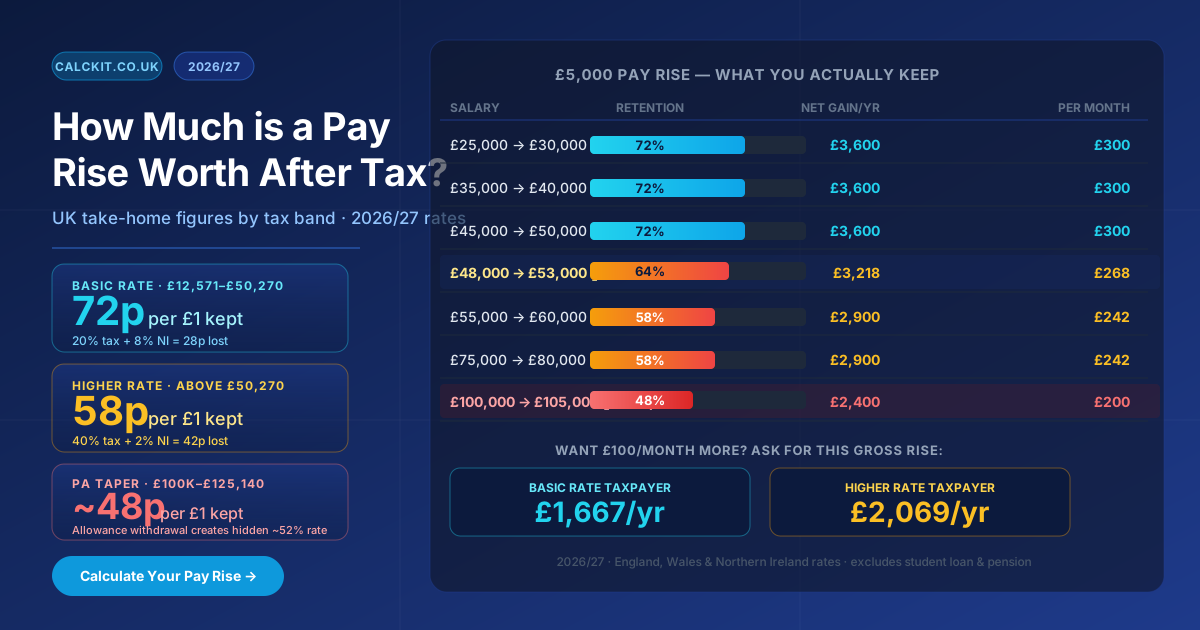
Basic rate band (income £12,571–£50,270): Every extra pound of salary costs you 20% income tax plus 8% National Insurance — 28p total. You keep 72p per £1.
Higher rate band (income £50,271–£125,140): Every extra pound costs 40% income tax plus 2% NI — 42p. You keep 58p per £1.
Those two percentages — 72% and 58% — cover the arithmetic for almost every pay negotiation in the UK. The rest of this guide is detail, context, and the exceptions that matter.
Worked examples: the actual numbers
Example 1 — Basic rate: £30,000 salary, 5% rise (£1,500)
| Before | After | Change | |
|---|---|---|---|
| Gross salary | £30,000 | £31,500 | +£1,500 |
| Income tax | £3,486 | £3,786 | +£300 |
| National Insurance | £1,394 | £1,514 | +£120 |
| Take-home pay | £25,120 | £26,200 | +£1,080/yr |
| Monthly take-home | £2,093 | £2,183 | +£90/mo |
You asked for £1,500. You get £1,080. 72% of your raise reaches your bank account — which is actually one of the better retention rates in the tax system.
📈Example 2 — Straddling the threshold: £49,000 salary, 5% rise (£2,450)
This is the scenario people get most confused about. Your rise of £2,450 pushes you from £49,000 to £51,450 — crossing the £50,270 higher rate threshold.
The important thing: you do not pay 40% on your whole salary. Only the £1,180 that sits above £50,270 is taxed at the higher rate. The rest is still basic rate.
| Portion of rise | Amount | Deduction rate | Kept |
|---|---|---|---|
| Below £50,270 (basic rate) | £1,270 | 28% | £914.40 |
| Above £50,270 (higher rate) | £1,180 | 42% | £684.40 |
| Total rise | £2,450 | — | £1,598.80 |
Your overall retention is 65.3% — lower than 72% because part of your rise is in the higher rate band, but far from the 42% someone might wrongly assume because you "crossed into 40% tax."
Monthly take-home increase: £133
Example 3 — Fully in the higher rate band: £55,000 salary, 5% rise (£2,750)
Once your salary is already above £50,270, every pound of a pay rise is taxed at 40% income tax plus 2% NI.
| Before | After | Change | |
|---|---|---|---|
| Gross salary | £55,000 | £57,750 | +£2,750 |
| Income tax | £9,432 | £10,582 | +£1,150 |
| National Insurance | £3,111 | £3,166 | +£55 |
| Take-home pay | £42,457 | £44,002 | +£1,595/yr |
| Monthly take-home | £3,538 | £3,667 | +£133/mo |
You keep 58% of your £2,750 rise — a respectable outcome, but notably less satisfying than the 72% you would keep at £30,000.
Notice that examples 2 and 3 produce almost identical monthly increases (£133) despite very different gross rises (£2,450 vs £2,750). When negotiating a rise that will push you into or within the higher rate band, the gross number matters less than it appears.
Full salary table — how much of a £5,000 rise you keep
This table shows the net annual and monthly gain from a £5,000 gross pay rise at common UK salary levels for 2026/27.
| Current salary | New salary | Net rise/yr | Net rise/mo | % kept |
|---|---|---|---|---|
| £15,000 | £20,000 | £3,600 | £300 | 72% |
| £20,000 | £25,000 | £3,600 | £300 | 72% |
| £25,000 | £30,000 | £3,600 | £300 | 72% |
| £30,000 | £35,000 | £3,600 | £300 | 72% |
| £35,000 | £40,000 | £3,600 | £300 | 72% |
| £40,000 | £45,000 | £3,600 | £300 | 72% |
| £45,000 | £50,000 | £3,600 | £300 | 72% |
| £48,000 | £53,000 | £3,218 | £268 | 64.4% |
| £55,000 | £60,000 | £2,900 | £242 | 58% |
| £65,000 | £70,000 | £2,900 | £242 | 58% |
| £75,000 | £80,000 | £2,900 | £242 | 58% |
| £100,000 | £105,000 | £2,400 | £200 | 48% |
The £48,000 row is lower than pure basic rate because the rise crosses the £50,270 threshold. Everything from £50,000 to £125,000 follows the same 58% pattern — and then the Personal Allowance taper creates a different problem above £100,000.
The £100,000 Personal Allowance trap
Above £100,000, the UK tax system adds a hidden extra cost. For every £2 your income rises above £100,000, you lose £1 of your £12,570 tax-free Personal Allowance. By £125,140, your entire allowance is gone.
This means income between £100,000 and £125,140 faces a much higher effective tax rate than the standard 40% higher rate:
- The new income itself: 40% income tax + 2% NI
- The lost allowance: each £2 rise loses £1 of PA, which was previously sheltering income from tax
A £5,000 gross rise from £100,000 to £105,000 produces approximately £2,400 net — a retention rate of around 48%.
There is also a non-financial cost at the £100,000 mark: you lose eligibility for free 30-hour childcare for 3 and 4-year-olds. If you have a young child, that loss can be worth £4,000–£6,000 a year in private childcare costs — making a salary rise from £99,000 to £101,000 a genuinely bad financial deal. Salary sacrifice pension contributions can reduce your adjusted net income back below £100,000 to protect both your Personal Allowance and your childcare entitlement.
What gross rise should you ask for?
Use these figures when negotiating. If you know what net monthly increase you need, work backwards to the gross amount to request.
Basic rate taxpayer (keeping 72%):
| You want this extra/month | Ask for this gross/year |
|---|---|
| £50/month | £833 |
| £100/month | £1,667 |
| £200/month | £3,333 |
| £300/month | £5,000 |
| £500/month | £8,333 |
Higher rate taxpayer (keeping 58%):
| You want this extra/month | Ask for this gross/year |
|---|---|
| £50/month | £1,034 |
| £100/month | £2,069 |
| £200/month | £4,138 |
| £300/month | £6,207 |
| £500/month | £10,345 |
A £100 net monthly increase requires a £1,667 gross pay rise in the basic rate band. The same £100 net requires a £2,069 gross rise if you are a higher rate taxpayer — you need to ask for £400 more on paper to end up at the same place in your pocket.
📈Student loan repayments reduce your gain further
If you have a student loan, repayments are triggered as a percentage of income above your plan threshold — on top of income tax and NI. This is not included in the pay rise calculator but matters significantly for recent graduates.
| Plan | Threshold (2026/27) | Rate |
|---|---|---|
| Plan 1 (pre-2012) | £26,900 | 9% |
| Plan 2 (2012–2023) | £29,385 | 9% |
| Plan 5 (from 2023) | £25,000 | 9% |
| Plan 4 (Scotland) | £33,795 | 9% |
| Postgraduate | £21,000 | 6% |
For a Plan 2 borrower in the basic rate band, a pay rise is worth only 63p per £1 (not 72p), because 9p also goes to loan repayments alongside the 28p in tax and NI.
At higher earnings, the combined deduction rate can exceed 50% before you factor in pension contributions — which is why higher earners with student debt often look carefully at salary sacrifice strategies. See our guide to salary sacrifice for how pension contributions can reduce this burden.
Is it a real pay rise? The inflation test
A pay rise that beats inflation is a real pay rise in terms of purchasing power. One that only tracks inflation keeps you standing still. One that falls below inflation is actually a pay cut in real terms — even if the number on your payslip goes up.
UK CPI inflation has been running at approximately 2.5–3% in 2026. If your rise is:
- Below inflation: you are getting less in real terms despite a higher number on your payslip
- Equal to inflation: you are standing still, maintaining your current standard of living
- Above inflation: you have a genuine real-terms increase in purchasing power
A 3% rise from £35,000 is £1,050 gross — but after tax and NI, it is £756 net per year (£63 per month). If inflation is 3%, your basket of goods and services costs £1,050 more per year to buy — so a 3% rise in the basic rate band only feels like a 3% improvement before tax; after tax, it is worth less than 3% in real terms.
This does not mean you should reject a cost-of-living rise — but it is useful context when deciding whether to push for more. If your employer cites "a 3% cost-of-living increase" and inflation is 3%, you are not gaining ground.
Scottish taxpayers: different rates apply
Scotland has its own income tax rates that differ from the rest of the UK. Scottish taxpayers pay:
- Starter rate: 19% on £12,571–£15,397
- Basic rate: 20% on £15,398–£27,491
- Intermediate rate: 21% on £27,492–£43,662
- Higher rate: 42% on £43,663–£75,000
- Advanced rate: 45% on £75,001–£125,140
- Top rate: 48% above £125,140
The key difference: a Scottish taxpayer earning between £27,492 and £43,662 pays 21% income tax (not 20%), and the higher rate kicks in at £43,663 (not £50,270). National Insurance rates are the same across the UK.
This means a Scottish taxpayer earning £45,000 is already in the higher rate band, while an equivalent English taxpayer is still at basic rate. Retention on a £5,000 rise at £45,000 Scottish would be approximately 55% rather than 72%.
The CalcKit pay rise calculator currently uses England, Wales and Northern Ireland rates. Scottish taxpayers should use the intermediate and higher rate percentages above to adjust their expectations.
Should you take the raise as a pension contribution instead?
If you are approaching the higher rate threshold or the £100,000 Personal Allowance taper, there is a case for negotiating some or all of a pay rise as a pension contribution rather than salary.
Under salary sacrifice, the contribution never appears as salary, so:
- It avoids income tax at your marginal rate (20%, 40%, or the effective 52%+ in the taper zone)
- It avoids National Insurance for both you and your employer
- It does not push your income into a higher band or erode your Personal Allowance
For a higher rate taxpayer, a £1,000 pension salary sacrifice saves £400 in income tax and £20 in NI — the pension receives £1,000, but it only costs you £580 in net pay. See our full salary sacrifice guide for the detailed breakdown.
This is particularly worth considering if a pay rise would push you just over £50,270 (into the 40% band) or over £100,000 (into the allowance taper).
Summary: what your pay rise is worth
| Tax situation | You keep | You lose |
|---|---|---|
| Basic rate (£12,571–£50,270) | 72p per £1 | 20p tax + 8p NI |
| Higher rate (£50,271–£125,140) | 58p per £1 | 40p tax + 2p NI |
| PA taper zone (£100,001–£125,140) | ~48p per £1 | Includes allowance withdrawal effect |
| Additional rate (above £125,140) | 53p per £1 | 45p tax + 2p NI (no NI above £125,140 in some calculations, but NI continues at 2%) |
| Basic rate + Plan 2 student loan | 63p per £1 | 20p tax + 8p NI + 9p loan |
The most important number to take into a negotiation is the gross pay rise you need to achieve your net income goal. In the basic rate band, ask for 39% more than you want to pocket. In the higher rate band, ask for 72% more than you want to pocket.
Use our free pay rise calculator to see the exact figures for your salary and proposed rise.
📈Frequently Asked Questions
How much of a pay rise do I keep after tax in the UK?
Basic rate taxpayers keep approximately 72% of a pay rise — 20% income tax and 8% National Insurance take the rest. Higher rate taxpayers (income above £50,270) keep about 58%, with 40% tax and 2% NI. Between £100,000 and £125,140, the Personal Allowance taper reduces retention to around 48%.
Does a pay rise push me into a higher tax bracket?
Moving into a higher tax band only affects the slice of your salary above the threshold — not your entire income. If a rise takes you from £49,000 to £52,000, only the £1,730 above £50,270 is taxed at 40%. The rest stays at 20%. Use the CalcKit pay rise calculator to see the exact split for your situation.
What gross pay rise do I need to get £100 more per month after tax?
In the basic rate band, you need approximately £1,667 gross per year (£139/month) to net an extra £100 per month. In the higher rate band, you need approximately £2,069 gross per year (£172/month) to achieve the same net gain.
How much is a 5% pay rise on £35,000 after tax?
A 5% rise on £35,000 is £1,750 gross. After tax and NI at basic rate (2026/27), your take-home pay increases by approximately £1,260 per year — around £105 extra per month.
What happens to my take-home if my salary crosses £100,000?
Above £100,000, you lose £1 of your Personal Allowance for every £2 earned above that level. This creates an effective marginal rate of around 52% on pay rises between £100,000 and £125,140 — significantly higher than the standard 40% higher rate. You also lose access to free 30-hour childcare for young children at £100,000. Salary sacrifice pension contributions can bring your adjusted net income below £100,000 to protect your allowance and childcare eligibility.
Does a pay rise affect student loan repayments?
Yes. Student loan repayments are 9% of income above the plan threshold (6% for postgraduate loans). A rise that takes you above your threshold — or further above it — increases repayments on top of tax and NI. For a Plan 2 borrower in the basic rate band, a pay rise is worth about 63p per £1, not 72p.
Last updated July 2026. 2026/27 UK tax rates — income tax personal allowance £12,570, basic rate 20% on £12,571–£50,270, higher rate 40% on £50,271–£125,140.