
On a £35,000 salary, most people expect a monthly pay packet around £2,917. The actual figure is closer to £2,393 — a gap of over £500 a month once income tax and National Insurance are taken out. This guide explains exactly what gets deducted from your gross salary, in what order, and how pension contributions, student loans, and other factors shift that number in either direction.
💷What take-home pay means
Take-home pay — also called net pay — is the amount deposited into your bank account after all deductions. Your payslip will show the gross figure (what you earn before anything is removed) and then list each deduction separately before arriving at the net.
For most UK employees, those deductions are:
- Income tax (via PAYE)
- National Insurance contributions (employee NICs)
- Student loan repayments (if applicable)
- Pension contributions (if you are in a workplace scheme)
The order matters. Some deductions — specifically salary sacrifice pension contributions — reduce your taxable pay before tax and NI are calculated, making them more tax-efficient than deductions applied after.
Income tax 2026/27
Income tax is calculated on the portion of your salary above the Personal Allowance, applied in bands.
| Band | Taxable income | Rate |
|---|---|---|
| Personal Allowance | Up to £12,570 | 0% |
| Basic rate | £12,571 – £50,270 | 20% |
| Higher rate | £50,271 – £125,140 | 40% |
| Additional rate | Above £125,140 | 45% |
The key point: you do not pay 40% on your entire salary once you hit £50,271. You pay 20% on the slice between £12,571 and £50,270, and 40% only on the slice above £50,270.
These bands apply in England, Wales, and Northern Ireland. Scotland has separate income tax rates — see the Scotland section below.
For a full breakdown including the Personal Allowance taper and how your tax code adjusts these bands, see UK Income Tax Bands 2026/27.
National Insurance 2026/27
Employee National Insurance contributions (NICs) are deducted alongside income tax but calculated separately, with their own threshold and rates.
| Band | Earnings | Employee NI rate |
|---|---|---|
| Below Primary Threshold | Up to £12,570/year | 0% |
| Main rate | £12,571 – £50,270/year | 8% |
| Above Upper Earnings Limit | Above £50,270/year | 2% |
Note that the NI threshold (£12,570) coincidentally matches the income tax Personal Allowance for 2026/27. Both are frozen under the current government's thresholds policy.
NI is calculated weekly or monthly on actual pay in each period — unlike income tax, which can be adjusted for cumulative earnings across the year. For more detail, see National Insurance Rates UK 2026/27.
How pension contributions change your take-home
Pension contributions come in two types with different effects on take-home pay.
Salary sacrifice (most tax-efficient)
Your employer deducts the pension contribution from your gross pay before calculating tax and NI. This means:
- Your taxable salary is lower
- You pay less income tax
- You pay less National Insurance
Example — £40,000 salary, 5% salary sacrifice pension:
| No pension | With 5% sacrifice | |
|---|---|---|
| Gross salary | £40,000 | £40,000 |
| Pension deducted | – | £2,000 |
| Taxable pay | £40,000 | £38,000 |
| Income tax | £5,486 | £5,086 |
| National Insurance | £2,194 | £2,034 |
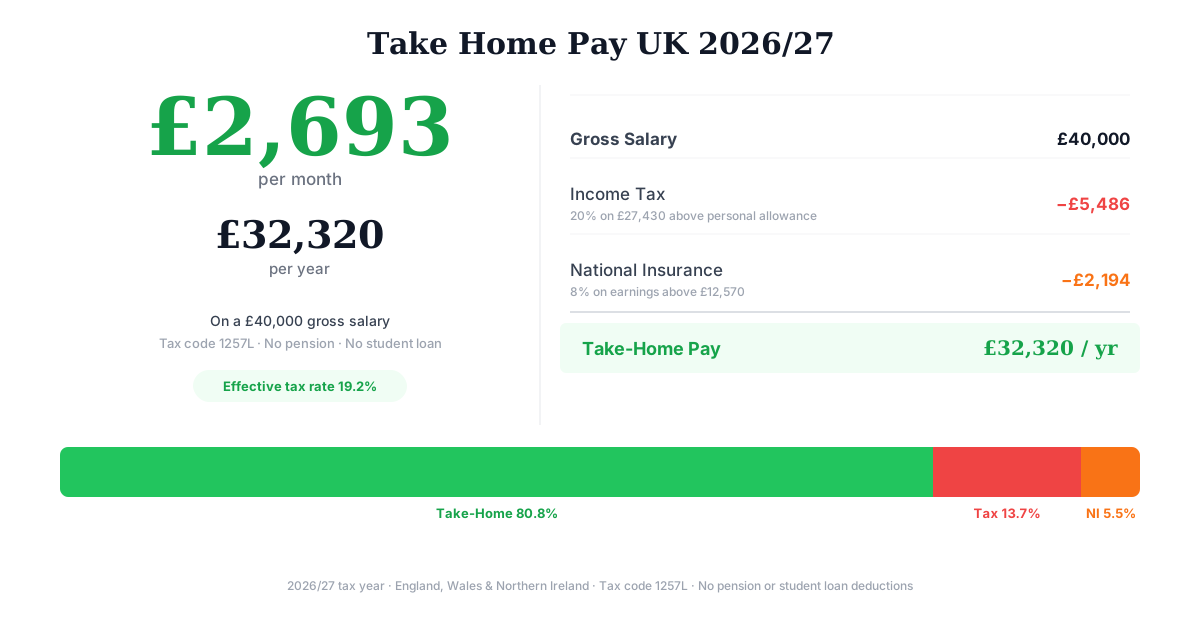
| Take-home pay | £32,320/yr | £30,880/yr |
| Monthly take-home | £2,693 | £2,573 |
The £2,000 pension contribution costs you only £1,440 in take-home pay. You save £560 in tax and NI, which effectively goes into your pension pot rather than to HMRC.
Relief at source
Here the pension contribution is taken from your net pay (after tax). You pay the contribution, and the pension provider claims 20% basic rate tax relief from HMRC and adds it to your pot. Higher and additional rate taxpayers must claim extra relief via Self Assessment.
Most auto-enrolment workplace pensions (Nest, The People's Pension) use relief at source. Large occupational schemes typically use net pay or salary sacrifice. Check your scheme documents if unsure.
🏦Student loan repayments
Student loan deductions are applied after income tax and NI, reducing take-home pay further. Each plan has its own repayment threshold — you pay nothing below that threshold, and 9% on earnings above it (6% for Postgraduate Loans).
| Loan plan | Annual threshold | Rate |
|---|---|---|
| Plan 1 (pre-2012 England/Wales; all Scottish) | £26,900 | 9% |
| Plan 2 (post-2012 England/Wales) | £29,385 | 9% |
| Plan 4 (Scottish, post-2012 or Plan 1 transferred) | £33,795 | 9% |
| Plan 5 (England, from Aug 2023 onwards) | £25,000 | 9% |
| Postgraduate Loan | £21,000 | 6% |
Example — Plan 2 at £35,000 salary:
Repayment = (£35,000 − £29,385) × 9% = £5,615 × 9% = £505 per year (£42 per month)
This comes on top of income tax and NI, so take-home pay on £35,000 with Plan 2 student loan drops from £2,393 to approximately £2,351 per month.
Take-home pay at common UK salaries
These figures assume England/Wales/Northern Ireland tax rates, tax code 1257L, no pension contribution, no student loan, and the standard 2026/27 thresholds.
| Gross salary | Annual take-home | Monthly take-home | Income tax | National Insurance |
|---|---|---|---|---|
| £20,000 | £17,430 | £1,453 | £1,486 | £1,084 |
| £25,000 | £21,520 | £1,793 | £2,486 | £994 |
| £30,000 | £25,120 | £2,093 | £3,486 | £1,394 |
| £35,000 | £28,720 | £2,393 | £4,486 | £1,794 |
| £40,000 | £32,320 | £2,693 | £5,486 | £2,194 |
| £45,000 | £35,920 | £2,993 | £6,486 | £2,594 |
| £50,000 | £39,520 | £3,293 | £7,486 | £2,994 |
| £60,000 | £45,357 | £3,780 | £11,432 | £3,211 |
| £75,000 | £54,057 | £4,505 | £17,432 | £3,511 |
| £100,000 | £67,057 | £5,588 | £27,432 | £5,511 |
From £50,000 upward, the jump in take-home per additional £10,000 shrinks noticeably. Between £50,000 and £60,000 you keep only £5,837 from £10,000 gross — because the £9,730 above £50,270 is taxed at 40% rather than 20%.
For your exact figure with pension, student loan, or a non-standard tax code, use the calculator:
💷To convert your take-home to an hourly or daily rate — useful when comparing a salaried role against a freelance day rate or an hourly contract — use the salary to hourly calculator.
🕐The £100,000 personal allowance trap
Between £100,000 and £125,140 your Personal Allowance is progressively removed. For every £2 you earn above £100,000, you lose £1 of allowance. The allowance reaches zero at £125,140.
This creates an effective marginal income tax rate of 60% on earnings in this band:
- You pay 40% higher rate income tax on the extra income
- AND the reduction of your allowance makes previously tax-free income taxable at 40%
- Combined effect: 40% + (40% × 50%) = 60%
A salary of £125,000 results in a similar take-home to a salary of £100,000 after accounting for the effective 60% rate on the £25,000 between them. Pension contributions that bring your adjusted net income below £100,000 are the most common way to avoid this band.
Self-employed take-home pay
If you are self-employed, your take-home calculation is different in one key respect: you pay Class 4 National Insurance instead of employee Class 1 NICs.
| Class | Earnings | Rate |
|---|---|---|
| Class 4 NI | £12,570 – £50,270 | 6% |
| Class 4 NI | Above £50,270 | 2% |
Class 4 NI at 6% is lower than the employee rate of 8%, which means self-employed earners pay slightly less NI at the same income level. However, this is offset by the absence of employer pension contributions, sick pay, and paid holiday.
Income tax bands are the same as for employees. Self-employed workers pay via Self Assessment rather than PAYE — tax is due in two instalments (January and July) rather than monthly via payroll.
For the full picture including how to work out your taxable profit and what expenses reduce it, see Self-Employed Tax UK 2026/27.
Scotland: different take-home pay
Scottish taxpayers pay income tax under rates set by the Scottish Parliament, not Westminster. For 2026/27 Scotland has six bands compared to three for the rest of the UK:
| Band | Rate |
|---|---|
| Starter rate | 19% |
| Basic rate | 20% |
| Intermediate rate | 21% |
| Higher rate | 42% |
| Advanced rate | 45% |
| Top rate | 48% |
A Scottish taxpayer earning above approximately £27,000 pays more income tax than an equivalent earner in England, Wales, or Northern Ireland. The gap is most pronounced for mid-to-high earners where the 42% Scottish higher rate compares to England's 40%.
National Insurance rates are the same across the UK — set by Westminster, not devolved.
How to check your own figure
The quickest way to find your exact take-home pay is to enter your salary, pension percentage, and student loan plan into the calculator. It applies all 2026/27 rates and shows your monthly result first, with a full deductions breakdown below.
💷If you want to understand how your tax code affects the calculation — for example if you have a K code, BR, or 0T emergency code — see What Your Tax Code Means.
If you are expecting a pay rise or negotiating one, use the pay rise calculator to see exactly how much of your raise you keep after income tax and National Insurance — and whether it crosses into a higher band.
📈Published July 2026. Figures reflect 2026/27 tax year rates for England, Wales, and Northern Ireland unless stated otherwise. Worked examples assume tax code 1257L, no pension contribution, and no student loan unless specified. For personalised advice, consult a qualified UK accountant.