
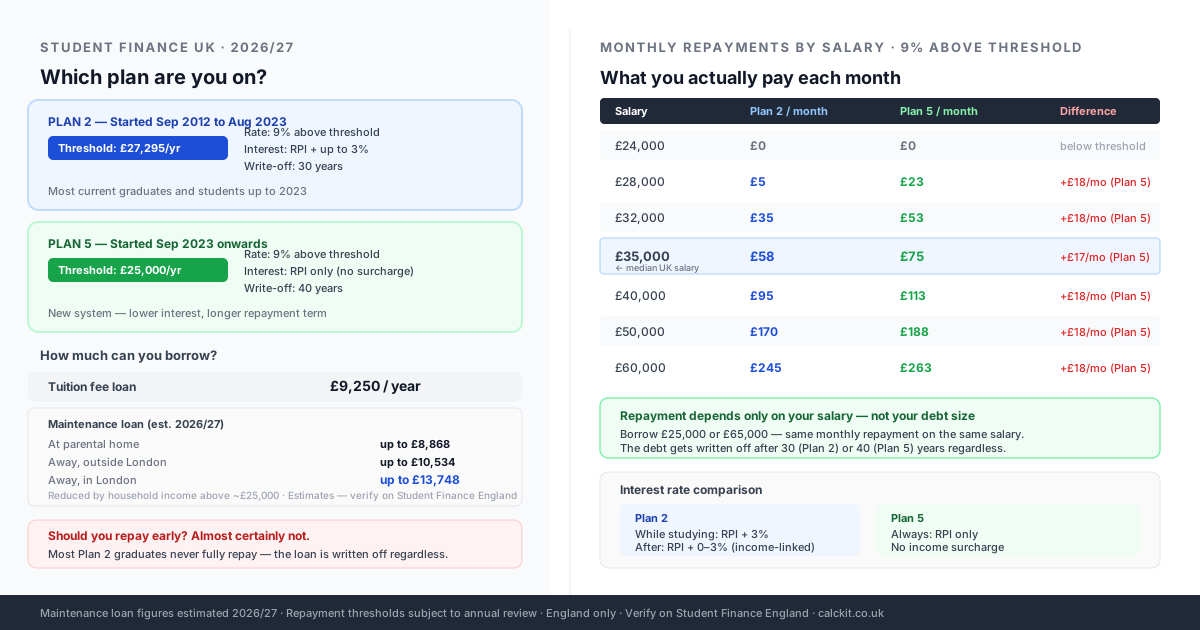
The tuition fee loan is £9,250 a year. The maintenance loan can reach £13,748 if you study in London. But the number most graduates care about — what you actually repay each month — depends almost entirely on one question: which repayment plan are you on?
That question also determines your write-off date, your interest rate, and whether making early repayments ever makes financial sense. This guide covers all of it for 2026/27.
💷Heads up: Maintenance loan amounts for 2026/27 are estimated from confirmed 2025/26 figures, uprated for inflation. Always verify on the Student Finance England website before applying.
Which student loan plan are you on?
In England, your plan is set by when you started your undergraduate course:
| Started | Plan | Threshold | Rate | Write-off |
|---|---|---|---|---|
| Before Sep 2012 | Plan 1 | £24,990/yr | 9% above | 25 years (or age 65) |
| Sep 2012 – Aug 2023 | Plan 2 | £27,295/yr | 9% above | 30 years |
| Sep 2023 onwards | Plan 5 | £25,000/yr | 9% above | 40 years |
| Scotland (most years) | Plan 4 | £31,395/yr | 9% above | 30 years |
| Postgraduate | Plan 3 | £21,000/yr | 6% above | 30 years |
The vast majority of current students and recent graduates are on Plan 2 or Plan 5. Everything below focuses on these two plans unless stated otherwise.
How much can you borrow in 2026/27?
Tuition fee loan
The maximum tuition fee loan is £9,250 per year for most English university courses — a cap in place since 2017. It goes directly to your university; you never see the money. If your course costs less (or you attend a provider with lower fees), the loan matches the actual fee.
Some accelerated degree courses (two-year degrees) attract a higher cap of £11,100 per year.
Maintenance loan (estimated 2026/27)
The maintenance loan covers living costs and goes directly to you, paid in three instalments. How much you get depends on where you live and study, and your household income.
Maximum maintenance loan by living situation (England, estimated 2026/27):
| Living situation | Maximum loan | Minimum loan |
|---|---|---|
| At parental home | ~£8,868/yr | ~£3,790/yr |
| Away from home, outside London | ~£10,534/yr | ~£4,651/yr |
| Away from home, in London | ~£13,748/yr | ~£6,002/yr |
| Studying overseas | ~£12,066/yr | ~£5,314/yr |
The maximum is paid when household income is below £25,000. Above £25,000, the loan tapers down to the minimum. Above around £70,000 household income, most students receive only the minimum.
Example: A student living away from home outside London, with household income of £45,000, would receive approximately £7,400 per year in 2026/27 — less than halfway to the maximum.
When do repayments start?
You start repaying in April after you finish or leave your course, and only once your income exceeds the repayment threshold.
Below the threshold — in any week or month where earnings fall short — you pay nothing. There is no penalty and no "missed payment". The threshold applies to your total annual income; PAYE deductions are calculated monthly.
If you are self-employed, you declare student loan repayments on your Self Assessment return.
How much do you repay each month?
The formula is simple: 9% of everything you earn above the threshold, per year.
It does not depend on the size of your debt. A graduate with £60,000 of debt and a £35,000 salary repays exactly the same monthly amount as one with £25,000 of debt on the same salary.
Plan 2 repayment examples (threshold ~£27,295)
| Annual salary | Above threshold | Annual repayment | Monthly repayment |
|---|---|---|---|
| £25,000 | £0 | £0 | £0 |
| £28,000 | £705 | £63 | £5 |
| £32,000 | £4,705 | £423 | £35 |
| £35,000 | £7,705 | £693 | £58 |
| £40,000 | £12,705 | £1,143 | £95 |
| £50,000 | £22,705 | £2,043 | £170 |
| £60,000 | £32,705 | £2,943 | £245 |
Plan 5 repayment examples (threshold £25,000)
| Annual salary | Above threshold | Annual repayment | Monthly repayment |
|---|---|---|---|
| £25,000 | £0 | £0 | £0 |
| £28,000 | £3,000 | £270 | £22.50 |
| £32,000 | £7,000 | £630 | £52.50 |
| £35,000 | £10,000 | £900 | £75 |
| £40,000 | £15,000 | £1,350 | £112.50 |
| £50,000 | £25,000 | £2,250 | £187.50 |
| £60,000 | £35,000 | £3,150 | £262.50 |
At the same salary, Plan 5 graduates repay more each month because the threshold is £2,295 lower. Over a 40-year repayment window (vs 30 years for Plan 2), Plan 5 graduates also repay for longer — though the lower interest rate partly offsets this.
🐷What interest rate applies?
Plan 2 interest
- While studying and until the April after graduation: RPI + 3%
- After graduation, income-related:
- Earning below £27,295: RPI only
- Earning £27,295–£49,130: RPI + up to 3% (scaled linearly)
- Earning above £49,130: RPI + 3%
In practice, Plan 2 interest can be materially higher than RPI for higher earners — the loan balance grows in real terms for many graduates during the early years of their career.
Plan 5 interest
- While studying and throughout the repayment term: RPI only (no additional percentage)
This is a significant difference. Plan 5 graduates never pay interest above inflation. The loan balance in real terms stays flat rather than growing, which is why the longer 40-year window is considered more manageable than it initially sounds.
When does your loan get written off?
| Plan | Written off |
|---|---|
| Plan 2 | 30 years after the April following your graduation |
| Plan 5 | 40 years after the April following your graduation |
| Plan 1 | 25 years after first repayment, or when you turn 65 |
| Plan 3 (postgraduate) | 30 years after the April following your graduation |
The write-off is complete and unconditional — the remaining balance disappears, with no tax consequence and no credit file impact.
Research from the Institute for Fiscal Studies suggests fewer than 20% of Plan 2 graduates will repay the full balance before write-off. The average graduate simply does not earn enough, for long enough, to clear a £40,000–£50,000+ debt in 30 years at 9% of income above £27,295. For most people, the loan functions less like a bank loan and more like a graduate tax that stops after 30 years.
Should you repay your student loan early?
For most graduates: no.
The argument for early repayment: you save on interest, particularly for Plan 2 where RPI + 3% applies while earning above £49,130.
The argument against, which applies to the majority:
- Write-off risk: If your loan is written off before you repay it in full, any extra payments you made are gone — you paid voluntarily for debt that would have disappeared anyway.
- Income risk: Repayments pause when income falls below the threshold. A voluntary lump sum does not pause; that money is spent.
- Opportunity cost: The interest rate on a student loan, even at RPI + 3%, is typically lower than the return on a stocks and shares ISA over a 30-year horizon — and far lower than the effective return on paying down high-interest credit card debt.
When early repayment might make sense: You are a high earner (consistently above £50,000), you are on Plan 2, you have a large loan balance, and you expect to earn well above the threshold for the next 30 years. In this scenario, the interest charges are real and the write-off is unlikely. Even then, run the numbers: the break-even point is often later than people expect.
Plan 5 early repayment is almost never worth it. With interest capped at RPI, the loan is not growing in real terms. The 40-year write-off window is generous. And the threshold of £25,000 means most graduates are repaying something meaningful throughout their career already.
Postgraduate loans
Postgraduate Master's loans (Plan 3) work differently:
- Maximum loan (2026/27, estimated): ~£12,167
- Repayment threshold: £21,000/year
- Rate: 6% of income above £21,000
- Interest: RPI + 3% throughout
- Write-off: 30 years after the April following graduation
Postgraduate Doctoral loans (for PhD and equivalent) have a separate, smaller maximum — around £28,673 in 2025/26.
If you have both an undergraduate and postgraduate loan, you repay both simultaneously: 9% on income above £27,295 (or Plan 5 threshold) for the undergraduate loan, plus 6% on income above £21,000 for the postgraduate loan.
Example at £35,000 salary (Plan 2 + postgraduate):
- Plan 2 undergraduate: 9% × (£35,000 − £27,295) = £693/year
- Plan 3 postgraduate: 6% × (£35,000 − £21,000) = £840/year
- Total: £1,533/year (£128/month)
Scotland, Wales and Northern Ireland
This guide covers England only. Student finance is devolved:
- Scotland: Scottish residents at Scottish universities pay no tuition fees (covered by SAAS). Repayment is on Plan 4 with a higher threshold of £31,395.
- Wales: Welsh students can receive a combination of grant and loan. Tuition fee support up to £9,250 regardless of where they study in the UK.
- Northern Ireland: Students at Northern Irish universities pay up to £4,710/year. Repayment is on Plan 1.
English students studying in Scotland, Wales, or Northern Ireland still pay their home nation's rate (i.e., English students pay up to £9,250 at Scottish universities).
The key takeaway
Student finance in the UK is not a loan in the conventional sense. The monthly repayment is fixed at 9% (or 6% for postgraduate) of income above a threshold — regardless of what you borrowed. The balance is written off after a fixed period. No payment is ever demanded faster than your income allows.
For most graduates, the optimal strategy is: repay what PAYE deducts, do not make voluntary overpayments, and treat the annual write-off date as your real loan term.
Use the take-home pay calculator to see exactly how student loan repayments affect your monthly take-home on your current or expected salary.