
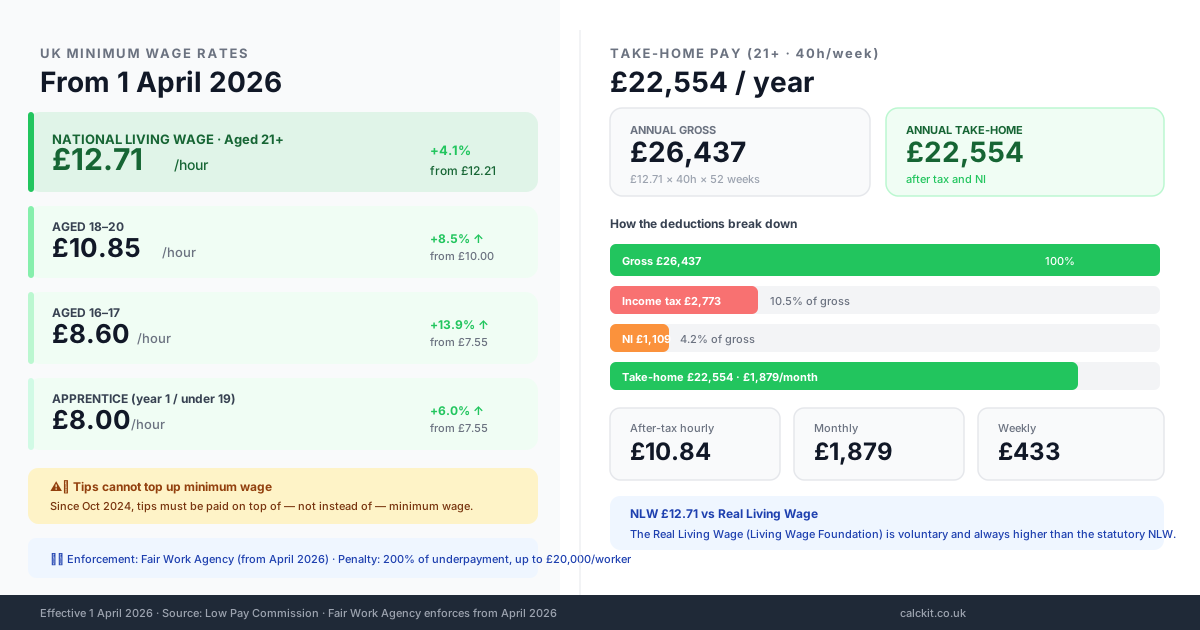
The National Living Wage rose to £12.71 per hour on 1 April 2026 — a 4.1% increase affecting around 2.7 million workers across the UK. Below is everything you need: every rate, what it means for take-home pay, and the rules employers must follow.
💷The 2026 minimum wage rates
All rates are effective from 1 April 2026, set by the government following Low Pay Commission recommendations.
| Worker category | Hourly rate | April 2025 rate | Increase |
|---|---|---|---|
| Aged 21 and over (NLW) | £12.71 | £12.21 | +£0.50 (+4.1%) |
| Aged 18–20 | £10.85 | £10.00 | +£0.85 (+8.5%) |
| Aged 16–17 | £8.00 | £7.55 | +£0.45 (+6.0%) |
| Apprentice | £8.00 | £7.55 | +£0.45 (+6.0%) |
The 18–20 rate rose the sharpest in percentage terms. The government has been deliberately narrowing the gap between youth rates and the adult rate over successive years.
What you actually take home
Gross pay is not what lands in your account. Here is what minimum wage workers take home after income tax and National Insurance in 2026/27, assuming the standard personal allowance of £12,570.
Aged 21+ on £12.71/hour:
| Hours per week | Annual gross | Annual take-home | Monthly take-home |
|---|---|---|---|
| 37.5h | £24,785 | £21,364 | £1,780 |
| 40h | £26,437 | £22,554 | £1,879 |
Aged 18–20 on £10.85/hour (37.5h/week):
| Annual gross | Annual take-home | Monthly take-home |
|---|---|---|
| £21,158 | £18,753 | £1,563 |
Use the take-home pay calculator to model your specific situation including student loan, pension contributions, or Scottish income tax.
National Minimum Wage vs National Living Wage vs Real Living Wage
Three rates, three very different things:
National Minimum Wage (NMW) is the legal minimum for workers under 21. It has tiered rates for 16–17 year olds and 18–20 year olds. Not paying it is illegal.
National Living Wage (NLW) is the legal minimum for workers aged 21 and over. Despite the name, it is a statutory rate set by the government — not based on what it actually costs to live. From April 2026: £12.71/hour.
Real Living Wage is a voluntary rate set by the Living Wage Foundation based on independent research into what workers actually need to cover the basics. It is always higher than the NLW, and employers choose to pay it — it is not a legal requirement. The London Living Wage is higher still to reflect the capital's costs.
If your employer advertises that they pay the "Living Wage", check which one they mean.
Who qualifies for minimum wage
You are entitled to at least the National Minimum Wage or National Living Wage if you are:
- A worker (employed or on a zero-hours contract)
- An agency worker or temp
- A casual or seasonal worker
- Working as part of a homeworking arrangement
You are not entitled to minimum wage if you are:
- Genuinely self-employed (running your own business, setting your own hours, providing your own equipment)
- A volunteer for a charity or voluntary organisation
- A company director with no employment contract
- Under 16
Employment status is frequently disputed. If you work regular hours for one employer, use their equipment, and cannot send a substitute — you may be a worker or employee even if you have been told you are self-employed. An employment tribunal can rule on this.
🕐If your employer has just raised your pay to meet the new minimum wage rate, use the pay rise calculator to see exactly how much extra you take home each month after income tax and National Insurance.
📈Tips cannot top up minimum wage
From 1 October 2024, tips, gratuities, and service charges must be paid to workers on top of their minimum wage — they cannot be used to bring pay up to the legal floor.
This change came from the Employment (Allocation of Tips) Act 2023. Employers in hospitality and retail who previously relied on tips to meet NMW obligations now risk enforcement action if they continue to do so.
Workers have the right to see their employer's written tips policy and request a statement of tips allocated to them.
The apprentice rate — the most common compliance trap
The apprentice rate of £8.00/hour is one of the most frequently misapplied rules in minimum wage law. It only applies in two situations:
- The apprentice is under 19, regardless of which year of the apprenticeship they are in
- The apprentice is 19 or over and is in the first year of their apprenticeship
From the second year onwards, an apprentice aged 19 or over must be paid at least the rate for their actual age. A 20-year-old in year two of their apprenticeship must receive at least £10.85/hour — not the £8.00 apprentice rate.
HMRC (now operating as Fair Work Agency officers) identifies the over-age apprentice error as the most common underpayment case in its annual enforcement round.
The Fair Work Agency
From 1 April 2026, the Fair Work Agency took over enforcement of the National Minimum Wage. HMRC officers continue to carry out enforcement work but now do so under the Fair Work Agency's authority.
The agency handles:
- NMW enforcement
- Statutory Sick Pay enforcement
- Holiday pay for vulnerable workers
- Employment agency standards
The enforcement process has not changed for workers or employers — HMRC officers continue the same investigation and enforcement functions. If you think you are being underpaid, you can report it to the Fair Work Agency online.
What employers face for underpayment
Underpaying minimum wage carries serious consequences:
- Arrears: full repayment of all underpaid wages to each worker
- Financial penalty: 200% of the total underpayment, subject to a minimum of £100 and a maximum of £20,000 per worker
- Public naming: the government publishes a list of employers found to have underpaid — this is reputationally damaging and automatic above certain thresholds
- Criminal prosecution: for the most serious or deliberate cases
The 6-year limitation period means underpayment claims can reach back six years of payroll history.
Year-on-year rate history
| Year | NLW (21+) | 18–20 | 16–17 | Apprentice |
|---|---|---|---|---|
| Apr 2023 | £10.42 | £7.49 | £5.28 | £5.28 |
| Apr 2024 | £11.44 | £8.60 | £6.40 | £6.40 |
| Apr 2025 | £12.21 | £10.00 | £7.55 | £7.55 |
| Apr 2026 | £12.71 | £10.85 | £8.00 | £8.00 |
The NLW has risen by 22% since April 2023. The 18–20 rate has risen 45% over the same period — the government's stated aim is to eventually align youth and adult minimum wage rates.
Frequently asked questions
What is the minimum wage in the UK in 2026?
From 1 April 2026, the National Living Wage for workers aged 21 and over is £12.71 per hour. Workers aged 18–20 receive £10.85 per hour, workers aged 16–17 receive £8.00 per hour, and apprentices earn £8.00 per hour.
When did the minimum wage increase in 2026?
The 2026 minimum wage increase took effect on 1 April 2026. The National Living Wage rose from £12.21 to £12.71 — a 4.1% increase. The 18–20 rate rose 8.5% from £10.00 to £10.85.
What is the difference between the National Living Wage and National Minimum Wage?
The National Living Wage (NLW) is the legal minimum for workers aged 21 and over. The National Minimum Wage (NMW) covers workers aged 16–20 and apprentices at lower age-tiered rates. Both are legal floors — not paying them is illegal. The Real Living Wage is a separate, higher voluntary rate set by the Living Wage Foundation.
What happens if my employer pays me less than minimum wage?
Report it to the Fair Work Agency. If confirmed, your employer must repay all arrears plus a penalty of 200% of the underpayment (up to £20,000 per worker). You cannot be dismissed for making a complaint.
Does minimum wage apply to self-employed workers?
No. It only covers workers and employees. However, if you have been wrongly classified as self-employed, you may be entitled to NMW and can challenge this at an employment tribunal.
Do tips count toward minimum wage in 2026?
No. Since October 2024, tips must be paid on top of minimum wage — they cannot be used to top wages up to the legal floor.
What is the apprentice minimum wage in 2026?
£8.00 per hour. It applies only to apprentices under 19, or apprentices aged 19-plus in their first year. After year one, apprentices 19 or over must be paid at least the rate for their age.
What is the Real Living Wage and how does it compare to the National Living Wage?
The Real Living Wage is a voluntary rate set by the Living Wage Foundation based on independent research into the actual cost of living. It is always higher than the statutory National Living Wage. Employers choose to pay it — it is not legally required.