
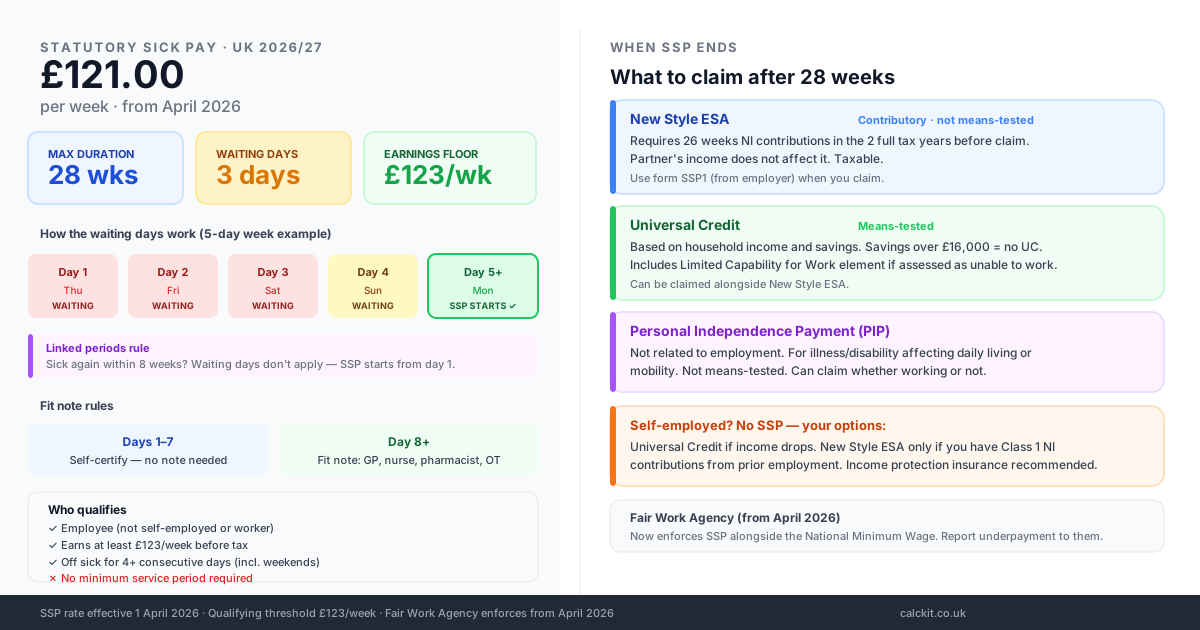
Statutory sick pay (SSP) is the minimum your employer must pay if you are too ill to work. From April 2026, SSP is £121.00 per week, and it can be paid for up to 28 weeks. Below is everything you need to know — whether you are an employee trying to understand your rights or an employer making sure you are paying correctly.
💷The 2026/27 SSP rate
| Detail | Figure |
|---|---|
| Weekly SSP rate | £121.00 |
| Daily rate (÷ qualifying days in your week) | £24.20 (5-day week) |
| Maximum duration | 28 weeks |
| Qualifying earnings threshold | £123/week (Lower Earnings Limit) |
| Waiting days (unpaid) | 3 days |
| SSP begins from | Day 4 of illness |
SSP is taxable income and subject to National Insurance in the same way as regular wages. It appears on your payslip and P60.
Who qualifies
You are entitled to SSP if all of the following apply:
- You are an employee — not self-employed, not a worker, not a company director without a service contract
- You earn at least £123 per week (the Lower Earnings Limit) — averaged across the 8 weeks before your illness
- You have been off sick for at least 4 consecutive days, including weekends and bank holidays
- You are sick due to illness (physical or mental health), not because of an elective procedure you arranged
There is no minimum length of service. You qualify for SSP from your first day in the job if your earnings meet the threshold and you have a genuine illness.
Who does not qualify
- Self-employed people
- Workers (including some gig economy workers and zero-hours workers who are not employees)
- Employees earning less than £123/week
- People who have already received 28 weeks of SSP in this period of illness
- People who are in legal custody
How the waiting days work
SSP begins on day 4 of your illness. Days 1, 2, and 3 are called waiting days — your employer does not have to pay SSP for them.
The days are counted consecutively, including non-working days. If you fall sick on a Thursday and your working week is Monday to Friday:
| Day | Day count | SSP? |
|---|---|---|
| Thursday (sick) | Day 1 | No — waiting day |
| Friday (sick) | Day 2 | No — waiting day |
| Saturday (sick, not a working day) | Day 3 | No — waiting day |
| Sunday (sick, not a working day) | Day 4 | No — waiting day |
| Monday (sick) | Day 5 | Yes — SSP starts |
Your employer can only pay SSP for days that are qualifying days — usually your contracted working days. SSP is not paid for weekends unless you work weekends.
Linked periods — when the waiting days disappear
If you fall ill again within 8 weeks of the end of a previous period of illness, the two periods are treated as linked. In a linked period, the waiting days do not apply again — SSP starts from day 1 of the second absence.
For example: you are off sick for two weeks, return to work, and fall ill again six weeks later. Because the gap is less than 8 weeks, the second absence links to the first and you receive SSP from the first day.
🏛Self-certification and fit notes
The first 7 days — self-certify
For any illness lasting 7 days or fewer, you self-certify. Your employer cannot require a fit note (doctor's note) for the first 7 days. Most employers have a self-certification form; if not, a written statement of your illness dates is sufficient.
From day 8 — fit note required
From the 8th calendar day of absence, you must provide a fit note. Since April 2022, fit notes can be issued by:
- GPs
- Hospital doctors
- Nurses
- Midwives
- Pharmacists
- Physiotherapists
- Occupational therapists
Your employer cannot insist on a GP note specifically — a fit note from any of these professionals is legally sufficient. If you cannot get an appointment quickly, explain this to your employer.
A fit note can say you are not fit for work or may be fit for work with adjustments (such as reduced hours, lighter duties, or working from home). The second option is not a requirement to return — it is an invitation to discuss whether adjustments are possible.
How long SSP lasts — and what happens next
SSP can be paid for up to 28 weeks in a single period of illness (or in linked periods that add up to 28 weeks). After that, your employer's obligation to pay SSP ends.
When SSP ends, your employer must give you form SSP1 within 7 days, explaining why SSP has stopped. You use this form to support a claim for other benefits.
What you can claim after SSP
New Style Employment and Support Allowance (ESA) A contributory benefit based on your National Insurance record. You need at least 26 weeks of NI contributions in the 2 full tax years before your claim. New Style ESA is not means-tested — your partner's income does not affect it — but it is taxable.
Universal Credit Means-tested and based on household income. If you or your partner have savings over £16,000, you receive nothing. UC can top up New Style ESA or stand alone if you do not qualify for ESA. UC includes a limited capability for work element if your health condition is assessed as limiting your ability to work.
Personal Independence Payment (PIP) For people whose illness or disability affects daily living or mobility. PIP is not related to employment — you can claim whether you are in work or not, and it is not affected by your income or savings. PIP is a separate assessment from work-related benefits.
Your employer's sick pay scheme
Your employer can pay more than SSP — this is called occupational sick pay or enhanced sick pay. They can offer full pay for a set period, then half pay, then SSP, depending on their policy.
Your employer cannot pay less than SSP. If their sick pay scheme would result in less than £121.00/week during qualifying sick days, they must make up the difference.
Check your employment contract or staff handbook for your employer's sick pay policy. Some employers offer nothing beyond the statutory minimum; others provide full pay for 3–6 months.
Self-employed and sick — what are your options?
SSP is not available to self-employed people. Your options if you cannot work due to illness:
Universal Credit: the main route. The limited capability for work element can increase your UC payment once an assessment confirms your condition limits your ability to work.
New Style ESA: only if you have sufficient NI contributions from employed work in the previous 2 tax years. Self-employed NI contributions (Class 2 and Class 4) do not qualify for New Style ESA — you need Class 1 (employed) contributions.
Building a sick pay fund: because you have no statutory entitlement, saving the equivalent of SSP in an emergency fund is the practical alternative. Some self-employed people also take out income protection insurance that pays out after a qualifying period of illness.
Fair Work Agency and SSP enforcement
From 1 April 2026, the Fair Work Agency (which took over National Minimum Wage enforcement from HMRC) also handles SSP enforcement. If your employer refuses to pay SSP you are entitled to, or pays less than the statutory rate, you can report them to the Fair Work Agency.
Your employer can also refer to HMRC's SSP checker if they believe you do not qualify. If they decide you do not qualify, they must give you a form SSP1 within 7 days of your request or your first qualifying day (whichever is later) so you can claim other benefits.
Frequently asked questions
How much is statutory sick pay in 2026?
SSP is £121.00 per week from April 2026. It is paid by your employer for up to 28 weeks. Tax and National Insurance are deducted in the usual way.
Who qualifies for statutory sick pay?
Employees earning at least £123/week who have been off sick for at least 4 consecutive days. Self-employed people and workers who are not employees do not qualify. There is no minimum service period.
What are the SSP waiting days?
The first 3 days of illness are unpaid waiting days. SSP begins from day 4. If you fall ill again within 8 weeks of a previous period, the periods link and waiting days are not reapplied.
How long can I get statutory sick pay?
Up to 28 weeks per period of illness. After that, claim New Style ESA, Universal Credit, or PIP depending on your NI record and circumstances.
Do I need a fit note to get SSP?
Not for the first 7 days — self-certification is sufficient. From day 8, you need a fit note, which can now be issued by GPs, nurses, pharmacists, physiotherapists, midwives, and occupational therapists.
Does SSP apply to self-employed people?
No. Only employees are entitled to SSP. Self-employed people may claim Universal Credit or, if they have sufficient Class 1 NI contributions from prior employment, New Style ESA.
What happens when SSP runs out after 28 weeks?
Your employer gives you form SSP1. You can then claim New Style ESA (if you have sufficient NI contributions), Universal Credit, or PIP. Some employers have enhanced sick pay that continues beyond SSP — check your contract.
Can an employer pay less than the SSP rate?
No. SSP is the legal minimum. Employers can pay more through an occupational sick pay scheme, but never less. The Fair Work Agency handles SSP underpayment complaints from April 2026.