
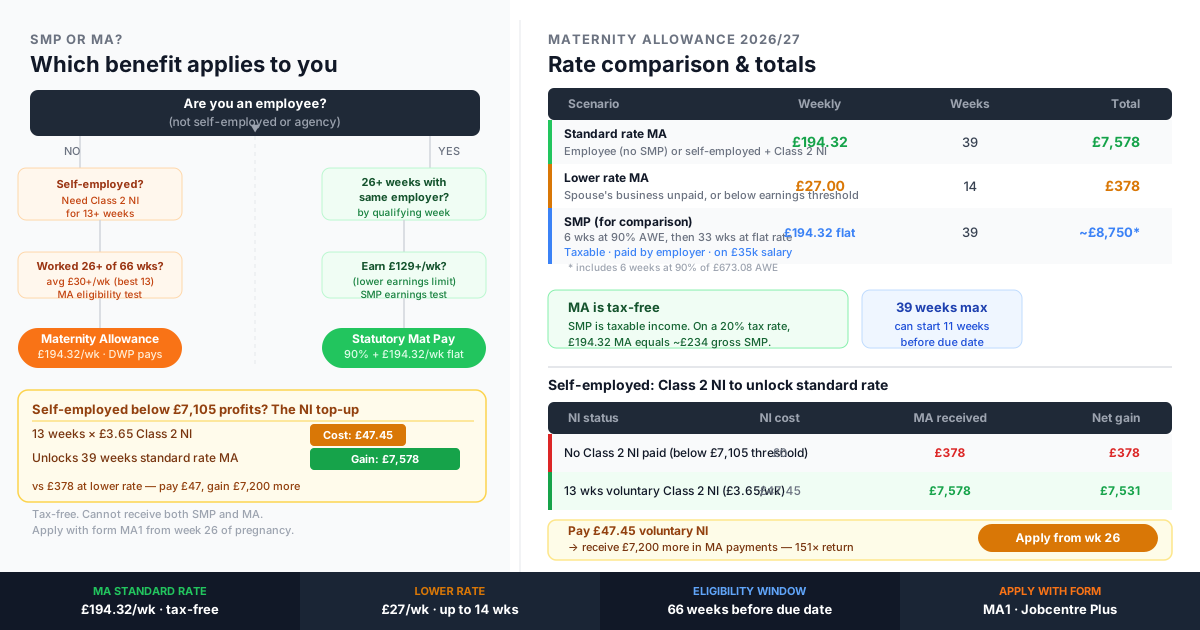
Maternity Allowance (MA) is the benefit most people have never heard of until they need it. If you're self-employed, recently changed jobs, or earn below the lower earnings limit, it may be the only maternity pay you can access — and the standard rate of £194.32 per week is worth knowing about.
This guide covers who qualifies, how the 66-week test works, and why self-employed workers in particular should check whether a small voluntary NI contribution could unlock thousands of pounds in payments.
🏛MA rates 2026/27
| Rate | Amount | Duration |
|---|---|---|
| Standard rate | £194.32/week | Up to 39 weeks |
| Lower rate | £27/week | Up to 14 weeks |
The standard rate is the same as the statutory flat rate for Statutory Maternity Pay (SMP) — but MA is not taxable, so your take-home from MA is higher than an equivalent nominal SMP payment.
Total MA at standard rate: £7,578.48 over 39 weeks.
MA is paid by the DWP, not your employer. It can start as early as 11 weeks before your baby's due date.
Who qualifies for MA?
You qualify for standard-rate MA (£194.32/week) if:
- You have been employed or self-employed in at least 26 of the 66 weeks before your due date
- Your average weekly earnings from your best 13 of those weeks are at least £30
This covers four groups:
- Employees who don't qualify for SMP — because you haven't worked for your employer for 26 continuous weeks, or earn below the lower earnings limit of £129/week
- Self-employed workers with Class 2 NI contributions (see below)
- Recently employed workers who left a job during pregnancy
- Agency and casual workers who have enough weeks of work in the test period
You qualify for the lower rate (£27/week) if you worked unpaid for a spouse or civil partner's business, or if your earnings don't meet the £30/week average threshold.
The 66-week test explained
The 66-week test looks backwards from the week your baby is due.
- Count back 66 weeks from your expected week of childbirth (EWC)
- You need 26 weeks of employment or self-employment in that window
- The 26 weeks don't need to be consecutive — a mixture of jobs, gaps, and self-employment all count
- Your MA rate is calculated from the average of your best 13 weeks of earnings from those 66 weeks
The "best 13 weeks" rule is important for anyone whose earnings fluctuate. If you had three busy months and six quiet months, DWP uses the high weeks. The 13 chosen weeks don't need to be consecutive.
Example: A freelancer works 10 high-rate weeks at £800/week and 16 slower weeks at £200/week during the 66-week period. DWP picks the best 13, all at £800 — average £800/week. MA pays the statutory cap of £194.32/week (the standard rate is not 90% of earnings for MA — it's a flat rate, unlike SMP weeks 1–6).
SMP or MA: which applies to you?
The two benefits are mutually exclusive — you can't receive both for the same pregnancy.
You'll get SMP if:
- You are an employee
- You have worked for the same employer continuously for 26 weeks by the qualifying week (15th week before due date)
- Your average weekly earnings are at least £129 (the lower earnings limit)
You'll get MA if:
- You're self-employed
- You're an employee but don't meet SMP's continuous-service or earnings tests
- You recently left a job or changed employers during pregnancy
- You're an agency worker or have multiple part-time jobs without a qualifying employer
If you qualify for SMP, your employer pays it. They cannot choose to pay MA instead — if you meet SMP criteria, SMP is what you receive (even if your employer's enhanced package is better than MA, SMP is the statutory floor they must pay).
If your employer says you don't qualify for SMP, they must give you a completed SMP1 form. Keep it — you'll need it when you apply for MA.
💷Self-employed workers: the Class 2 NI top-up
This is the angle most guides miss.
Self-employed workers pay Class 2 National Insurance to build entitlement to contributory benefits, including MA. For 2026/27, Class 2 NI is £3.65 per week.
You automatically pay Class 2 NI if your self-employed profits exceed the Small Profits Threshold of £7,105 for 2026/27 (roughly £136.63/week). If your profits are below that, you're exempt from mandatory Class 2 NI — but you can still pay it voluntarily.
The calculation:
| Lower rate MA | Standard rate MA | |
|---|---|---|
| Requirement | — | 13 weeks of Class 2 NI |
| Voluntary NI cost | — | 13 × £3.65 = £47.45 |
| MA received | 14 wks × £27 = £378 | 39 wks × £194.32 = £7,578 |
| Difference | — | +£7,200 |
Paying £47.45 in voluntary Class 2 NI contributions can unlock an additional £7,200 in MA payments. That's a 151× return on the NI spend.
Who this applies to: self-employed workers whose profits have been below £7,105 during the 66-week test period. You need to have been self-employed (even at low profits) for at least 26 of those 66 weeks, and you need Class 2 NI contributions covering at least 13 of those weeks.
How to pay: You can pay voluntary Class 2 NI via your Self Assessment return, or by contacting HMRC directly. If your baby is due soon, contact HMRC as early as possible — you cannot pay NI contributions retrospectively for weeks that have already passed.
How to apply
- Download form MA1 from GOV.UK (search "MA1 maternity allowance")
- Gather your documents:
- MATB1 certificate from your midwife or GP (given around week 20)
- Payslips, accounts, or bank statements covering your best 13 weeks
- SMP1 form from your employer (if they refused SMP)
- Post to your local Jobcentre Plus — the address is on the MA1 form
- Earliest you can apply: week 26 of pregnancy
- MA can start: from 11 weeks before your due date, or from the week after you give birth if earlier
DWP usually decides within 24 working days. You'll receive a decision letter stating your rate and start date.
Self-employed: your evidence of Class 2 NI contributions is your HMRC record. If you've recently paid voluntary contributions, allow time for them to appear on your NI record before applying.
MA and Universal Credit
Maternity Allowance reduces your Universal Credit award pound-for-pound — it's treated as unearned income.
If you receive £194.32/week in MA and were previously receiving UC, your UC will decrease by the same amount. However:
- The child element of UC is unaffected by MA
- The work allowance (if you have housing costs or a child/disability element) means the first £344–£573/month of income doesn't reduce UC at all — but MA typically exceeds this
- If you're receiving MA and UC simultaneously, you must report MA as income in your UC online journal
Example: You receive UC of £1,000/month. MA pays £194.32/week (£842/month). Your UC drops by £842 to £158/month. Total income: £1,000 — the same as before. MA doesn't top up UC in this scenario; it replaces it.
If your original UC included a housing cost element and you have no earned income work allowance, you lose UC pound-for-pound from the first pound of MA.
KIT days and MA
MA recipients can work up to 10 Keeping in Touch (KIT) days during their maternity leave without losing their MA for that week. Unlike SMP, where KIT days are governed by your employer, MA KIT days are any paid work you choose to do.
Working a KIT day does not cancel your MA payment for that week — but you must inform DWP if you do any paid work while receiving MA.
What MA doesn't cover
MA is not the same as SMP-enhanced pay. Most employers who offer enhanced maternity pay (say, 3 months at full salary) only top up SMP — they don't top up MA. If you're self-employed or on MA, you receive the statutory rate and nothing more unless your client or agency has a specific arrangement.
MA also does not give you the right to return to a specific job. Employment protections during maternity leave apply to employees only — self-employed workers have no statutory job-return rights.
Frequently asked questions
How much is Maternity Allowance in 2026/27?
The standard rate is £194.32 per week for up to 39 weeks, paid by DWP. The lower rate is £27 per week for up to 14 weeks. Both are tax-free.
Who qualifies for Maternity Allowance?
Anyone who has been employed or self-employed for at least 26 of the 66 weeks before their due date, with average weekly earnings of at least £30 from their best 13 weeks. This includes self-employed workers, employees who don't meet SMP rules, agency workers, and recently employed people.
How do I apply for Maternity Allowance?
Download form MA1 from GOV.UK, attach your MATB1 certificate and payslips (or accounts), and post to your local Jobcentre Plus. You can apply from week 26 of pregnancy. If your employer refused SMP, include their SMP1 form.
Is Maternity Allowance taxable?
No. MA is not subject to income tax or National Insurance. This makes it slightly more valuable in take-home terms than a nominally equivalent taxable payment.
Can self-employed workers claim Maternity Allowance?
Yes — self-employed workers with Class 2 NI contributions covering at least 13 weeks in the 66-week test period qualify for standard-rate MA. If your profits are below the Small Profits Threshold of £7,105, you can pay voluntary Class 2 NI at £3.65/week to qualify.
How does the 66-week test work for Maternity Allowance?
DWP counts back 66 weeks from your expected week of childbirth and checks how many of those weeks you were employed or self-employed. You need 26 qualifying weeks. Your rate is then based on the average of your best 13 weeks of earnings from that period.
What is the lower rate of Maternity Allowance?
£27 per week for up to 14 weeks. It applies to people who worked unpaid for a spouse or civil partner's business, or whose earnings don't meet the £30/week average threshold.
Does Maternity Allowance affect Universal Credit?
Yes — MA counts as unearned income and reduces UC pound-for-pound. The child element of UC is not affected. Report MA payments to DWP via your UC online journal.