
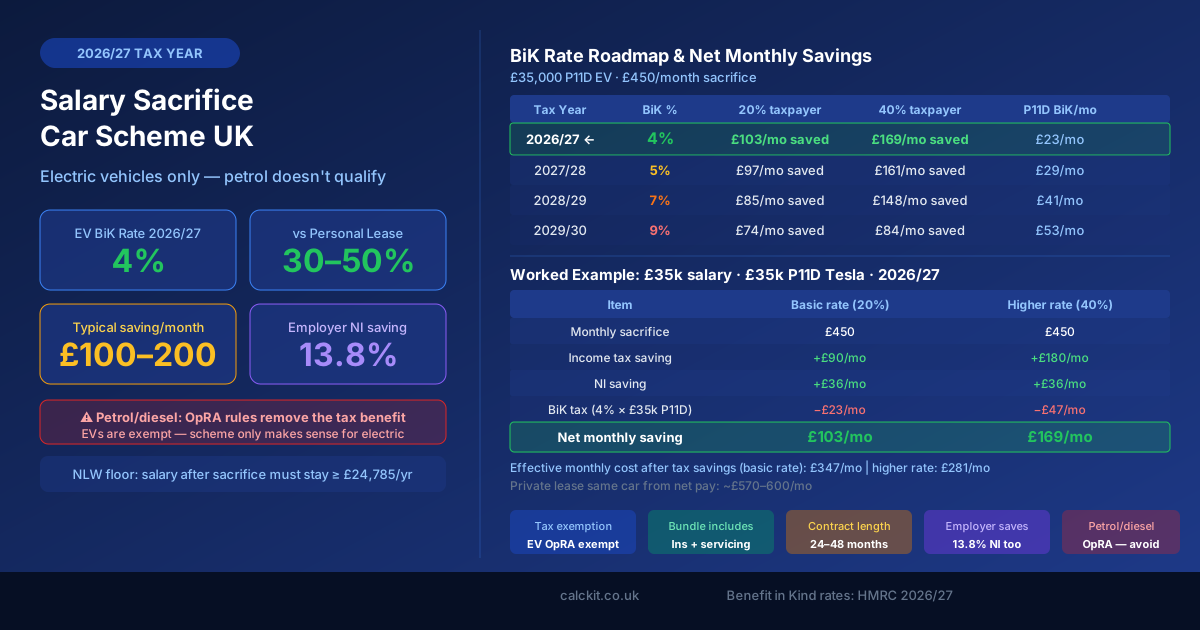
A £35,000 electric car costs a higher-rate taxpayer roughly £340 a month through a salary sacrifice scheme. A private lease on the same car typically runs £550–600 a month. That £200 gap is not a special deal — it is what happens when three tax savings stack on top of each other, and it is available to most UK employees whose employer offers the scheme.
This guide explains exactly how those savings work, what they look like across different salary levels, the full trajectory of BiK rates through 2029/30, and the honest answer to whether the scheme is still worth it once the rates start climbing.
🚗What is a salary sacrifice car scheme?
A salary sacrifice car scheme is an arrangement where your employer leases a car on your behalf and you pay for it by accepting a lower gross salary. Like all salary sacrifice schemes, the sacrifice is taken from your gross pay before income tax and National Insurance are calculated. Because you are giving up salary before it is taxed, you pay income tax and National Insurance on a smaller number. You are then taxed on the car as a Benefit in Kind (BiK) — but in the case of electric vehicles, the BiK rate is just 4% of the car's P11D value in 2026/27, making the net cost far lower than leasing privately from net pay.
The car is in your employer's name, not yours. Insurance, servicing, and maintenance are typically bundled into the monthly lease payment. At the end of the contract (usually 24–48 months), you hand the car back.
How the process works: step by step
-
Your employer signs up with a salary sacrifice provider (such as Octopus EV, Tusker, loveelectric, or The Electric Car Scheme). Small employers can set this up in a few weeks; most providers handle the leasing and admin.
-
You choose a car from the approved list. Most schemes offer a wide range of EVs. The monthly lease cost (insurance, servicing, and charging cable typically included) is quoted to you.
-
You and your employer sign a salary sacrifice agreement — a formal variation to your employment contract. Your contractual gross salary drops by the monthly lease amount.
-
Your payslip reflects the reduced gross salary. Income tax and National Insurance are calculated on the lower figure. At the end of the tax year, HMRC is notified of the BiK value via a P11D (or payrolled BiK) form.
-
You pay BiK tax on the car. This is collected via an adjusted tax code — HMRC reduces your personal allowance by the BiK value so the tax comes out of your salary automatically.
-
At the end of the lease term, the car is returned. You can either start a new scheme with a different car or return to your previous salary.
The three tax savings explained
Every salary sacrifice car saving comes from the same three-part formula:
1. Income tax saving Sacrificing £5,000 a year in salary reduces your taxable income by £5,000. A basic rate taxpayer saves £1,000 a year (£5,000 × 20%). A higher rate taxpayer saves £2,000 (£5,000 × 40%).
2. National Insurance saving The NI saving depends on where your salary sits. Between £12,570 and £50,270, employee NI is 8% — so sacrificing £5,000 saves £400 in NI. Above £50,270 the NI rate drops to 2%, saving only £100 on the same £5,000.
3. BiK tax (the offset) You pay Benefit in Kind tax on the car itself. For 2026/27, the BiK rate for fully electric cars is 4% of the P11D value. On a car with a P11D value of £35,000, the annual BiK is £35,000 × 4% = £1,400. A basic rate taxpayer pays 20% of £1,400 = £280 a year (£23/month). A higher rate taxpayer pays £560 a year (£47/month).
The net saving = income tax saving + NI saving − BiK tax.
The P11D value vs the monthly lease cost — a common confusion
Many people confuse the P11D value with the monthly lease cost. They are not the same thing.
P11D value is the manufacturer's list price of the car (including optional extras and VAT), as used by HMRC to calculate BiK tax. A Tesla Model Y Long Range has a P11D value of roughly £53,000, regardless of what a salary sacrifice scheme charges you per month for it.
Monthly lease cost is what your employer pays the leasing company — and therefore the amount by which your salary is reduced. It is a function of the car's depreciation, a finance charge, and the bundle of included services.
BiK tax is calculated on P11D value, not the lease cost. This distinction matters because a car with a low P11D but a high lease cost (because of a premium insurance add-on, for example) still has a low BiK charge.
BiK rates: 2026/27 and the full roadmap
The Government has published EV BiK rates through 2029/30. Here is the full trajectory:
| Tax year | Electric car BiK rate | Example: £35k P11D (basic rate tax) | Example: £35k P11D (higher rate tax) |
|---|---|---|---|
| 2025/26 | 3% | £210/yr (£18/mo) | £420/yr (£35/mo) |
| 2026/27 | 4% | £280/yr (£23/mo) | £560/yr (£47/mo) |
| 2027/28 | 5% | £350/yr (£29/mo) | £700/yr (£58/mo) |
| 2028/29 | 7% | £490/yr (£41/mo) | £980/yr (£82/mo) |
| 2029/30 | 9% | £630/yr (£53/mo) | £1,260/yr (£105/mo) |
Even at 9% in 2029/30, the BiK charge on a £35,000 EV is £105/month for a higher rate taxpayer. The income tax and NI savings on a typical £500/month sacrifice would still outweigh this comfortably. Compare this to a petrol car at 26–37% BiK — the scheme only makes sense for EVs. For a full breakdown of how company car tax works on non-sacrifice arrangements, see the company car tax guide.
How much will you save? Salary band comparison
The table below shows the net monthly saving for a typical £35,000 P11D electric car with a monthly lease cost of £450 (the sacrifice amount), compared to leasing the same car personally from net pay at £450/month:
| Annual salary | Tax band | Monthly sacrifice | IT saving | NI saving | BiK cost | Net monthly saving |
|---|---|---|---|---|---|---|
| £25,000 | Basic (20%) | £450 | £90 | £36 | £23 | £103 |
| £35,000 | Basic (20%) | £450 | £90 | £36 | £23 | £103 |
| £50,000 | Higher (40%) | £450 | £180 | £36 | £47 | £169 |
| £60,000 | Higher (40%) | £450 | £180 | £9 | £47 | £142 |
| £80,000 | Higher (40%) | £450 | £180 | £9 | £47 | £142 |
| £100,000+ | Additional (45%) | £450 | £203 | £9 | £52 | £160 |
Notes: NI saving at 8% rate up to £50,270, then 2% above. BiK figures based on £35,000 P11D at 4% rate (2026/27), basic rate taxpayer pays 20%, higher rate pays 40%, additional rate 45%.
The £100,000+ figure also avoids the personal allowance taper (where income between £100k–£125k is effectively taxed at 60%) because reducing gross salary via sacrifice can bring adjusted net income below £100,000. For very high earners, this additional benefit can be worth more than the headline IT and NI savings combined.
Salary sacrifice vs personal lease vs company car allowance
| Salary sacrifice (EV) | Personal lease | Car allowance | |
|---|---|---|---|
| Tax on benefit | 4% BiK on P11D | None (you pay from net pay) | Allowance taxed as salary |
| Income tax saving | Yes — sacrifice is pre-tax | No | No |
| NI saving | Yes — on sacrifice amount | No | 8%/2% paid on allowance |
| Insurance included | Usually yes | No | No |
| Servicing included | Usually yes | No | No |
| Early termination risk | Employer liability, usually | You pay | N/A |
| Affects mortgage? | Yes (lower declared salary) | No | Allowance counted as income |
| Best for | Employee in scheme with employer | Self-employed / no scheme | Flexibility seekers |
The OpRA rules: why EVs are different from petrol and diesel
In 2017, HMRC introduced Optional Remuneration Arrangement (OpRA) rules to prevent salary sacrifice from being used as a tax dodge on high-value benefits.
Under OpRA, most benefits provided through salary sacrifice are taxed on whichever is higher: the sacrifice amount or the standard BiK value. For a petrol car with a 30% BiK rate, the standard BiK is typically higher than the sacrifice — so you end up paying full BiK tax anyway, eliminating most of the scheme's advantage.
Electric vehicles are exempt from OpRA. The government explicitly excluded EVs when OpRA was introduced, on the basis that encouraging EV adoption is a policy objective. This means:
- EV salary sacrifice is still taxed on the standard (low) BiK rate of 4%
- Petrol and diesel salary sacrifice is taxed on whichever is higher (sacrifice value or 30%+ BiK) — making it almost always a bad deal
- Hybrid cars with a ULEV threshold below 75g CO2/km can still access reduced BiK rates, but the rates are not as advantageous as full EVs
If you are considering a plug-in hybrid, check the CO2 emissions carefully. PHEVs with low official CO2 figures can still qualify for reduced BiK rates, though not the 4% rate.
Eligibility: who can use the scheme?
You must meet all of the following:
- You are an employee (not self-employed, a director with no PAYE, or a contractor through a personal service company)
- Your employer offers the scheme — the employer sets up the lease arrangement with a provider. You cannot set this up yourself
- Your salary after sacrifice stays above the National Living Wage — £12.71/hour from April 2026, approximately £24,785/year on a full 37.5-hour week. This is a legal requirement, not a guideline
Practically, most schemes require a minimum annual salary of around £20,000–£25,000 before sacrifice to ensure the NLW floor is not breached after deduction.
The minimum wage floor in practice
For a worker earning £28,000 a year, a £450/month (£5,400/year) sacrifice would bring their contractual salary to £22,600 — below the NLW floor of £24,785. Their employer would have to refuse this arrangement or offer a smaller sacrifice.
| Annual salary before | Monthly sacrifice | Annual sacrifice | Salary after | Above NLW floor? |
|---|---|---|---|---|
| £30,000 | £300/mo | £3,600 | £26,400 | ✅ Yes |
| £28,000 | £450/mo | £5,400 | £22,600 | ❌ No |
| £30,000 | £450/mo | £5,400 | £24,600 | ❌ Borderline |
| £35,000 | £450/mo | £5,400 | £29,600 | ✅ Yes |
If you earn below £30,000 and want an EV through salary sacrifice, look for cars with a lower monthly lease cost — smaller EVs (Vauxhall Corsa Electric, MG4) typically come in at £250–£350/month.
Impact on mortgage, SMP, and pension
Mortgage affordability
Mortgage lenders assess affordability based on the gross salary shown on your payslip or P60 — which is the reduced figure after sacrifice. Some lenders will accept a letter from your employer confirming your pre-sacrifice salary, but many will not. If you plan to apply for a mortgage within 12 months, speak to a broker before committing to a sacrifice arrangement.
Statutory Maternity Pay and Shared Parental Pay
SMP is calculated as 90% of your Average Weekly Earnings in the 8 weeks before your qualifying week. Those earnings are your post-sacrifice gross salary. A salary sacrifice that reduces your gross from £35,000 to £29,600 reduces your Phase 1 SMP rate from £605/week to £510/week — a difference of £570 over 6 weeks. If you are expecting to start a family, consider the SMP impact carefully. See Statutory Maternity Pay 2026/27 for the full calculation.
Pension contributions
If your pension scheme calculates contributions or final-salary benefits on your contractual salary, a sacrifice arrangement reduces both your contributions and the pension you build up. Most defined contribution schemes are unaffected because the pound amount you save does not change — your employer's percentage contribution just applies to a lower base. Check your scheme's rules before signing.
The employer National Insurance angle
An often-overlooked fact: employers also save National Insurance on the sacrifice amount. Employer NIC is 13.8% on earnings above £9,100/year. On a £450/month (£5,400/year) sacrifice, the employer saves £5,400 × 13.8% = £745/year per employee.
This is why employers are motivated to offer salary sacrifice car schemes even when they have to set up and administer them. Some employers pass a portion of this saving back to employees — either as an enhanced lease option or as a contribution toward the monthly cost. It is worth asking your HR department whether any employer NI saving is factored into the scheme.
🏛What happens if you leave your job?
The car is leased in your employer's name. If you resign, are made redundant, or are dismissed:
- Your employer ends the lease arrangement
- Early termination charges typically apply — often 3–6 months of remaining payments
- Most schemes place the liability for early termination with the employee if you resign, but with the employer in the case of redundancy
- Some providers (notably The Electric Car Scheme and Octopus EV) offer protection packages covering early termination due to redundancy, serious illness, or death
Before signing, read the early termination clause carefully. A 3-year lease where you resign after 6 months could trigger charges of 30 months × lease rate — potentially £10,000–£15,000 on a premium EV.
Is salary sacrifice car still worth it in 2028/29 and 2029/30?
At 9% BiK in 2029/30, a higher-rate taxpayer on a £35,000 P11D car pays £1,260/year (£105/month) in BiK tax. Assuming the same car has a monthly sacrifice of £450:
- Higher rate income tax saving: £450 × 40% × 12 = £2,160/year
- NI saving (above £50k): £450 × 2% × 12 = £108/year
- BiK tax: £1,260/year
- Net annual saving: £1,008/year (£84/month)
Compared to a basic rate taxpayer (2029/30):
- IT saving: £450 × 20% × 12 = £1,080/year
- NI saving: £450 × 8% × 12 = £432/year
- BiK tax: £630/year
- Net annual saving: £882/year (£74/month)
The scheme remains financially positive at 9% BiK for both tax bands, assuming comparable cars are still available at current lease rates. The scheme becomes less advantageous as the BiK rate rises, but it does not turn negative unless lease costs fall significantly or the BiK exemption for EVs is removed entirely.
The key risk to watch: if the government withdraws the OpRA exemption for EVs after 2029/30, the tax calculation would shift to the higher of the sacrifice value or BiK — which could negate most of the saving. This has not been announced, but it remains a policy risk worth monitoring.
How to set up the scheme
You cannot arrange a salary sacrifice car scheme yourself. It must be set up by your employer. If your employer does not currently offer one:
- Make the case to HR or finance. Employers save 13.8% employer NI on every sacrifice. For 10 employees sacrificing £5,400/year, that is £7,450 in employer NI savings — often enough to cover the admin cost of running the scheme.
- Suggest a provider. Octopus EV, Tusker, and loveelectric are well-established options with employer setup support. The Electric Car Scheme offers a white-glove setup service for smaller employers.
- Allow 4–8 weeks for setup. Contract changes, FCA compliance checks for employers, and provider due diligence all take time.
Once the scheme is running, employees can typically browse and order cars directly via the provider's portal.
The bottom line
A salary sacrifice car scheme is one of the most tax-efficient benefits available to UK employees in 2026/27, specifically because EVs are exempt from the OpRA rules that neutered most other car-based salary sacrifice arrangements. The savings are real — typically £100–£200/month compared to private leasing — and they apply to both income tax and National Insurance.
The scheme is not for everyone. Lower earners near the minimum wage floor may not be able to sacrifice enough to get a desirable car. Anyone planning a mortgage application should understand the affordability impact. And the long-term value depends on the BiK rate trajectory and whether the OpRA exemption for EVs survives intact.
Use the calculator to run your own numbers with your actual salary, the car you are considering, and its P11D value.
🚗Last updated September 2026. Benefit in Kind rates from HMRC's published BiK rate table. National Living Wage from GOV.UK April 2026. Mortgage and SMP impacts are general guidance only — consult a qualified mortgage broker or financial adviser for personal advice.