
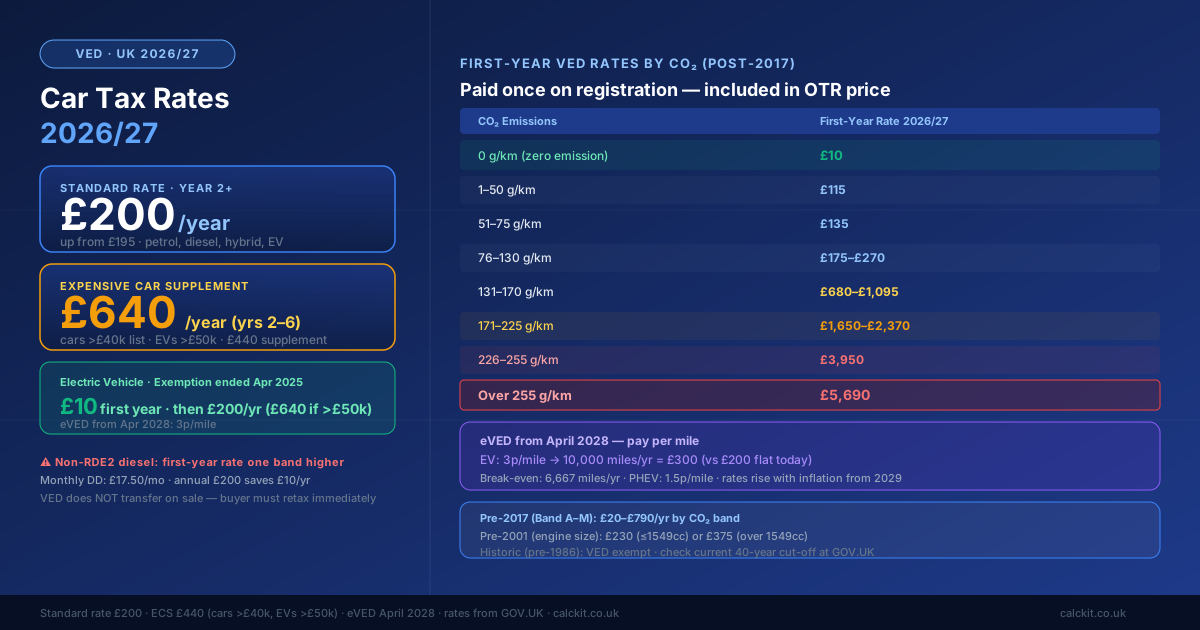
The standard rate for UK car tax (Vehicle Excise Duty) rose to £200 per year from 1 April 2026 — up from £195. That is the headline figure, and it is what most guides lead with.
But the rate you actually pay depends on when your car was registered, how much it cost, and its CO2 emissions. A new petrol car emitting 180g/km CO2 pays £1,650 in its first year. A diesel that fails the RDE2 test pays one band more. An electric car over £50,000 pays £640/year for five years. And from April 2028, EV drivers face a pay-per-mile system that could cost more than the flat rate they pay today.
This guide covers every rate for 2026/27, the three things most VED guides miss, and what to do if you are choosing a car now.
🏛Which VED scheme applies to your car?
Your car runs in one of three different VED schemes for its entire life — the scheme does not change when you sell or buy the vehicle:
| Registration date | Scheme | Rate type |
|---|---|---|
| After 1 April 2017 | Post-2017 scheme | First-year rate by CO2, then flat standard rate |
| 1 March 2001 – 31 March 2017 | Band scheme (A–M) | Annual rate by CO2 band |
| Before 1 March 2001 | Engine-size scheme | Annual rate by engine displacement |
| Before 1986 (approx.) | Historic vehicle | Exempt |
The scheme a car entered when it was first registered is the one it stays in permanently.
Post-2017 cars: first-year rates 2026/27
The first-year rate — sometimes called showroom tax — is paid once when the car is first registered, usually included in the on-the-road price at the dealership. It is based on CO2 emissions and is significantly higher for polluting vehicles.
| CO2 emissions (g/km) | First-year rate 2026/27 |
|---|---|
| 0 (zero emission) | £10 |
| 1–50 | £115 |
| 51–75 | £135 |
| 76–90 | £175 |
| 91–100 | £195 |
| 101–110 | £220 |
| 111–130 | £270 |
| 131–150 | £680 |
| 151–170 | £1,095 |
| 171–190 | £1,650 |
| 191–225 | £2,370 |
| 226–255 | £3,950 |
| Over 255 | £5,690 |
Source: DVLA / GOV.UK. Rates effective 1 April 2026.
Non-RDE2 diesel surcharge: Diesel cars that do not meet the Real Driving Emissions 2 (RDE2) standard pay a first-year rate one CO2 band higher than the equivalent petrol car. See the section below for what this means in practice.
Important: The first-year rate is almost always paid at the dealership as part of the on-the-road price — it is not a separate invoice you receive later. When comparing new car prices, check whether the quoted price includes first-year VED.
Post-2017 cars: standard rate from year 2 onwards
From the second year of registration, all post-2017 petrol, diesel, hybrid, and electric cars move to the same flat rate regardless of CO2 emissions:
£200 per year (up from £195 in 2025/26)
This means a new car emitting 5g/km CO2 and one emitting 150g/km CO2 pay exactly the same annual rate from year two.
The Expensive Car Supplement
Cars with an original list price above £40,000 pay an additional £440 per year on top of the standard rate, from the second year of registration through to the sixth year — five payments in total.
| Year | Standard rate | ECS | Total annual VED |
|---|---|---|---|
| Year 1 | First-year rate (by CO2) | Not applicable | See table above |
| Years 2–6 | £200 | £440 | £640 |
| Year 7+ | £200 | — | £200 |
Total ECS cost over 5 years: £2,200.
Electric vehicles: The ECS threshold for EVs is £50,000 — more generous than the £40,000 threshold for petrol and diesel. An EV with a list price between £40,001 and £50,000 does not pay the supplement.
What counts as list price? The original manufacturer's recommended retail price (MRRP) when the car was new — not the price you paid, not the current market value. A car originally listed at £42,000 that you bought secondhand for £25,000 still pays the ECS during years 2–6.
The ECS exit strategy
Choosing a car with a list price of £39,999 instead of £40,001 saves £2,200 in ECS over five years. When comparing similar cars near the £40,000 threshold, the VED saving alone can justify a lower-spec trim.
For electric cars at or near the £50,000 threshold, the same logic applies: a spec upgrade that pushes list price above £50,000 adds £2,200 in future VED.
The non-RDE2 diesel surcharge — what most guides don't explain
RDE2 (Real Driving Emissions 2) is an emissions test introduced for diesel cars from April 2018. It measures real-world NOx emissions (not just lab-based figures) and is significantly harder to pass than the earlier RDE standard.
Diesel cars that do not pass RDE2 are taxed one CO2 band higher in their first year only. From year two, they pay the same £200 flat rate as everything else.
What this means in practice:
| Car | CO2 | Actual band | Tax if RDE2 fails |
|---|---|---|---|
| Diesel, 120g/km | 120g/km | Band 111–130 (£270) | Taxed as 131–150: £680 |
| Diesel, 160g/km | 160g/km | Band 151–170 (£1,095) | Taxed as 171–190: £1,650 |
| Diesel, 200g/km | 200g/km | Band 191–225 (£2,370) | Taxed as 226–255: £3,950 |
A single-band jump at 160g/km costs an extra £555 in first-year VED.
Which diesels fail RDE2?
- Most new diesels sold from 2021 onwards meet RDE2
- Euro 6 diesels registered between 2018 and 2021 may or may not meet RDE2 — check the manufacturer or look for 'RDE2 compliant' in the spec sheet
- Euro 5 diesels (pre-2018) do not meet RDE2 but were registered before the surcharge was introduced — the surcharge only applies when paying first-year VED on a new car, not when retaxing a used one
When buying a used diesel registered between 2018 and 2021, this is not directly relevant to you (you pay the flat £200 standard rate). But when buying a new diesel or one that will be re-registered, confirm RDE2 status before agreeing a price.
Electric vehicles and the end of the exemption
From 1 April 2025, zero-emission vehicles are no longer exempt from VED. In 2026/27:
- New EVs (registered post-2017): £10 first-year rate, then £200/year standard rate
- EVs with list price over £50,000: £10 first-year, then £640/year (standard + ECS) for years 2–6, then £200 from year 7
The £10 first-year rate was set deliberately low to maintain some cost advantage for EV buyers in the showroom. It is not zero — EV buyers should check whether the £10 is included in the on-the-road price or quoted separately.
EVs registered before April 2025 but post-2017: Now pay the £200 standard rate. If list price was above £50,000, they also pay the ECS from their second year going forward.
EVs registered before April 2017: Fall into the band scheme and typically sit in Band A (0g/km), which from 2026 costs a small amount — check the current Band A rate on GOV.UK.
🐷Pre-2017 cars: band scheme (A–M)
Cars registered between 1 March 2001 and 31 March 2017 are taxed by CO2 band. These bands do not change from year to year in the same way — rates are updated each April but the band structure is fixed.
| Band | CO2 (g/km) | Annual rate 2026/27 |
|---|---|---|
| A | 0–100 | £20 |
| B | 101–110 | £30 |
| C | 111–120 | £30 |
| D | 121–130 | £155 |
| E | 131–140 | £180 |
| F | 141–150 | £200 |
| G | 151–165 | £240 |
| H | 166–175 | £290 |
| I | 176–185 | £320 |
| J | 186–200 | £365 |
| K | 201–225 | £395 |
| L | 226–255 | £720 |
| M | Over 255 | £790 |
Verify current rates at gov.uk/vehicle-tax-rate-tables
A car from 2010 emitting 118g/km (Band C) pays just £30/year — significantly less than a modern EV at £200. Older, fuel-efficient petrol cars in Bands A–C can be extremely cheap to tax.
Pre-2001 cars: engine-size scheme
Cars registered before 1 March 2001 are taxed by engine displacement, not CO2:
| Engine size | Annual rate 2026/27 |
|---|---|
| 1,549cc or under | £230 |
| Over 1,549cc | £375 |
Historic vehicles: exempt
Vehicles manufactured more than 40 years ago qualify as historic and are exempt from VED entirely. The 40-year cut-off rolls forward each year on 1 April. From April 2026, vehicles manufactured before 1986 are exempt.
To claim the exemption, you must apply to the DVLA — it does not apply automatically. Use the V5C to confirm the manufacture date.
Paying car tax: annual vs monthly vs 6-monthly
The DVLA offers three payment options. Annual payment is always cheapest:
| Payment option | Rate at £200 standard | Annual total |
|---|---|---|
| Annual (one payment) | £200 | £200 |
| 6-monthly (two payments) | £110 per payment | £220 (+10%) |
| Monthly Direct Debit | £17.50/month | £210 (+5%) |
For a car paying the full £640 annual rate (standard + ECS):
| Payment option | Monthly equivalent | Annual total |
|---|---|---|
| Annual | £53.33 | £640 |
| 6-monthly | £58.67 | £704 (+£64) |
| Monthly DD | £56.00 | £672 (+£32) |
Interestingly, monthly Direct Debit costs less than 6-monthly for cars paying the full rate. For most drivers, monthly is the most manageable option and only costs £32 more per year than annual on a £640 bill.
Checking your car's VED status
To check whether a vehicle is currently taxed and when the tax expires: use the DVLA vehicle enquiry service — enter the registration plate and it shows the tax status, expiry date, and MOT expiry date.
You can also check the CO2 emissions for a specific registration to work out which first-year band applied, or look up the band for a 2001–2017 car.
What happens to VED when you sell your car?
Since October 2014, VED does not transfer to the new owner when a car is sold. This is one of the most common VED misconceptions.
What actually happens:
- You sell the car and notify the DVLA (or the dealer does)
- Your remaining VED months are automatically refunded to you — calculated by full calendar months remaining, not days
- The buyer must tax the car immediately — there is no grace period between the sale and the new owner taxing it
- A car that is untaxed and uninsured on a public road is immediately committing an offence, even for one day
Refund timing: DVLA typically processes refunds within 4–6 weeks by cheque or bank transfer. You do not need to claim — it happens automatically when DVLA processes the change of keeper notification.
Practical tip: If you have two months of VED remaining and sell the car on 1 September, you receive a refund for September and October (both full months remaining). You do not receive a partial refund for September itself because you owned the car for only one day.
SORN: what it is and what happens if you get it wrong
SORN (Statutory Off Road Notification) means declaring that a vehicle is not being used or kept on a public road. While SORNed, no VED is required.
The SORN trap: SORN does not apply automatically when your car tax expires. If your tax runs out and you do nothing:
- The vehicle is untaxed on a public road — even if parked and not being driven
- You are not automatically SORNed
- The DVLA will issue a £80 fixed penalty (reduced to £40 if paid within 33 days)
- Your insurance may also be invalid if the car is technically not legally on the road
To SORN correctly:
- Declare SORN at gov.uk/sorn-statutory-off-road-notification (takes 5 minutes)
- The vehicle must then be kept on private land — your driveway, a private car park, or a garage
- A SORNed car on a public road is an immediate offence, regardless of whether it is being driven
SORN continues indefinitely until you retax the vehicle. You do not need to renew SORN annually.
eVED 2028: what it means if you are buying an EV today
From April 2028, the government plans to introduce electric Vehicle Excise Duty (eVED) — a pay-per-mile system for zero-emission and plug-in hybrid vehicles:
- Electric cars: 3p per mile
- Plug-in hybrids: 1.5p per mile
- Both rates will increase with inflation from April 2029
The real-world cost at different mileages (EVs at 3p/mile):
| Annual mileage | eVED cost from 2028 | vs current £200 flat rate |
|---|---|---|
| 5,000 miles | £150 | £50 cheaper |
| 6,667 miles | £200 | Break-even |
| 10,000 miles | £300 | £100 more |
| 12,000 miles | £360 | £160 more |
| 15,000 miles | £450 | £250 more |
The average UK driver covers around 7,400 miles per year — just above the break-even point. At 7,400 miles, eVED costs £222 vs the current £200 flat rate: an extra £22/year.
High-mileage EV drivers (10,000+ miles/year) will pay significantly more than today's flat rate. Low-mileage urban EV drivers will pay less.
If you are buying an EV now: The current flat £200 rate applies until April 2028. After that, your annual bill will be determined by mileage. Factor eVED into the lifetime cost calculation, particularly if you drive 10,000+ miles per year.
There is currently no confirmed mechanism for measuring EV mileage for eVED purposes — details of the scheme administration have not been published. The rates above are policy as announced; implementation details may change before April 2028.
VED exemptions
The following vehicles pay no VED regardless of age or CO2:
- Historic vehicles (manufactured 40+ years ago, currently pre-1986)
- Disabled drivers' vehicles — one vehicle per registered disabled person (must be in receipt of qualifying disability benefit)
- Agricultural vehicles — tractors, combine harvesters, and other qualifying farm vehicles
- Mobility scheme vehicles — cars on the Motability scheme
- Crown vehicles — vehicles used exclusively by the emergency services
Zero-emission vehicles no longer qualify for exemption since April 2025.
How to tax your car
Online: The easiest method. Go to gov.uk/vehicle-tax — you need your V11 (renewal reminder) or V5C logbook reference.
Post Office: Any Post Office that handles DVLA services. Bring your V11 or V5C and a valid MOT certificate if your car needs one.
By phone: DVLA Vehicle Tax line: 0300 123 4321
Cars must have a valid MOT and insurance before they can be taxed (for vehicles that require an MOT). You cannot tax a car with an expired MOT.
The five things to check before paying VED:
- Is your car's list price above £40,000? (£50,000 for EVs) — budget for £640/year for years 2–6, not £200
- Is your diesel non-RDE2 compliant? — check the spec sheet before buying a 2018–2021 diesel
- Are you buying a used car? — confirm the VED expiry date at vehicleenquiry.service.gov.uk before completing the sale; you must retax on the day of purchase
- Annual payment vs monthly? — annual saves £10–£64/year depending on your rate
- Planning to buy an EV? — at 10,000+ miles/year, eVED from 2028 costs more than today's flat rate
Last updated September 2026. VED rates effective 1 April 2026. eVED rates based on policy as announced — implementation details may change. Verify current rates at gov.uk/vehicle-tax-rate-tables.