
Helen's mother died in January 2026 leaving an estate of £720,000, including the family home. Helen's father had died eight years earlier and his nil-rate band was unused. Helen expected to pay around £94,000 in inheritance tax. She paid nothing. The transferred nil-rate band combined with the residence nil-rate band gave her mother £1,000,000 in total allowances — well above the estate value.
David made a £200,000 gift to his daughter five years before he died in March 2026. His estate at death was £550,000. Because the gift plus estate exceeded his £325,000 nil-rate band, HMRC applied inheritance tax to the gift — but with taper relief at 60% off the 40% rate, the effective rate was 16%. The gift cost his estate £32,000, not £80,000.
These two misunderstandings — transferred allowances and how the seven-year rule actually works — account for most inheritance tax surprises. Here's the full picture.
🏛The UK inheritance tax threshold for 2026/27
There is no single IHT threshold — your allowance depends on who you are, what you own, and who you leave it to.
| Allowance | Amount | Conditions |
|---|---|---|
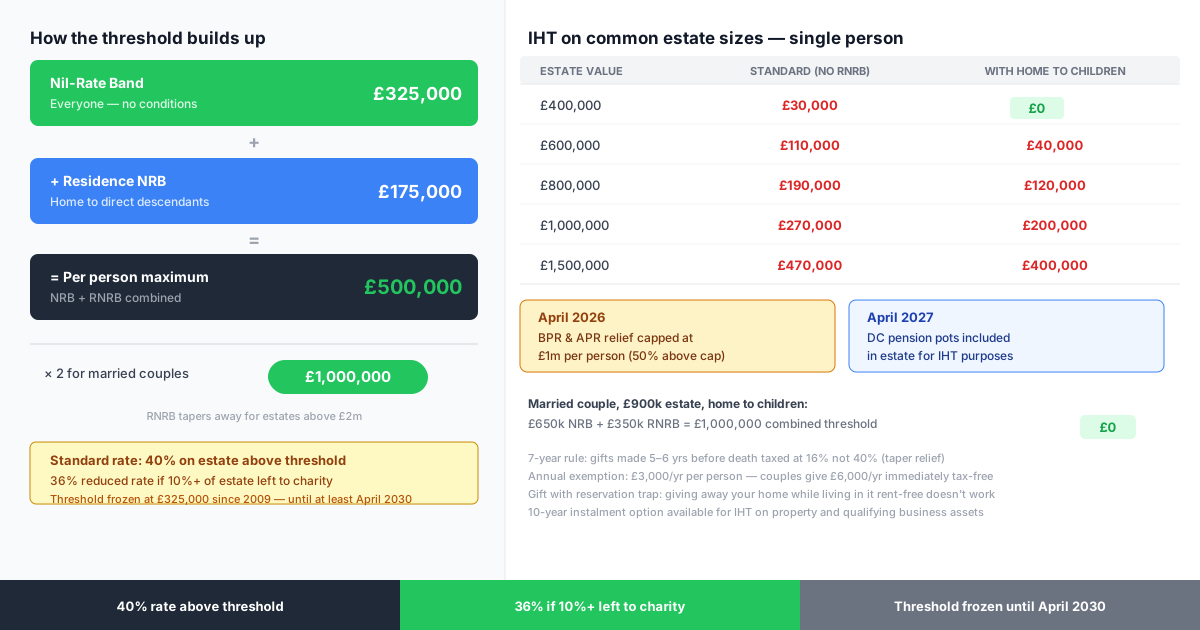
| Nil-rate band (NRB) | £325,000 | Everyone — no conditions |
| Residence nil-rate band (RNRB) | £175,000 | Main home left to direct descendants only |
| Single person maximum | £500,000 | Own a home + leaving it to children/grandchildren |
| Transferred NRB (surviving spouse) | Up to £325,000 | Deceased spouse's unused NRB transferred |
| Transferred RNRB (surviving spouse) | Up to £175,000 | Deceased spouse's unused RNRB transferred |
| Married couple maximum | £1,000,000 | Combined NRBs + RNRBs, home to descendants |
The nil-rate band has been frozen at £325,000 since April 2009 and will remain frozen until at least April 2030. With house prices rising, more estates are being pulled into the IHT net each year — this is sometimes called a "stealth tax increase."
The standard IHT rate is 40% on the taxable portion of the estate. A reduced rate of 36% applies if you leave at least 10% of your net estate to charity.
Who actually pays inheritance tax?
Around 4% of UK estates pay inheritance tax, but that figure is rising. HMRC collected £8.5 billion in 2025/26 — up from £5.2 billion in 2020/21. The freeze on thresholds means more estates breach the limit every year, especially in areas with high property values.
The 96% who pay nothing are typically:
- Estates below the £325,000 NRB
- Married couples who use both sets of allowances
- Estates where everything passes to a spouse or civil partner (spouse exemption is unlimited)
How to calculate your IHT bill — step by step
This is what most guides skip. The calculation has four steps.
Step 1: Value the estate Include everything: property (at market value), savings, investments, cars, jewellery, business interests, and gifts made in the last seven years.
Step 2: Deduct liabilities Subtract mortgage balance, debts, funeral costs, and professional fees. What remains is the "net estate."
Step 3: Identify available allowances Start with £325,000 NRB. Add £175,000 RNRB if you qualify. Add any transferred allowances from a deceased spouse.
Step 4: Calculate tax at 40% Apply 40% to any amount above the available allowances.
Worked examples
Example 1 — Single person, no home to children
- Estate: £600,000 (savings and property not passed to children)
- NRB: £325,000
- RNRB: £0 (not applicable)
- Taxable: £600,000 − £325,000 = £275,000
- IHT: £275,000 × 40% = £110,000
Example 2 — Single person, home to children
- Estate: £600,000 (including £350,000 home left to children)
- NRB: £325,000 + RNRB: £175,000 = £500,000
- Taxable: £600,000 − £500,000 = £100,000
- IHT: £100,000 × 40% = £40,000
Example 3 — Married couple (both allowances transferred)
- Second death estate: £900,000 (including home left to children)
- Available: £325,000 + £325,000 (transferred) + £175,000 + £175,000 (transferred) = £1,000,000
- Taxable: £900,000 − £1,000,000 = £0
- IHT: £0
Example 4 — Large estate
- Estate: £1,500,000 (home to children, single person)
- NRB + RNRB = £500,000
- Taxable: £1,500,000 − £500,000 = £1,000,000
- IHT: £1,000,000 × 40% = £400,000
The residence nil-rate band — and when you lose it
The RNRB adds £175,000 to your threshold when:
- You leave your main home (or the proceeds of its sale if downsized after July 2015) to direct descendants — children, stepchildren, adopted children, grandchildren, or their spouses
- Your estate does not exceed £2 million
The taper: For estates above £2 million, the RNRB reduces by £1 for every £2 of estate value above £2 million. It disappears entirely at £2,350,000 (single) or £2,700,000 (couple with both RNRBs).
RNRB taper worked example:
- Estate: £2,200,000 (home left to children, single person)
- RNRB reduction: (£2,200,000 − £2,000,000) ÷ 2 = £100,000
- Available RNRB: £175,000 − £100,000 = £75,000
- Total threshold: £325,000 + £75,000 = £400,000
- Taxable: £2,200,000 − £400,000 = £1,800,000
- IHT: £720,000
The RNRB is not available for estates left to siblings, nephews, nieces, or friends — only direct descendants.
IHT for married couples and civil partners
Transfers between married couples and civil partners are fully exempt from inheritance tax — regardless of the estate size. This is the spousal exemption.
When the first spouse dies, their unused nil-rate band and unused RNRB can be transferred to the surviving spouse. The percentage of unused allowance transfers, not the cash amount — so if the NRB was £325,000 when the first spouse died but has risen since, the survivor gets the percentage increase applied to the current NRB.
In practice for 2026/27 (with both thresholds frozen): The transfer is always the full £325,000 NRB and £175,000 RNRB if neither was used on first death.
Even if the first spouse left everything to charity (using no NRB at all), the full NRB still transfers to the survivor. The key is that the NRB was unused, not that it was "saved" for transfer.
Unmarried couples have no spousal exemption. Each partner's estate is assessed separately, and assets passing between them on death are subject to IHT in the normal way. This is one of the most significant financial differences between marriage/civil partnership and cohabitation.
Gifts and exemptions — what is immediately exempt
These gifts are exempt from IHT immediately, regardless of when you die:
| Exemption | Limit | Notes |
|---|---|---|
| Annual exemption | £3,000/year | Unused allowance carries forward one year only (max £6,000 in one year if prior year unused) |
| Small gifts | £250/person/year | Cannot combine with annual exemption for the same person |
| Wedding/civil partnership | £5,000 (child), £2,500 (grandchild), £1,000 (anyone else) | Must be given before the ceremony |
| Normal expenditure from income | No limit | Must be regular, from surplus income, and not reduce your standard of living |
| Spousal/civil partner gifts | No limit | Always exempt |
| Gifts to charities | No limit | Always exempt; 10%+ of estate triggers 36% rate on remainder |
The normal expenditure from income exemption is the most underused. If you regularly pay your grandchild's school fees, fund a child's rent, or make regular transfers from investment income that you don't need, these can be immediately exempt — but HMRC requires a pattern of regular payments, not one-off large transfers.
The seven-year rule — how taper relief actually works
Gifts that do not qualify for immediate exemption are called potentially exempt transfers (PETs). They become fully exempt after seven years. If you die within seven years, they may be brought back into your estate for IHT purposes.
How the calculation works:
- Add all PETs made in the seven years before death to your estate
- Use the nil-rate band against the oldest gifts first
- Apply any remaining NRB to the estate
- Calculate IHT on any estate amount above the remaining NRB
Taper relief reduces the IHT rate on gifts — not on the estate. It only applies when the gift itself exceeds the nil-rate band.
| Years between gift and death | Taper relief | Effective IHT rate on gift |
|---|---|---|
| 0–3 years | 0% | 40% |
| 3–4 years | 20% | 32% |
| 4–5 years | 40% | 24% |
| 5–6 years | 60% | 16% |
| 6–7 years | 80% | 8% |
| 7+ years | Exempt | 0% |
Worked example — David's gift:
- Gift: £200,000 made 5 years 2 months before death
- Estate at death: £550,000
- NRB: £325,000
- NRB applied to gift first: £200,000 gift uses up £200,000 of NRB; £125,000 NRB remains
- Estate taxable: £550,000 − £125,000 = £425,000 → IHT on estate: £170,000
- Gift taxable: £200,000 − £200,000 (NRB already used) = £0 → No additional IHT on gift in this case
- Total IHT: £170,000
If David had made the gift with no remaining NRB (estate already large), the gift element would be taxed at 16% (5–6 year bracket), not 40%.
💷Gift with reservation of benefit — the trap
Giving away an asset while continuing to benefit from it is a gift with reservation of benefit — and it does not work for IHT purposes. The asset remains in your estate as if you never gave it away.
The most common example: giving your home to your children but continuing to live in it rent-free. Unless you pay a market rent to your children (which must be maintained), HMRC treats the house as still yours for IHT.
If you later move out or start paying rent, the gift starts a fresh seven-year clock from that point.
A related trap is the Pre-Owned Assets Tax (POAT), which charges income tax on the benefit you receive from an asset you previously gave away — designed to discourage arrangements that try to sidestep the reservation of benefit rules.
April 2026: business and agricultural property relief
From 6 April 2026, the rules for business property relief (BPR) and agricultural property relief (APR) changed significantly.
Before April 2026: Qualifying business or agricultural assets received 100% IHT relief with no cap.
From April 2026:
- 100% relief applies on the first £1,000,000 combined of qualifying BPR and APR assets
- 50% relief applies on qualifying assets above £1,000,000 — giving an effective IHT rate of 20% on the excess (50% of 40%)
Worked example — family farm:
- Farm value: £1,800,000 (qualifying for APR throughout)
- Relief on first £1,000,000: 100% = £0 IHT
- Relief on remaining £800,000: 50% → £400,000 chargeable at 40% = £160,000 IHT
- Old rule: £0 IHT
This change affects farmers, landowners, and business owners with qualifying assets above £1 million. The £1,000,000 cap applies per person — so a couple with business assets could each use their allowance separately under the right ownership structure.
IHT on qualifying BPR/APR assets above the cap can be paid in 10 equal annual instalments interest-free, which reduces the immediate cash burden on farming families.
April 2027: pensions and inheritance tax
From 6 April 2027, most unused defined contribution (DC) pension pots will be included in your estate for inheritance tax purposes. This is one of the biggest changes to IHT planning in decades.
Currently: Pension funds fall outside your estate entirely. A £500,000 pension pot passes to your nominated beneficiaries with no IHT, regardless of estate size.
From April 2027: Unused pension funds are added to your estate. If your estate plus pension exceeds your threshold, IHT is due.
Worked example:
- Estate: £400,000 (home to children, single person, RNRB applies)
- DC pension pot: £350,000 (unused at death)
- Combined: £750,000
- Current IHT: £0 (estate below £500,000 threshold; pension excluded)
- Post-April 2027 IHT: £750,000 − £500,000 = £250,000 × 40% = £100,000
Defined benefit (final salary) pensions operate differently and will largely remain outside the estate. The change targets DC pots — workplace pensions, SIPPs, and personal pensions where the fund accumulates.
If you have a large pension pot, the time to review your strategy is before April 2027, not after.
Reducing your IHT bill — legal routes
1. Start a seven-year gifting plan Regular gifting reduces your estate. Use the £3,000 annual exemption every year — a couple can give away £6,000/year tax-free without any seven-year clock. Larger gifts start the clock, but the taper relief means gifts made 5-7 years before death face much lower effective rates than 40%.
2. Use regular gifts from surplus income If you have investment or rental income you do not need, regular transfers to children or grandchildren can be immediately exempt. Document them carefully — HMRC requires evidence of a consistent pattern.
3. Pass the family home to direct descendants This unlocks the £175,000 RNRB. For a couple, that is £350,000 in additional threshold at no cost — simply by ensuring the will directs the property to children or grandchildren.
4. Review pension nominations before April 2027 With DC pensions entering the estate from April 2027, drawdown strategies and nomination forms may need revisiting. Taking more income from the pension and spending it (or gifting it from surplus income) before 2027 reduces the pot that will be subject to IHT.
5. Consider life insurance written in trust A life insurance policy written in trust pays out to your beneficiaries outside your estate, meaning the payout is not subject to IHT. The payout can be used to settle the IHT bill itself, preserving other estate assets intact.
6. Charitable giving Leaving at least 10% of your net estate to charity reduces the IHT rate on the remainder from 40% to 36%. For large estates, this can result in more money going to your chosen charities while your heirs pay less — a genuine win-win in some cases.
Last updated July 2026. IHT thresholds from HMRC 2026/27. April 2026 BPR/APR changes confirmed in Autumn Budget 2024. For personal estate planning advice, consult a solicitor or chartered financial planner.