
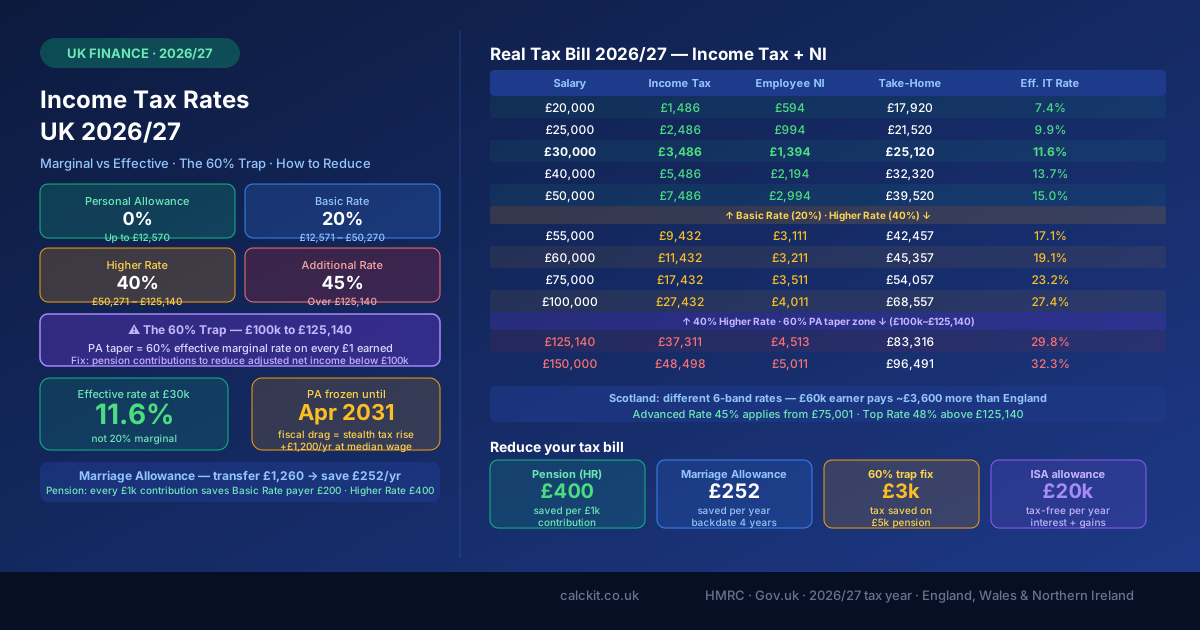
The tax rate on your payslip is not the rate you actually pay. A £60,000 salary sits in the 40% Higher Rate band, but the tax bill is £11,432 — an effective rate of 19.1%. Understanding the difference is what separates people who plan their tax from those who overpay it.
This guide covers the 2026/27 rates, the real tax bill at every common salary, the 60% trap between £100k and £125k, and exactly how to reduce what you hand over to HMRC.
🏛UK income tax rates 2026/27 at a glance
The UK income tax system for 2026/27 (England, Wales, Northern Ireland) has four bands:
| Band | Taxable income | Rate |
|---|---|---|
| Personal Allowance | Up to £12,570 | 0% |
| Basic Rate | £12,571 – £50,270 | 20% |
| Higher Rate | £50,271 – £125,140 | 40% |
| Additional Rate | Over £125,140 | 45% |
Nothing has changed from 2025/26. The rates, the Personal Allowance, and all thresholds are identical. The only tax change for April 2026 was employer National Insurance (up to 15%, secondary threshold down to £5,000) — that affects your employer's costs, not your personal tax bill.
The Personal Allowance is frozen at £12,570 until April 2031 under the current government's fiscal plan.
Your real tax bill at every salary
The headline rate (20%, 40%, 45%) applies only to the slice of income in that band — not to your whole salary. Here is the actual income tax you pay at every common salary level:
| Salary | Income tax | Effective IT rate | Marginal rate |
|---|---|---|---|
| £20,000 | £1,486 | 7.4% | 20% |
| £25,000 | £2,486 | 9.9% | 20% |
| £30,000 | £3,486 | 11.6% | 20% |
| £35,000 | £4,486 | 12.8% | 20% |
| £40,000 | £5,486 | 13.7% | 20% |
| £45,000 | £6,486 | 14.4% | 20% |
| £50,000 | £7,486 | 15.0% | 20% |
| £55,000 | £9,432 | 17.1% | 40% |
| £60,000 | £11,432 | 19.1% | 40% |
| £75,000 | £17,432 | 23.2% | 40% |
| £100,000 | £27,432 | 27.4% | 40% |
| £125,140 | £37,311 | 29.8% | 45% |
| £150,000 | £48,498 | 32.3% | 45% |
The effective rate rises gradually. Even at £150,000 it is 32.3% — well below the 45% marginal rate. That gap exists because the first £12,570 is always tax-free and the next £37,700 is always taxed at 20%.
Effective rate vs marginal rate — why both matter
Marginal rate is the rate applied to your last pound of income. If you earn £55,000, your marginal rate is 40%.
Effective rate is your total tax bill divided by your total income. At £55,000 that is £9,432 ÷ £55,000 = 17.1%.
They are different numbers used for different decisions:
- Marginal rate is what matters when deciding whether to take on extra paid work, accept a bonus, or make a pension contribution. A £1,000 bonus costs £400 in tax if you are a Higher Rate payer.
- Effective rate is what matters for overall financial planning — how much of your income you keep and how you compare to other workers.
The mistake most people make is assuming their "tax rate" is their marginal rate. It is not. At £60,000, 40% sounds punishing — but the effective rate is 19.1%.
💷Income tax + National Insurance: your real combined deduction
Income tax is not the only deduction from your pay. Employee National Insurance (Class 1) takes a further bite:
- 8% on earnings from £12,570 to £50,270
- 2% on earnings above £50,270
Combined income tax + NI at common salaries:
| Salary | Income tax | Employee NI | Total deduction | Combined effective rate |
|---|---|---|---|---|
| £20,000 | £1,486 | £594 | £2,080 | 10.4% |
| £30,000 | £3,486 | £1,394 | £4,880 | 16.3% |
| £40,000 | £5,486 | £2,194 | £7,680 | 19.2% |
| £50,000 | £7,486 | £2,994 | £10,480 | 21.0% |
| £60,000 | £11,432 | £3,211 | £14,643 | 24.4% |
| £80,000 | £19,432 | £3,611 | £23,043 | 28.8% |
| £100,000 | £27,432 | £4,011 | £31,443 | 31.4% |
At £100,000 you keep 68.6p of every pound earned before the Personal Allowance taper begins. That changes dramatically at £100,001.
The 60% trap: why £100,001 is worse than £100,000
Between £100,001 and £125,140 the effective marginal tax rate is 60%, not 40%.
Here is why: for every £2 you earn above £100,000, your Personal Allowance reduces by £1. Losing £1 of Personal Allowance means HMRC taxes an extra £1 of income at 40% — on top of the 40% you already pay on the extra £1 earned. That is 40% + 40% × 50% = 60%.
Example: you earn £105,000. Your Personal Allowance has reduced by £2,500 (£5,000 excess ÷ 2). That means £2,500 of previously tax-free income now gets taxed at 40% = £1,000 of extra tax on top of the standard 40% on the extra £5,000 = £3,000. Total extra tax on £5,000 = £4,000. Effective marginal rate = 80%... wait, let me correct that: 40% on the extra £5,000 = £2,000, plus 40% on the £2,500 lost allowance = £1,000. Total = £3,000 on £5,000 income = 60%.
The most effective escape route is pension contributions. A £5,000 employer or personal pension contribution made into a registered pension scheme reduces your adjusted net income and can bring it below £100,000, recovering the full Personal Allowance. A £5,000 contribution in this band costs just £2,000 net (£3,000 tax saving at 60%).
What income is not taxable
Not all income counts as taxable income. The following are either fully exempt or have their own allowances:
| Income type | Tax-free amount | Notes |
|---|---|---|
| Savings interest | £1,000 (Basic Rate) / £500 (Higher Rate) | Personal Savings Allowance |
| Dividend income | £500 | Dividend Allowance — income above taxed at 8.75% / 33.75% / 39.35% |
| ISA income | Unlimited | No tax on interest, dividends, or gains inside an ISA |
| Self-employment / freelance | £1,000 | Trading Allowance |
| Property rental income | £1,000 | Property Allowance |
| Rent a Room | £7,500 | Renting a room in your own home |
| Redundancy pay | £30,000 | Statutory and contractual redundancy up to this threshold |
If your only income is employment through PAYE, these are less relevant — but freelance income, a rental property, or savings interest above the PSA all need to be declared via Self Assessment.
How to reduce your income tax bill
The most effective legal tax reduction strategies, with real amounts:
1. Pension contributions (biggest lever) Every £1,000 of gross pension contribution reduces your taxable income by £1,000, saving:
- £200 if you are a Basic Rate payer (20%)
- £400 if you are a Higher Rate payer (40%)
- £600 if you are in the £100k–£125,140 zone (60% effective rate)
Via salary sacrifice you also save National Insurance (8% on Basic Rate salary), making the real cost of a £1,000 pension contribution approximately £720 (Basic Rate) or £520 (Higher Rate).
2. Salary sacrifice for other benefits Electric vehicle car schemes and cycle-to-work schemes reduce gross pay. The tax saving is your marginal rate + NI rate. A £5,000 EV lease via salary sacrifice saves a Higher Rate payer ~£2,200 in income tax and NI combined.
3. Marriage Allowance If one partner earns below £12,570 (or their income is zero), they can transfer £1,260 of their unused Personal Allowance to the other partner. The higher earner gets a tax credit of £252/yr. Claims can be backdated four tax years — worth up to £1,260 in total.
4. Gift Aid donations When you donate to charity via Gift Aid, HMRC treats the donation as if made from gross income. For a Higher Rate payer donating £800, the charity reclaims £200 (Basic Rate relief). You can then claim an additional £200 relief through Self Assessment — meaning a £800 donation costs £600 net and reduces your tax bill by £200.
5. ISA contributions The ISA allowance for 2026/27 is £20,000. Interest, dividends, and capital gains inside an ISA are completely tax-free. At a savings rate of 4.5%, £20,000 in a Cash ISA generates £900 interest with no tax due. Outside an ISA, a Higher Rate payer pays 40% tax on interest above the £500 PSA.
🏛️Scottish income tax rates 2026/27
Scotland has its own income tax system, set by the Scottish Parliament:
| Band | Taxable income | Rate |
|---|---|---|
| Starter Rate | £12,571 – £15,397 | 19% |
| Basic Rate | £15,398 – £27,491 | 20% |
| Intermediate Rate | £27,492 – £43,662 | 21% |
| Higher Rate | £43,663 – £75,000 | 42% |
| Advanced Rate | £75,001 – £125,140 | 45% |
| Top Rate | Over £125,140 | 48% |
Scottish taxpayers are identified by a tax code starting with S (e.g. S1257L). NI rates and thresholds are the same across the UK — only income tax differs. At £60,000 a Scottish taxpayer pays approximately £15,048 in income tax vs £11,432 for the rest of the UK.
What changed from 2025/26?
Income tax: nothing changed. Rates, thresholds, and the Personal Allowance are all identical to 2025/26.
What did change (April 2026):
| Change | 2025/26 | 2026/27 | Impact |
|---|---|---|---|
| Employer NI rate | 13.8% | 15% | Higher employer cost; may limit pay rises |
| Employer NI threshold | £9,100 | £5,000 | Affects low-earners and part-time workers most |
| Personal Allowance | £12,570 | £12,570 | Frozen — real-terms cut due to inflation |
| Basic Rate threshold | £50,270 | £50,270 | Frozen — fiscal drag pulling workers into 40% |
| Class 4 NI (self-employed) | 6% / 2% | 6% / 2% | Unchanged |
| Class 2 NI | Abolished | N/A | Still abolished |
The fiscal drag effect: the Personal Allowance has been frozen at £12,570 since April 2021 and will remain so until April 2031. With average earnings growing at ~4% annually, someone earning the UK median wage (approximately £37,000 in 2026) pays roughly £1,200 more income tax per year than they would have if the allowance had risen with inflation since 2021. This is the largest stealth tax in a generation, affecting every PAYE worker in England, Wales, and Northern Ireland.
Key points to remember
- The Basic Rate is 20%, Higher Rate 40%, Additional Rate 45% — but these are marginal rates, not your overall tax rate
- At £30,000 the effective income tax rate is 11.6%; at £60,000 it is 19.1%
- The 60% trap between £100k–£125,140 is caused by the Personal Allowance taper — pension contributions are the main route out
- Income tax rates are unchanged for 2026/27; the employer NI increase does not affect your personal tax bill
- Every £1,000 of pension contribution saves a Higher Rate payer £400 in income tax (plus NI saving via salary sacrifice)
- Scotland has higher rates: a £60,000 earner pays ~£3,600 more income tax than in England
For a full breakdown of your specific salary, including Student Loan, pension, and take-home pay, use the income tax calculator above.