
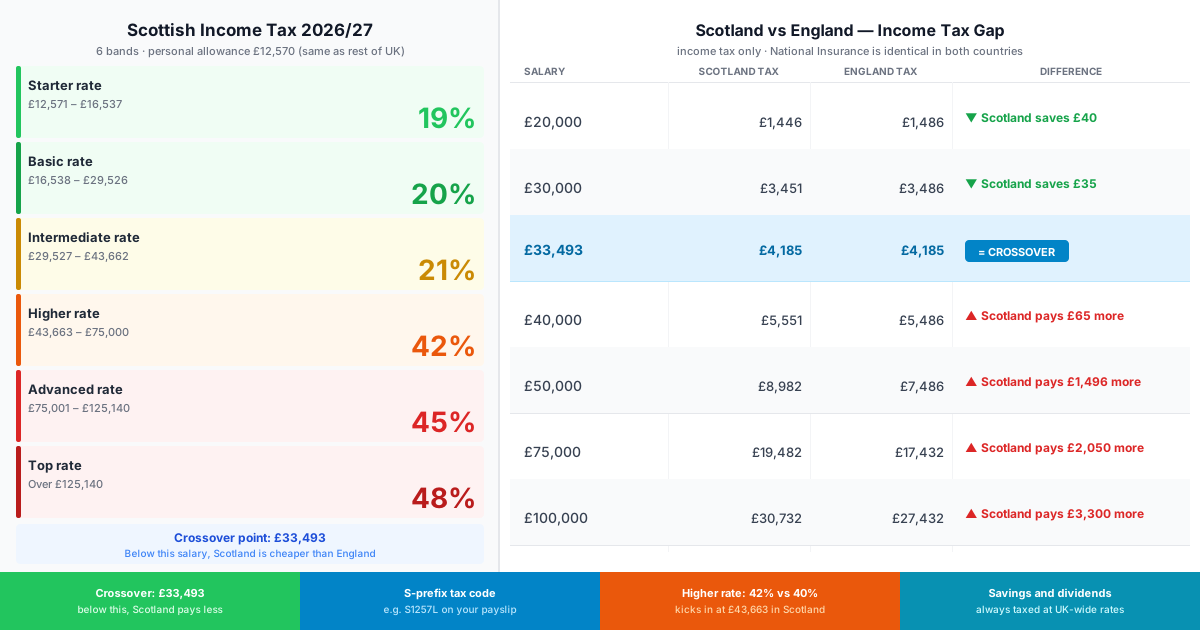
A £50,000 salary earner in Edinburgh pays around £1,496 more in income tax than the same earner in Manchester. A £30,000 salary earner in Glasgow pays around £35 less. The dividing line — where Scotland shifts from being cheaper to more expensive — is £33,493. Most guides miss that exact number.
This article covers all six Scottish bands for 2026/27, what changed from last year, the precise salary-by-salary comparison with England, and the nuances that affect self-employed workers, pension savers, and anyone with savings or dividends.
🏛Scottish income tax rates 2026/27
Scotland has six income tax bands. The personal allowance (£12,570) is set by the UK Government and is identical to the rest of the UK.
| Band | Taxable income | Rate |
|---|---|---|
| Starter | £12,571–£16,537 | 19% |
| Basic | £16,538–£29,526 | 20% |
| Intermediate | £29,527–£43,662 | 21% |
| Higher | £43,663–£75,000 | 42% |
| Advanced | £75,001–£125,140 | 45% |
| Top | Over £125,140 | 48% |
The personal allowance tapers above £100,000 at £1 per £2 of income, eliminating it entirely at £125,140. This applies identically in Scotland and the rest of the UK.
What changed from 2025/26
The Scottish Government expanded the lower bands in 2026/27. The upper bands remain frozen until at least 2028/29.
| Band | 2025/26 upper threshold | 2026/27 upper threshold | Change |
|---|---|---|---|
| Starter (19%) | £15,397 | £16,537 | +£1,140 |
| Basic (20%) | £27,491 | £29,526 | +£2,035 |
| Intermediate (21%) | £43,662 | £43,662 | Unchanged |
| Higher (42%) | £75,000 | £75,000 | Unchanged |
| Advanced (45%) | £125,140 | £125,140 | Unchanged |
| Top (48%) | — | — | Unchanged |
The Scottish Government described the starter and basic band increases as "significantly above inflation" (CPI was approximately 3.8%). The effect: lower earners spend longer in the 19% and 20% bands before reaching the 21% intermediate rate, benefiting those below around £43,662.
The crossover point — where Scotland stops being cheaper than England — moved from approximately £30,300 in 2025/26 to approximately £33,493 in 2026/27 as a result.
Scotland vs England: salary comparison
National Insurance is a reserved matter and is identical for Scottish and English workers. These figures show income tax only.
| Salary | Scotland tax | England tax | Difference |
|---|---|---|---|
| £20,000 | £1,446 | £1,486 | Scotland saves £40 |
| £30,000 | £3,451 | £3,486 | Scotland saves £35 |
| £33,493 | £4,185 | £4,185 | Equal — crossover point |
| £40,000 | £5,551 | £5,486 | Scotland pays £65 more |
| £50,000 | £8,982 | £7,486 | Scotland pays £1,496 more |
| £75,000 | £19,482 | £17,432 | Scotland pays £2,050 more |
| £100,000 | £30,732 | £27,432 | Scotland pays £3,300 more |
Figures exclude personal allowance tapering above £100,000, which affects both countries equally but at different effective rates (see below).
The crossover point: why £33,493
The starter rate (19%) is 1% below England's basic rate (20%). Across the full starter band (£3,967 of taxable income), this saves a Scottish taxpayer £39.67 per year.
In the basic band (£16,538–£29,526), both Scotland and England pay 20%, so that £39.67 saving stays constant.
Once income enters the intermediate band (above £29,526), Scotland charges 21% while England charges 20%. The 1% extra erodes the £39.67 saving at £10 per £1,000 of additional income.
The saving disappears at: £29,527 + (£39.67 ÷ £0.01) = £29,527 + £3,966 = £33,493.
Above £33,493, every additional pound of income in the intermediate, higher, advanced, or top bands costs more in Scotland than in England.
💷The £100,000 to £125,140 trap: Scotland's 67.5% effective rate
When income exceeds £100,000, the personal allowance tapers at £1 for every £2 earned above that threshold. Every £2 of extra income means £1 more of taxable income from the tapering, plus the £2 of earnings themselves.
In England, where the relevant rate is 40%:
- Extra tax on £2 of earnings: £2 × 40% = £0.80
- Extra tax from £1 PA lost: £1 × 40% = £0.40
- Total: £1.20 on £2 earned → effective rate: 60%
In Scotland, where the relevant rate is 45% (Advanced):
- Extra tax on £2 of earnings: £2 × 45% = £0.90
- Extra tax from £1 PA lost: £1 × 45% = £0.45
- Total: £1.35 on £2 earned → effective rate: 67.5%
A Scottish taxpayer earning between £100,000 and £125,140 pays an effective marginal rate of 67.5% on every additional pound — compared to England's 60%. Pension contributions that reduce adjusted net income below £100,000 offer significant relief, restoring the personal allowance and reducing the effective rate.
What Scottish income tax rates do and do not apply to
This is widely misunderstood. Scottish rates apply only to:
- Employment income (salary, wages, benefits in kind)
- Self-employment profits (sole trader and partnership income)
- Rental income (property letting profits)
Scottish rates do not apply to:
- Savings interest — taxed at UK-wide rates (20%/40%/45%) regardless of where you live in Scotland
- Dividend income — taxed at UK-wide rates (10.75%/35.75%/39.35%) regardless of where you live in Scotland
A Scottish higher rate taxpayer pays 42% on their salary and 35.75% on dividends — not 42% on dividends. The Scottish Parliament cannot set rates on savings and investment income.
This also means the Personal Savings Allowance (£1,000 for basic rate taxpayers, £500 for higher rate) operates the same for Scottish taxpayers as English ones, determined by UK income tax bands, not Scottish bands.
Scottish tax codes: what to look for on your payslip
Scottish taxpayers have an S prefix on their PAYE tax code. Examples:
| Code | Meaning |
|---|---|
| S1257L | Standard code — full personal allowance, Scottish rates |
| SBR | Scottish basic rate (20%) — typically a second job below higher rate threshold |
| SD0 | Scottish intermediate rate (21%) — second job in the intermediate band |
| SD1 | Scottish higher rate (42%) — second job above intermediate band |
| SD2 | Scottish advanced rate (45%) — second job above £75,000 |
| SK475 | Negative allowance (K code) — Scottish rates with a reduced personal allowance |
If you live in Scotland but your payslip shows a non-S code (for example 1257L), your employer may be using the wrong rates. Contact HMRC via the Personal Tax Account or call 0300 200 3300 to update your code. Your employer cannot change your tax code — HMRC must issue the instruction via the PAYE real-time information system.
Pension contributions and Scottish tax relief
Pension schemes use one of two collection methods, and they interact with Scottish rates differently.
Net pay arrangement (most workplace schemes, including many final salary schemes): Contributions come out before tax is calculated. Full Scottish rate relief applies automatically. No action needed.
Relief at source (SIPPs, Nest, People's Pension, Aviva, Scottish Widows personal pensions): The scheme claims 20% basic rate relief from HMRC and adds it to your pot. This applies to everyone regardless of their actual Scottish rate.
| Scottish rate | Rate actually paid | Relief auto-added | Extra to claim via Self Assessment |
|---|---|---|---|
| Starter 19% | 19% | 20% | None (1% windfall) |
| Basic 20% | 20% | 20% | None |
| Intermediate 21% | 21% | 20% | 1% |
| Higher 42% | 42% | 20% | 22% |
| Advanced 45% | 45% | 20% | 25% |
| Top 48% | 48% | 20% | 28% |
A Scottish higher rate taxpayer contributing £10,000 net into a SIPP gets £2,500 added automatically (20% basic rate relief), making £12,500 gross. They can then claim 22% of £12,500 = £2,750 back via Self Assessment. Total pension contribution cost: £10,000 − £2,750 = £7,250 net for £12,500 in the pension.
Compare this to an English higher rate taxpayer: same £10,000 net, £2,500 auto-added, claim back 20% = £2,500, net cost £7,500 for £12,500. The Scottish higher rate taxpayer gets £250 more relief per £10,000 contributed.
Self-employed Scottish taxpayers
Self-employed workers pay Scottish income tax on their trading profits. Class 4 National Insurance (6% on profits from £12,571–£50,270; 2% above) is a UK-wide charge and is identical for Scottish and English self-employed workers.
A Scottish sole trader earning £50,000 in profits pays:
- Income tax: £8,982 (vs £7,486 in England — £1,496 more)
- Class 4 NI: £2,267 (same in both countries)
The higher Scottish income tax does not affect the Class 4 NI calculation. NI thresholds and rates are set by Westminster.
Self Assessment tax codes for Scottish self-employed workers follow the same S-prefix system. In Making Tax Digital for ITSA (mandatory above £50,000 income from April 2026), the reporting requirements are identical — the only difference is the tax rates applied.
Who is a Scottish taxpayer?
You are a Scottish taxpayer if Scotland is your main place of residence for the tax year. The test is where you live, not where you work.
| Situation | Tax status |
|---|---|
| Live in Edinburgh, work in Edinburgh | Scottish taxpayer |
| Live in Edinburgh, commute to London | Scottish taxpayer |
| Live in Newcastle, work in Edinburgh | Not a Scottish taxpayer |
| Move from London to Glasgow on 10 June | Scottish taxpayer for the whole 2026/27 year |
| Split time equally between Scotland and England | HMRC looks at the location of your main home |
HMRC updates your tax code when it receives a change of address. If you move mid-year, your employer will receive an updated S-prefixed code from HMRC and should apply it going forward.
Frequently asked questions
What are the Scottish income tax rates for 2026/27?
Six bands: Starter 19% (£12,571–£16,537), Basic 20% (£16,538–£29,526), Intermediate 21% (£29,527–£43,662), Higher 42% (£43,663–£75,000), Advanced 45% (£75,001–£125,140), Top 48% (over £125,140). Personal allowance £12,570.
At what salary does Scotland become more expensive than England for income tax?
£33,493. Below this, the 19% starter rate saves up to £39.67 per year versus England's 20% basic rate. Above £33,493, Scotland's 21% intermediate rate has eroded that saving entirely.
Do Scottish income tax rates apply to savings interest and dividends?
No. Scottish rates apply only to employment income, self-employment profits, and rental income. Savings interest and dividends are taxed at UK-wide rates regardless of where in Scotland you live.
What is a Scottish tax code and how do I recognise one?
An S prefix — for example S1257L (standard), SBR (basic rate second job), SD0 (intermediate), SD1 (higher), SD2 (advanced). Check your payslip; if you live in Scotland without an S code, contact HMRC.
What changed in Scottish income tax from 2025/26 to 2026/27?
The starter band upper threshold rose from £15,397 to £16,537 (+£1,140) and the basic band from £27,491 to £29,526 (+£2,035). The higher, advanced, and top bands are frozen until at least 2028/29.
How does pension tax relief work for Scottish taxpayers?
Relief at source pensions auto-add 20% basic rate relief. Starter rate taxpayers get a 1% windfall. Intermediate, higher, advanced, and top rate taxpayers should claim the additional relief (1%, 22%, 25%, 28% respectively) through Self Assessment.
How much more income tax does a Scottish £50,000 earner pay than an English one?
Approximately £1,496 more per year. Scotland's 42% higher rate starts at £43,663 versus England's 40% at £50,271. National Insurance is the same in both countries.
Who counts as a Scottish taxpayer?
Anyone whose main place of residence is in Scotland for the tax year — regardless of where they work. If you live in Scotland and commute to England, you pay Scottish income tax rates.