
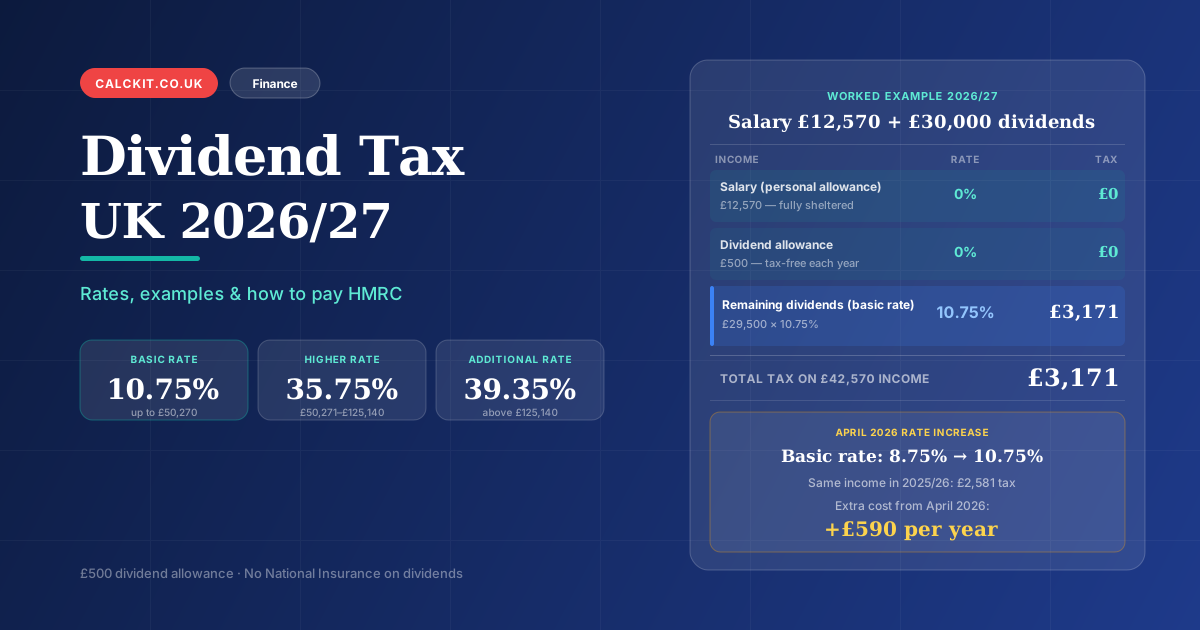
From April 2026, dividend tax rates in the UK increased by 2 percentage points. A director who previously paid 8.75% on dividends within the basic rate band now pays 10.75%. On £30,000 of dividends, that difference is an extra £600 a year — not trivial for the 1.3 million limited company directors in the UK who rely on dividend income.
This guide covers the 2026/27 rates in full, how to calculate your personal dividend tax bill, worked examples at each tax band, what changed from April 2026 and why, and how to pay HMRC.
💰What is dividend tax?
A dividend is a distribution of a company's after-tax profits to its shareholders. When you receive dividend income — whether from your own limited company or from shares in a publicly listed business — you pay dividend tax on that income.
Dividends are taxed differently from employment income or self-employment profits in three important ways:
- Lower rates — dividend tax rates are lower than equivalent income tax rates in every band (though they converged significantly in April 2026)
- No National Insurance — dividends attract no employee or employer National Insurance contributions
- A tax-free allowance — the dividend allowance (£500 for 2026/27) shelters the first £500 of dividend income each year, separate from your personal allowance
At the corporate level, the company already paid corporation tax (currently 25% for most companies) on the profits before distributing them. This is why dividend tax rates are — in principle — lower than income tax rates: they are partially compensating for the corporation tax already paid. However, when you combine corporation tax and dividend tax, the effective tax rate on company profits distributed as dividends is typically 31–55% depending on income level.
Dividend tax rates 2026/27
| Tax band | Total income | Dividend tax rate | Change from 2025/26 |
|---|---|---|---|
| Personal allowance | Up to £12,570 | 0% | No change |
| Dividend allowance | First £500 above personal allowance | 0% | No change |
| Basic rate | £12,571 – £50,270 | 10.75% | Up from 8.75% |
| Higher rate | £50,271 – £125,140 | 35.75% | Up from 33.75% |
| Additional rate | Above £125,140 | 39.35% | No change |
The 2pp increase at basic and higher rate was announced in the October 2024 Budget and took effect from 6 April 2026. The additional rate was left unchanged. This was the third consecutive year of worsening dividend tax treatment — rates were 7.5%, 32.5%, and 38.1% in 2022/23.
What the increase costs in practice:
| Dividend income | Extra tax at basic rate (2pp increase) | Extra tax at higher rate (2pp increase) |
|---|---|---|
| £10,000 | £200 | £200 |
| £20,000 | £400 | £400 |
| £37,700 (full basic band) | £754 | N/A |
How much dividend income is tax-free?
Two allowances can shelter dividend income from tax:
1. Personal allowance (£12,570): If your total income (salary + dividends + other income) is below £12,570, all of it is tax-free — including dividends. Most directors take a salary that uses up most or all of their personal allowance, so dividends typically sit above this threshold.
2. Dividend allowance (£500): The first £500 of dividend income each year is tax-free regardless of your tax band. This is separate from the personal allowance. However, the dividend allowance is not a relief from the dividend allowance — it is simply the first £500 taxed at 0%. Dividends are always added on top of other income when determining your tax band.
The dividend allowance has been cut dramatically over recent years: from £5,000 in 2017/18 down to £500 today. Directors who designed their pay strategy around tax-free dividends have seen it erode significantly.
How dividend tax is calculated
The calculation follows a specific order because dividends are treated as the "top slice" of income — they are added on top of all other income.
- Add all non-dividend income (salary, self-employment, rental)
- Deduct personal allowance (£12,570)
- Add dividend income on top
- Deduct dividend allowance (£500)
- Apply dividend tax rate based on which band the dividends fall into
This stacking rule matters. If your salary is £40,000, your dividends start being taxed from that point — not from zero. Even a small amount of dividends on top of a £45,000 salary would push you into the higher rate band.
Worked examples
Example 1 — Basic rate taxpayer (director, no other income)
A limited company director takes a salary of £12,570 and £30,000 in dividends. Total income: £42,570.
| Step | Calculation | Amount |
|---|---|---|
| Total income | £12,570 salary + £30,000 dividends | £42,570 |
| Less personal allowance | £12,570 used entirely by salary | £0 remaining |
| Dividend income | £30,000 | |
| Less dividend allowance | £500 | £29,500 taxable |
| Dividend tax at 10.75% | £29,500 × 10.75% | £3,171.25 |
| Income tax on salary | Salary = personal allowance, so | £0 |
| Total tax | £3,171.25 |
If the 2025/26 rate (8.75%) had applied, the tax would have been £2,581.25 — a difference of £590.
💰Example 2 — Dividends spanning the higher rate threshold
A director takes a salary of £8,000 and £50,000 in dividends. Total income: £58,000.
| Step | Calculation | Amount |
|---|---|---|
| Total income | £8,000 + £50,000 | £58,000 |
| Income tax on salary | £8,000 – £12,570 = all within personal allowance | £0 |
| Remaining personal allowance | £12,570 – £8,000 = £4,570 shelters dividends | |
| Dividends taxed at 0% | £4,570 (personal allowance) + £500 (dividend allowance) | £5,070 |
| Dividends at basic rate (10.75%) | From £5,070 to £50,270 total income = £45,200 of dividends | £4,859 |
| Dividends at higher rate (35.75%) | Remaining £4,730 (total income £50,270 → £58,000) | £1,691 |
| Total dividend tax | £6,550 |
Example 3 — Higher rate taxpayer with investment dividends
A PAYE employee earns £60,000 and receives £5,000 in dividends from their investment portfolio.
| Step | Calculation | Amount |
|---|---|---|
| Salary (all in higher rate band) | £60,000 already above basic rate threshold | |
| Dividend allowance | £500 at 0% | £0 |
| Taxable dividends | £5,000 – £500 = £4,500 | |
| Dividend tax at 35.75% (higher rate) | £4,500 × 35.75% | £1,608.75 |
All dividends fall in the higher rate because the salary already fills the basic rate band and more.
Example 4 — Additional rate taxpayer
A director with total income above £125,140. They receive £20,000 in dividends on top of £130,000 in salary.
| Step | Calculation | Amount |
|---|---|---|
| Personal allowance | Tapered to £0 (income above £125,140) | £0 |
| Dividend allowance | £500 at 0% | £0 |
| Taxable dividends | £20,000 – £500 = £19,500 | |
| Dividend tax at 39.35% | £19,500 × 39.35% | £7,673.25 |
Note: the personal allowance tapers at a rate of £1 for every £2 of income above £100,000 and reaches zero at £125,140. See the £100k trap section below.
Optimal director salary and dividend split for 2026/27
For most limited company directors without other income, the most common approach is:
Option A — Full personal allowance salary:
- Salary: £12,570 (uses entire personal allowance, zero income tax on salary)
- If you are the sole director with no other employees, employer National Insurance (NI) only applies above the secondary NI threshold (£9,100). A salary of £12,570 means NI on £3,470 at 15% = £520.50 employer NI per year
- Dividends: up to £37,200 at basic rate (10.75%) = £3,999 dividend tax
- Total tax on £49,770 income: ~£4,519
Option B — Salary at the secondary NI threshold:
- Salary: £9,100 (avoids all employer NI, but £3,470 of personal allowance unused)
- Dividends: up to £40,670 with £3,470 sheltered by remaining personal allowance
- Taxable dividends: £40,670 – £3,470 personal allowance – £500 dividend allowance = £36,700 at 10.75% = £3,945
- Total tax on £49,770 income: ~£3,945 (no NI)
Verdict for 2026/27: Both options land at roughly the same after-tax position. If your company has other employees and the Employment Allowance is available (up to £10,500 in 2026/27), Option A is typically better as the Employment Allowance wipes out the employer NI.
From April 2026, employer National Insurance rose to 15% and the secondary threshold dropped to £5,000. If you are the sole employee of your company and cannot claim the Employment Allowance, a salary between £5,000 and £9,100 minimises employer NI without triggering large amounts. Discuss with your accountant.
For a detailed breakdown of salary versus dividend structuring, read: How to Pay Yourself as a Limited Company Director in 2026.
The £100,000 personal allowance trap
If your total income (salary + dividends + other) exceeds £100,000, your personal allowance reduces by £1 for every £2 of income above £100,000. The allowance reaches £0 at £125,140.
This creates an effective marginal rate between £100,000 and £125,140 that is significantly higher than the headline 35.75% higher rate dividend rate:
In the £100,000–£125,140 band:
- Each extra £2 of dividends costs: £2 × 35.75% + £1 (lost personal allowance) × 35.75%
- Effective marginal rate on dividends: approximately 53.6%
This is one of the most expensive income zones in the UK tax system. Directors and investors approaching £100,000 in total income often deliberately reduce dividend income to stay below this threshold, or ensure income jumps cleanly above £125,140 rather than sitting in the trap zone.
Strategies to mitigate the trap:
- Increase employer pension contributions (these reduce adjusted net income)
- Time dividend payments across different tax years
- Use charitable donations via Gift Aid (these also reduce adjusted net income)
- If your income is reliably above £125,140, staying above it is better than being caught mid-trap
Scottish taxpayers and dividend tax
Scottish income tax applies different bands and rates to earnings and most other income — but dividend tax is reserved to Westminster and applies at the same UK-wide rates across Scotland, England, Wales, and Northern Ireland.
However, there is an important knock-on effect. Because Scotland has more income tax bands, Scottish taxpayers may hit the higher dividend rate at a different total income level.
In England, Wales and Northern Ireland, the basic rate income tax band ends at £50,270. In Scotland in 2026/27, the higher income tax rate begins at £43,663. A Scottish director with a salary of £43,000 and dividends has already used the basic rate income tax band before dividends begin — but their dividends are still taxed at the UK dividend rates, applied against the UK band thresholds (£50,270), not Scottish ones.
Net effect: For most Scottish directors taking a low salary and dividends below £50,270, the dividend tax calculation works the same way as for the rest of the UK. The divergence is primarily on the salary portion, not the dividends.
How to pay dividend tax
Dividend tax is paid through self-assessment, not automatically deducted through PAYE.
Step 1 — Register for self-assessment
If you have not filed a self-assessment return before, register with HMRC by 5 October following the tax year end. For dividends received in 2026/27 (April 2026 – April 2027), you must register by 5 October 2027.
Register at: gov.uk/register-for-self-assessment
Step 2 — File your self-assessment return
| Deadline | Action |
|---|---|
| 31 October 2027 | Paper return deadline for 2026/27 |
| 31 January 2028 | Online return and payment deadline |
Most people file online. The return asks for your dividend income; HMRC calculates the tax owed automatically.
Step 3 — Pay what you owe
The balance must be paid by 31 January. HMRC accepts payment by bank transfer (Faster Payments), debit card, or at a bank or building society.
Do you need to file if no tax is owed?
HMRC requires you to register for self-assessment if your dividend income exceeds £500 — even if you do not owe any additional tax (for example, because all dividends fall within the personal allowance). Failing to register is a separate offence from failing to pay tax.
Payments on account — what triggers them
If your self-assessment tax bill (including dividend tax) exceeds £1,000, HMRC requires you to make payments on account — advance payments toward next year's estimated bill.
Payments on account are made in two instalments:
- 31 January — first instalment (50% of prior year's tax bill)
- 31 July — second instalment (another 50%)
Example: If your 2026/27 dividend tax bill is £3,200, your 31 January 2028 payment is: £3,200 (tax owed) + £1,600 (first payment on account for 2027/28) = £4,800. The second payment on account (£1,600) is then due 31 July 2028.
Payments on account can catch first-time self-assessment filers off guard. If your income is genuinely lower in the following year, you can apply to reduce your payments on account at gov.uk — but be careful: if you under-estimate and pay too little, HMRC charges interest on the shortfall.
Using an ISA to shelter dividend income
A Stocks and Shares ISA shelters investment growth and income from tax entirely. Dividends earned inside an ISA are not subject to dividend tax — and they do not count toward your £500 dividend allowance.
The 2026/27 ISA allowance is £20,000 per person.
| Scenario | Annual dividends | Inside ISA | Outside ISA (higher rate) |
|---|---|---|---|
| £50,000 portfolio, 4% yield | £2,000 | £0 tax | £537.75 tax |
| £100,000 portfolio, 4% yield | £4,000 | £0 tax | £1,251.25 tax |
| £200,000 portfolio, 4% yield | £8,000 | £0 tax | £2,682.25 tax |
The compound effect of tax-free dividends reinvested inside an ISA over 10–20 years is significant. If you hold dividend-paying shares, prioritising ISA contributions is one of the most straightforward tax-free moves available.
For directors, note that a Stocks and Shares ISA holds personal investments — not company shares. Your company's shares cannot be held inside your ISA (unless traded on a recognised exchange). The ISA benefit applies to your investment portfolio, not your company itself.
Unlawful dividends — what directors must know
A dividend can only be paid from a company's distributable profits — the accumulated retained profits after corporation tax. You cannot pay dividends from cash in the company's bank account if those reserves are not from taxable profits.
If you take more in dividends than the company has in distributable reserves:
- The excess is an unlawful (illegal) dividend
- HMRC can reclassify it as a salary — triggering PAYE income tax and employee + employer National Insurance on the full amount
- You may be personally liable to repay the unlawful amount to the company
- If the company later enters insolvency, a liquidator can pursue directors for unlawful dividends paid in the preceding years
Before paying any dividend:
- Check your management accounts — confirm the company has sufficient distributable reserves
- Approve the dividend at a board meeting (even if you are the sole director)
- Prepare a dividend voucher stating: amount, date, company name, shareholder name, and tax credit reference
- Record the decision in board minutes
This is not bureaucracy for its own sake — it is the legal process that makes a dividend a dividend rather than an unrecorded director's withdrawal. If you are unsure whether your company has sufficient profits, ask your accountant before paying, not after.
IR35 and dividends
If you provide services through a limited company and those services are caught by IR35 (the off-payroll working rules), the income from that contract is treated as a deemed salary — not as company profits available for distribution as dividends.
The key consequence: if a material portion of your company's income is deemed inside IR35, the amount you can legitimately distribute as dividends is reduced, because the deemed salary is not profit available for dividend payment.
Outside IR35: the standard salary + dividend approach works. The company pays corporation tax on profits; you take dividends from retained profits. Dividend tax rates apply.
Inside IR35: HMRC expects the income to be treated as if it were employment income, subject to PAYE and National Insurance. Taking dividends from deemed-employment income is the kind of thing that attracts enquiries. Many contractors inside IR35 operate more or less as self-employed individuals through their company, with minimal dividend advantage.
For a full explanation of how IR35 is determined, read: What is IR35? UK Off-Payroll Working Rules Explained.
⚖️Dividend tax vs salary: the quick comparison
| Factor | Salary | Dividends |
|---|---|---|
| Income tax | Up to 45% (additional rate) | Up to 39.35% |
| National Insurance (employee) | Up to 2% above £50,270 | None |
| National Insurance (employer) | 15% above £5,000 | None |
| Corporation tax on company profits | N/A (deducted before salary) | 25% already paid on profits |
| Total effective rate (basic rate director) | ~33% on salary above personal allowance | ~33.75% (corp tax 25% + dividend tax 10.75% on remainder) |
| Total effective rate (higher rate director) | ~55% (income tax + NI) | ~51.8% (corp tax + 35.75% dividend tax) |
The dividend advantage has narrowed considerably since 2022. At the basic rate level, dividends and salary are now broadly equivalent in effective tax terms — the main benefit of dividends over salary is the absence of National Insurance, not a dramatic income tax rate difference.
At the higher rate level, dividends still have a meaningful advantage over salary, particularly because employer NI at 15% does not apply to dividends. A director taking £60,000 above the personal allowance pays roughly 3–4% less total tax using dividends versus salary at higher rates.
Frequently Asked Questions
Why did dividend tax rates go up in April 2026?
The 2pp increase at basic and higher rate was announced in the October 2024 Budget. The government cited the need to raise revenue while maintaining a tax advantage for shareholders versus equivalent employment income. It reversed some of the intended balance from the 2017 reforms and brought dividend rates closer to — though still below — equivalent income tax rates.
Can I split dividends with my spouse to reduce tax?
If your spouse is a shareholder in your company (owns shares), they can receive dividends in their own name and use their own personal allowance and dividend allowance. This is entirely legal, but HMRC may challenge arrangements where shares are transferred purely to reduce tax without commercial substance (the Arctic Systems case established limits here). Speak to an accountant before restructuring share ownership for tax reasons.
What if I receive dividends from multiple companies?
All dividend income is aggregated on your self-assessment return. The £500 dividend allowance covers total dividend income — you do not get a separate £500 allowance for each company.
Do foreign dividends count?
Yes. Foreign dividends received by UK residents are generally subject to UK dividend tax. Double tax treaties may mean you have already paid withholding tax in the source country — you can usually credit this against your UK liability. HMRC's self-assessment return has a specific section for foreign income.
Does dividend income affect my Child Benefit entitlement?
The High Income Child Benefit Charge applies when anyone in the household earns above £60,000 (the threshold from 2024/25 onwards). Dividend income counts toward this threshold. If you or your partner receives Child Benefit and your total income including dividends exceeds £60,000, you will start repaying it through self-assessment. At £80,000 total income, Child Benefit is fully clawed back.
The bottom line
Dividend tax rates in 2026/27 are the highest they have been since the current system was introduced in 2016. The basic rate increased from 8.75% to 10.75% and the higher rate from 33.75% to 35.75% — an extra £600 on £30,000 of basic-rate dividends.
For most limited company directors, dividends remain more tax-efficient than salary above the personal allowance, primarily because of the absence of National Insurance. But the gap has narrowed, and tax planning around the £100,000 trap, payments on account, and ISA sheltering has become more important as rates have risen.
Use the calculator to see your exact dividend tax bill for 2026/27 based on your total income.
💰Last updated June 2026. Dividend tax rates and allowances based on HMRC 2026/27 figures. Tax rules can change — for personalised advice, consult a qualified UK accountant.