
Most articles frame this as: contractor day rate × 220 days vs a salary. That's not the right comparison.
What matters is what lands in your bank, net of every cost — including the ones nobody mentions until you're three months into your first contract, scrambling to pay an unexpected tax bill.
Here are the real 2026/27 numbers, including the hidden costs that shift the break-even considerably further than most people expect.
⚖️What a £60,000 employee actually takes home
Start here. If you're considering contracting, you need a clear baseline for what you're trying to beat.
A £60,000 PAYE salary in 2026/27:
| Deduction | Amount |
|---|---|
| Income tax | £11,432 |
| Employee NI | £3,211 |
| Take-home | £45,357 |
On top of that, your employer bears costs you never see on your payslip:
| Hidden employer cost | Annual value |
|---|---|
| Employer NI (13.8% above £5,000) | £7,590 |
| Auto-enrolment pension (minimum 3%) | £1,800 |
| 28 days paid holiday | £6,461 |
| Sick pay (SSP, up to 28 weeks) | up to £3,269 |
| Total employer cost for a £60k job | ~£77,000 |
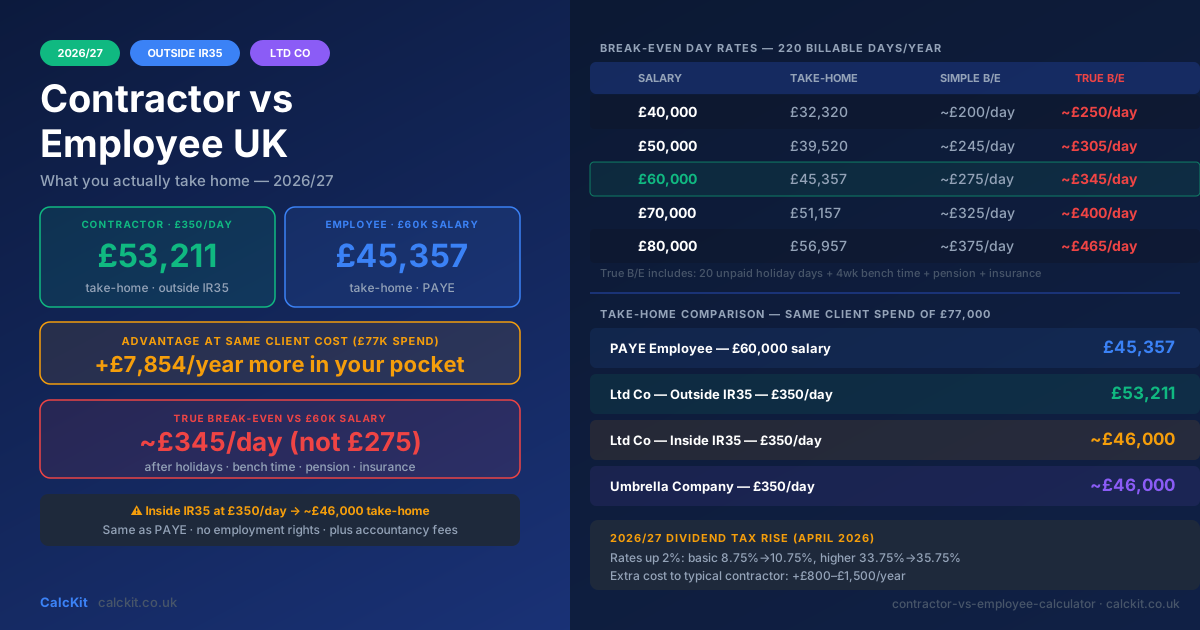
The client hiring a contractor at £350/day (220 days = £77,000) is paying the same total cost as employing someone on £60,000. The question is how much of that £77,000 you keep.
What a contractor actually takes home (outside IR35, limited company)
Outside IR35 through your own limited company, the rough mechanics are:
- Contract income flows into your company
- Pay yourself a small director salary (£12,570 — the personal allowance)
- Pay employer NI on salary above £5,000 (as a single-director company, you cannot claim Employment Allowance)
- Company pays corporation tax on profits
- Draw the rest as dividends — taxed at lower rates
Here are the real after-tax figures at key day rates, assuming 220 billable days and £2,500/year in accountancy and insurance costs:
| Day Rate | Revenue (220 days) | Take-Home (Outside IR35) | Take-Home (Inside IR35) |
|---|---|---|---|
| £200/day | £44,000 | £32,100 | ~£25,500 |
| £250/day | £55,000 | £40,735 | ~£32,000 |
| £300/day | £66,000 | £48,011 | ~£39,500 |
| £350/day | £77,000 | £53,211 | ~£46,000 |
| £400/day | £88,000 | £58,405 | ~£52,500 |
| £500/day | £110,000 | £70,200 | ~£64,000 |
Inside IR35 figures are approximate — use the IR35 calculator for your specific rate.
The break-even day rate — and why it's higher than you think
At first glance, the break-even looks generous to contractors. To match a £45,357 employee take-home (on £60k), you only need about £275/day as a contractor. That feels easy if the market rate for your skills is £350–450/day.
But this calculation ignores three costs that are always there:
Unpaid holidays. Employees get 28 days paid leave. Contractors don't. If you take 20 days off and your day rate is £350, that's £7,000 in lost income — before you've even accounted for bench time.
Bench time. The gap between contracts is real. A two-week break costs £3,500 at £350/day. A month costs £7,000. Most contractors budget for at least 4–6 weeks of non-billable time per year.
Self-funded pension. Your employer would have contributed £1,800/year on a £60k salary. As a contractor, you're contributing that yourself — from your take-home.
When you factor these in, the true break-even at each salary level is considerably higher:
| Annual Salary | Employee Take-Home | Simple Break-Even | True Break-Even (incl. holidays, bench, pension) |
|---|---|---|---|
| £40,000 | £32,320 | ~£200/day | ~£250/day |
| £50,000 | £39,520 | ~£245/day | ~£305/day |
| £60,000 | £45,357 | ~£275/day | ~£345/day |
| £70,000 | £51,157 | ~£325/day | ~£400/day |
| £80,000 | £56,957 | ~£375/day | ~£465/day |
If the market rate for your skills is right at or below the "simple break-even" column, contracting probably isn't worth the disruption.
Use the contractor vs employee calculator to run your specific numbers.
📋What IR35 does to these figures
IR35 status determines which set of figures applies to you. Outside IR35 gives you the higher take-home. Inside IR35 does not.
Inside IR35, the fee-payer (usually a recruitment agency or the client) deducts employer National Insurance before paying your company, then treats the remainder as deemed employment income — subject to full income tax and employee NI. You get no employment rights in return.
At £350/day inside IR35, you take home roughly £46,000 — similar to a PAYE employee on £60,000, but with accountancy fees on top.
The question of whether your contract falls inside or outside IR35 is decided by three status tests: personal service (can you send a substitute?), mutuality of obligation (are you obliged to accept work?), and control (does the client direct how you work?). A contract written correctly, and actually worked in line with those terms, can genuinely be outside IR35. A contract that looks like disguised employment will not.
Public sector clients place almost all contractors inside IR35 by default. Many medium and large private sector clients do the same to avoid liability. If you're primarily going to be working inside IR35, the financial case for contracting is much weaker. Read what is IR35 for the full picture.
The 2026/27 dividend tax rise
From April 2026, dividend tax rates rose by 2% across all bands:
| Band | 2025/26 | 2026/27 | Annual cost (on £40k dividends) |
|---|---|---|---|
| Basic rate | 8.75% | 10.75% | +£800 |
| Higher rate | 33.75% | 35.75% | +£800+ |
| Additional rate | 39.35% | 39.35% | — |
The dividend allowance remains at just £500 (down from £2,000 two years ago).
For a contractor drawing £40,000 in dividends per year, this costs an extra £800–£1,500 annually versus prior years. The tax efficiency of the Ltd Co route still beats PAYE — but the gap has narrowed. This makes it even more important to clear the true break-even, not just the simple one.
See dividend tax UK 2026/27 for the rate tables and calculation examples.
What contractors don't always account for
Beyond the day-rate maths, a few practical costs catch new contractors off guard:
Accountancy: A limited company requires annual accounts, a corporation tax return, a confirmation statement, and self assessment. Good contractor accountants charge £1,500–£3,000/year. Cheap online services exist but carry more risk if your IR35 status is challenged.
Professional indemnity insurance: Required by most clients and agencies. Typically £500–£1,500/year depending on your sector and contract value.
Public liability insurance: Often required alongside PI. Around £150–300/year.
Income protection: No SSP if you're sick. A 4-week illness that stops you billing costs the equivalent of £7,000 at £350/day. Income protection insurance costs roughly £50–150/month depending on your earnings and waiting period.
Mortgage complications: Most high-street lenders require two to three years of Ltd company accounts and assess affordability on salary plus dividends only — not your day rate. A contractor earning £100,000 in revenue but paying themselves £12,570 salary and £40,000 in dividends will be assessed on £52,570, not £100,000. Contractor-specialist lenders use day rate × 46 weeks × 5 days, which is far more appropriate. If you're planning to buy in the next two years, factor this in before you go contracting.
🏛When contracting is worth it
Clear yes:
- Your day rate comfortably clears the true break-even (not just the simple one)
- You're outside IR35 — or you have good grounds to be
- You have specialist skills that command a significant premium over equivalent seniority in employment
- You're comfortable with quarterly self assessment and running a company
- You want to build a pension via employer contributions from your Ltd Co into a SIPP (which is highly tax-efficient)
Probably not:
- Your day rate is right at or below the true break-even for your current salary
- Your client is public sector, or likely to place you inside IR35
- You're moving into contracting specifically to reduce tax — without a genuine premium in earnings to justify it, the admin outweighs the saving
- You're near the start of your career without an established day rate premium
Definitely not:
- Your role is inside IR35 and you're earning less than a comparable permanent employee would — you get worse tax treatment and no employment rights
- You're on a salary between £35,000 and £45,000 and your market day rate is £175–£220 — the numbers don't work outside IR35 once all costs are in
Comparing the routes side by side
For the same client engagement paying the equivalent of £77,000 total cost:
| Route | Take-Home | Employment Rights | Admin |
|---|---|---|---|
| PAYE employee (£60k salary) | £45,357 | Full | None |
| Ltd Co, outside IR35 (£350/day) | £53,211 | None | High |
| Ltd Co, inside IR35 (£350/day) | ~£46,000 | None | High |
| Umbrella company (£350/day) | ~£46,000 | Partial | Low |
Umbrella gives employment rights (holiday pay, SSP) but takes a margin (£15–25/week) and you pay employer NI on the gross — so take-home is similar to inside IR35 via Ltd, without the company admin. It's the sensible choice for short inside-IR35 contracts.
Use the contractor vs employee calculator to compare your specific day rate and salary side by side.
For context on how contractor income is taxed in detail, see self-employed tax UK 2026/27 and limited company vs PAYE UK. If you're setting a day rate rather than comparing to a specific salary offer, the freelancer day rate guide walks through the calculation from scratch.