
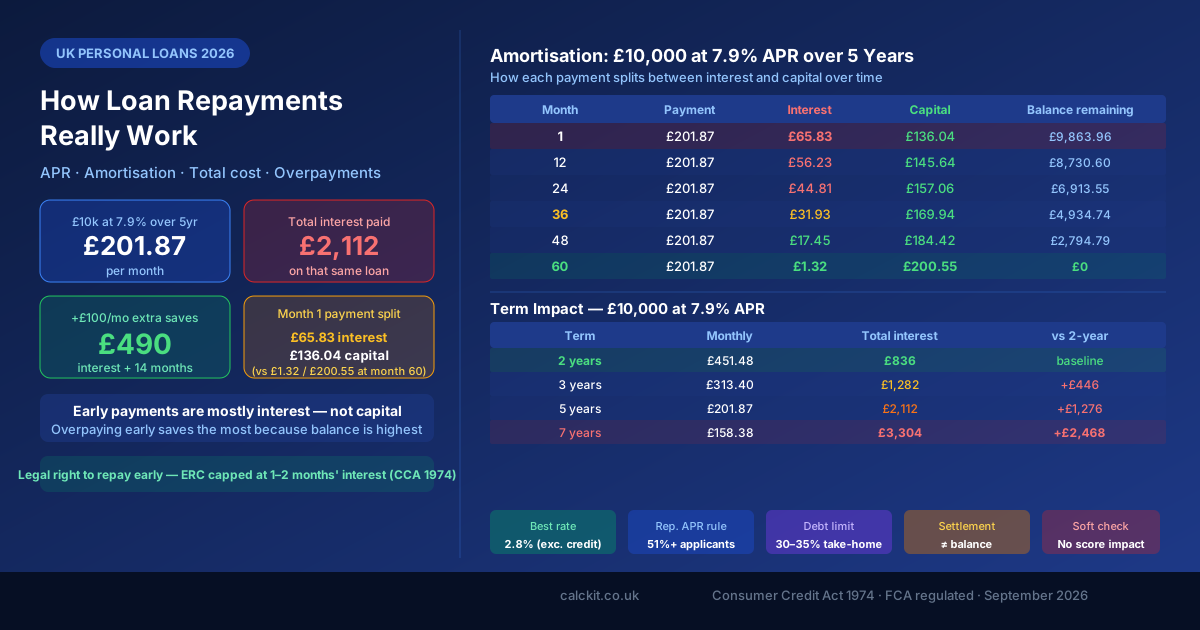
When you borrow £10,000 at 7.9% APR over five years, your monthly payment is £201.87. Most people stop there. But over those 60 months you repay £12,112 — £2,112 more than you borrowed. And in month one, £66 of your payment is pure interest. In month 60, it is less than £1.50.
That shift — from interest-heavy early payments to capital-heavy later ones — is called amortisation. Understanding it changes how you think about overpayments, early repayment, and whether a longer or shorter loan term is genuinely cheaper. This guide explains every layer of how UK loan repayments work, with tables showing the numbers at realistic borrowing amounts.
🏠How Loan Repayments Are Calculated
UK personal loans — and most car finance agreements and secured loans — use a method called amortisation. This produces equal monthly payments throughout the loan term. Each payment covers:
- The month's interest charge on the current outstanding balance
- A slice of the original capital (principal)
The formula that produces your fixed monthly payment is:
Monthly payment (M) = P × [ r(1+r)ⁿ ] ÷ [ (1+r)ⁿ − 1 ]
Where:
- P = loan amount (principal)
- r = monthly interest rate (annual APR ÷ 12)
- n = number of monthly payments (years × 12)
Example: £10,000 at 7.9% APR over 5 years (60 months)
- r = 7.9% ÷ 12 = 0.6583% per month
- Monthly payment = £201.87
- Total repaid = £12,112
- Total interest = £2,112
The monthly payment never changes — but what that payment contains shifts dramatically over time.
The Front-Loaded Interest Effect
This is the part most borrowers never see. Because interest is calculated on the outstanding balance, early payments are mostly interest (when the balance is highest) and later payments are mostly capital (when the balance is low).
Amortisation breakdown: £10,000 loan at 7.9% APR over 5 years
| Payment month | Monthly payment | Interest portion | Capital portion | Remaining balance |
|---|---|---|---|---|
| Month 1 | £201.87 | £65.83 | £136.04 | £9,863.96 |
| Month 6 | £201.87 | £61.25 | £140.62 | £9,410.35 |
| Month 12 | £201.87 | £56.23 | £145.64 | £8,730.60 |
| Month 24 | £201.87 | £44.81 | £157.06 | £6,913.55 |
| Month 36 | £201.87 | £31.93 | £169.94 | £4,934.74 |
| Month 48 | £201.87 | £17.45 | £184.42 | £2,794.79 |
| Month 60 | £201.87 | £1.32 | £200.55 | £0 |
By month 12 — one year in — you have paid £2,422 but your balance has only fallen to £8,731. Over £650 of your first year's payments went straight to interest. This is normal for amortising loans, not a scam or error.
Why this matters for overpayments: Making extra payments early in the loan reduces the balance at the point when interest charges are highest. Every pound of capital you remove early prevents months of interest from accruing.
APR: What It Really Means
APR (Annual Percentage Rate) is the annual cost of borrowing expressed as a percentage. It includes interest and any compulsory fees (arrangement fees, account fees) so you can compare loans on a like-for-like basis.
Representative APR is the rate shown in adverts. Under FCA rules, it must be the rate offered to at least 51% of approved applicants who apply based on that advert. The other 49% may receive a higher rate — potentially much higher — based on their credit profile.
What determines your actual rate:
- Credit score (the main factor — higher score = lower rate)
- Income and existing debts
- Employment status
- Loan amount and term (lenders often have rate tiers by amount)
- Whether the loan is secured or unsecured
Typical personal loan APR ranges in 2026:
| Credit profile | Typical APR range | £10,000 over 5 years — total interest |
|---|---|---|
| Excellent (750+ score) | 2.8%–4.9% | £723–£1,282 |
| Good (700–749) | 5%–9.9% | £1,299–£2,640 |
| Fair (650–699) | 10%–19.9% | £2,748–£5,643 |
| Poor (below 650) | 20%–49.9% | £5,828–£16,280 |
Check your credit report (free at Equifax, Experian, and TransUnion) before applying — your actual rate will depend on your individual profile.
Loan Term: Short vs Long — The True Cost
Many borrowers choose longer terms to reduce monthly payments without realising how much extra interest they pay overall.
£10,000 loan at 7.9% APR — term comparison:
| Term | Monthly payment | Total repaid | Total interest | vs 2-year loan |
|---|---|---|---|---|
| 2 years | £451.48 | £10,836 | £836 | — |
| 3 years | £313.40 | £11,282 | £1,282 | +£446 |
| 4 years | £244.74 | £11,748 | £1,748 | +£912 |
| 5 years | £201.87 | £12,112 | £2,112 | +£1,276 |
| 7 years | £158.38 | £13,304 | £3,304 | +£2,468 |
Choosing a 7-year term over 2 years to keep payments manageable costs nearly £2,500 extra in interest on the same £10,000. If the monthly difference is £293, you need a clear reason why you cannot afford it before accepting the longer term.
The sensible approach: Borrow over the shortest term your budget comfortably allows. A general rule: your total unsecured debt repayments should not exceed 30–35% of your monthly take-home pay.
Total Interest Cost: £1,000–£25,000 Across Rate Bands
The table below shows total interest over 5 years at three common APR levels for UK borrowers.
| Loan amount | At 4.9% APR | At 7.9% APR | At 14.9% APR |
|---|---|---|---|
| £1,000 | £128 | £213 | £411 |
| £3,000 | £384 | £639 | £1,233 |
| £5,000 | £639 | £1,056 | £2,055 |
| £7,500 | £959 | £1,584 | £3,083 |
| £10,000 | £1,279 | £2,112 | £4,110 |
| £15,000 | £1,918 | £3,168 | £6,165 |
| £25,000 | £3,197 | £5,280 | £10,275 |
A borrower with fair credit (14.9% APR) on a £15,000 loan pays £4,247 more in interest over 5 years than someone with excellent credit (4.9% APR) on the same loan. Improving your credit score before applying — even by 3–6 months of careful credit management — can save several thousand pounds.
💷How Much Can You Borrow? Affordability Rules
Lenders assess affordability before approving a personal loan. The calculation is broadly:
Monthly loan payment ÷ Monthly take-home pay ≤ 30–35%
Lenders also consider your total existing debt commitments — mortgage or rent, existing loan payments, credit card minimum payments.
Example: Take-home pay £2,600/month. Existing commitments: rent £900, car finance £250/month.
- Available for new debt repayments: 35% × £2,600 = £910
- Already committed: £250 (car finance — rent excluded by many lenders)
- Available headroom: £910 − £250 = £660/month for a new loan
At 7.9% APR over 5 years, £660/month supports a loan of approximately £32,500 in raw payment terms — but lenders will also apply income stress tests and maximum loan-to-income multiples (typically 3–5× annual gross income).
Soft vs hard credit checks: When you use an eligibility checker on a lender's website, it runs a soft search that does not affect your credit score. Only a full application triggers a hard search. Always use eligibility checkers before applying — multiple hard searches within a short period can reduce your score.
Overpayment: How Much Interest You Save
Making extra payments reduces your outstanding balance faster — which means less interest accrues each subsequent month. The compounding effect of overpayments is significant.
Overpayment savings on a £10,000 loan at 7.9% APR over 5 years:
| Extra monthly payment | Interest saved | Months cut from term | Time to repay |
|---|---|---|---|
| £0 (standard) | — | — | 60 months |
| +£50/month | £285 | 8 months | 52 months |
| +£100/month | £490 | 14 months | 46 months |
| +£200/month | £789 | 23 months | 37 months |
| +£500/month | £1,205 | 38 months | 22 months |
An extra £100/month cuts the total interest from £2,112 to £1,622 and pays off the loan 14 months early. If your lender allows overpayments without charges (check your agreement), this is almost always a good use of spare cash — see the savings vs loan comparison below.
How to make overpayments: Contact your lender to confirm whether you can overpay without charges, and whether overpayments reduce your term (preferred) or reduce future monthly payments. Most modern UK lenders allow unlimited overpayments on unsecured personal loans.
Early Repayment: Your Rights and the Charges
Under Section 94 of the Consumer Credit Act 1974, you have the right to repay any personal loan — fully or partially — at any time. Lenders cannot prevent early repayment.
Early Repayment Charges (ERCs): Lenders can charge a fee, but under the CCA it is capped at:
- 1 month's interest if you repay more than 12 months before the end of the term
- 2 months' interest if you repay within the final 12 months
On a £10,000 loan at 7.9% APR with a balance of £5,000 remaining, one month's interest is roughly £33. The ERC is rarely a reason to avoid early repayment.
Settlement Figure vs Outstanding Balance
These are often confused — they are different:
- Outstanding balance: The capital (principal) remaining on the loan
- Settlement figure: The total amount needed to fully close the loan today — includes outstanding capital plus accrued interest since your last payment, minus a statutory rebate under the Consumer Credit Act
Always request a formal settlement figure from your lender before paying off a loan. The figure is typically valid for 28 days. You cannot simply pay your last bank statement balance and assume the account is closed.
Personal Loan vs Credit Card vs Overdraft: True Cost Comparison
For smaller amounts and shorter periods, different borrowing products have very different costs.
Borrowing £2,000 for 12 months:
| Product | Typical APR | Monthly payment | Total interest | Notes |
|---|---|---|---|---|
| Personal loan | 6.9% | £173 | £75 | Fixed, predictable |
| 0% purchase card | 0% for 20 months | £100 | £0 | Only if cleared in time |
| Purchase card (ongoing) | 24.9% | Minimum (~£50) | £350+ | If only minimums paid |
| Authorised overdraft | 39.9% | Flexible | £420+ | Interest daily |
| Unarranged overdraft | Variable / fees | Varies | £800+ | FCA fee cap applies |
A 0% purchase credit card is genuinely the cheapest option for planned purchases — but only if you clear the balance before the 0% period ends. Letting it roll onto the standard rate (typically 20–25% APR) after the promotional period typically costs more than a personal loan would have from the start.
🐷Savings vs Loan Repayment: Which Wins?
Should you use savings to pay off a loan early? The maths is straightforward:
If your loan APR > savings rate: use savings to repay.
If your savings rate > loan APR: keep savings and pay normally.
Example (2026 rates):
- Personal loan at 7.9% APR
- Easy-access savings at 4.5% AER
- Net benefit of early repayment: 7.9% − 4.5% = 3.4% per year
On £5,000, that is roughly £170/year better off by repaying the loan. Over the remaining term, the saving compounds.
The emergency fund exception: Before using savings to repay a loan, keep at least 1–3 months of essential expenses in accessible savings. Paying off a loan and then needing credit again (at potentially worse rates) defeats the purpose.
See our tax on savings interest guide to understand whether your savings rate is affected by income tax — which changes the break-even calculation.
Secured vs Unsecured: The Key Difference
Unsecured personal loans (the standard type):
- No asset at risk
- Lender relies on your creditworthiness
- Available for £1,000–£50,000, typically 1–7 year terms
- Higher APR than secured equivalents
- Default consequences: CCJ, damaged credit score, debt collection — but not repossession
Secured loans (also called second-charge mortgages or homeowner loans):
- Secured against your home
- Default can lead to repossession
- Lower APR than unsecured equivalents
- Available for larger amounts and longer terms
- Appropriate for large amounts where the lower rate justifies the risk
For most people borrowing under £25,000 for personal use, an unsecured personal loan is appropriate. Never secure a loan against your home to pay off unsecured debts without taking independent advice — you are converting debt that cannot result in repossession into debt that can.
Quick Reference: Key Rules and Limits
| Rule or threshold | 2026 figure |
|---|---|
| Representative APR applies to | ≥51% of approved applicants |
| ERC cap (>12 months from end) | 1 month's interest |
| ERC cap (<12 months from end) | 2 months' interest |
| Recommended max debt repayments | 30–35% of take-home pay |
| Best personal loan APRs (2026) | 2.8–4.9% (excellent credit) |
| Typical APR for average credit | 6–10% |
| Settlement figure validity | Typically 28 days |
| Soft search | Does not affect credit score |
| Hard search | Affects credit score for up to 12 months |
For a worked calculation based on your own loan amount, term, and rate, use our mortgage overpayment calculator — the same amortisation maths applies to any amortising loan. See also our compound interest guide for a deeper look at how interest grows over time.
Last updated September 2026. APR ranges indicative for UK personal loan market, September 2026. Consumer Credit Act provisions from gov.uk/early-repayment-charges-on-loans. For advice on specific borrowing decisions, consult an FCA-authorised independent financial adviser.