
Around 1 in 3 UK adults have high blood pressure. Of those, roughly half are undiagnosed — they have no idea their readings are elevated because high blood pressure causes no obvious symptoms in the vast majority of people.
The only way to know is to check.
🩺What the two numbers mean
A blood pressure reading gives you two figures — for example, 130/85 mmHg.
Systolic (top number): the pressure in your arteries when your heart contracts and pumps blood out. This is the higher figure.
Diastolic (bottom number): the pressure when your heart relaxes between beats. This is the lower figure.
Both numbers matter and are measured in millimetres of mercury (mmHg). A reading of 130/85 means 130 mmHg systolic and 85 mmHg diastolic.
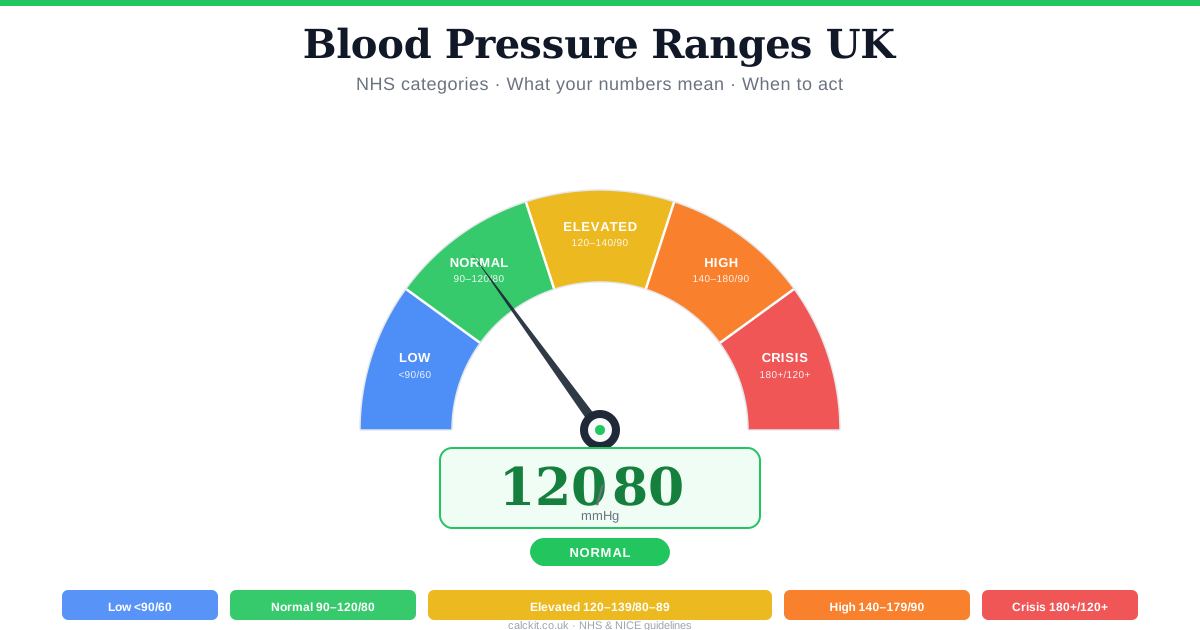
UK blood pressure categories — NHS chart
These are the blood pressure categories used in UK clinical practice, based on NHS and NICE guidance:
| Category | Systolic (mmHg) | Diastolic (mmHg) | What it means |
|---|---|---|---|
| Low (Hypotension) | Below 90 | Below 60 | May cause dizziness or fainting; see GP if symptomatic |
| Ideal / Normal | 90–120 | 60–80 | Healthy range; low cardiovascular risk |
| Elevated (Pre-high) | 121–139 | 81–89 | Higher than ideal; lifestyle changes recommended |
| High — Stage 1 | 140–159 | 90–99 | Hypertension; GP review and possible treatment |
| High — Stage 2 | 160–179 | 100–119 | Significant hypertension; treatment very likely needed |
| Hypertensive Crisis | 180+ | 120+ | Medical emergency — call 999 or go to A&E |
Important distinction — clinic vs home readings: The NHS diagnoses hypertension at 140/90 mmHg or above in a clinic, but at a lower threshold of 135/85 mmHg on home or ambulatory monitoring (ABPM). Home readings are typically 5 mmHg lower than clinic readings, which is why NICE recommends confirming a high clinic reading with home monitoring before diagnosing hypertension.
A single high reading does not mean you have hypertension. Blood pressure varies throughout the day and in response to activity, stress, and even caffeine. NHS diagnosis requires consistently elevated readings over several weeks, typically confirmed by home monitoring or ambulatory blood pressure monitoring (ABPM) over 24 hours.
Average blood pressure by age — UK
Blood pressure naturally rises with age as arteries stiffen. These are typical average ranges for UK adults at each age group:
| Age group | Typical systolic (mmHg) | Typical diastolic (mmHg) |
|---|---|---|
| 18–29 | 108–120 | 68–80 |
| 30–39 | 110–122 | 70–82 |
| 40–49 | 112–125 | 70–83 |
| 50–59 | 116–130 | 72–85 |
| 60–69 | 121–135 | 75–85 |
| 70+ | Up to 150 | Up to 90 |
These are population averages, not targets. The NHS treatment target for all adults under 80 is still below 140/90 mmHg (clinic) regardless of age. The target for adults aged 80 and over is slightly higher — below 150/90 mmHg — because very low blood pressure in older adults increases the risk of falls and dizziness.
High blood pressure: why most people have no symptoms
This is the most important thing to understand about hypertension: it is almost always asymptomatic. Headaches, nosebleeds, and dizziness are not reliable warning signs — most people with these symptoms have normal blood pressure, and most people with very high blood pressure feel completely well.
Blood pressure does its damage silently over years: weakening artery walls, overworking the heart, and raising the risk of heart attack, stroke, kidney disease, and vision loss. This is why it is sometimes called the "silent killer."
The only way to detect it is to measure it — which is why the NHS offers free blood pressure checks as part of the NHS Health Check (offered every 5 years to adults aged 40–74) and recommends checking at least every five years if your reading is normal.
Who is at higher risk of high blood pressure?
Risk factors that raise the likelihood of developing hypertension:
- Age — blood pressure rises naturally as arteries stiffen with age
- Family history — hypertension runs in families; having a parent with it increases your risk
- Ethnicity — people of Black African or Black Caribbean background have significantly higher rates of hypertension in the UK, often developing it at a younger age and to a more severe degree
- Being overweight or obese — particularly abdominal fat increases cardiovascular strain
- High salt intake — the average UK adult consumes 8–9g of salt per day; the NHS target is under 6g
- Physical inactivity
- Alcohol above 14 units per week
- Smoking — damages artery walls directly
- Chronic stress
- Underlying conditions — kidney disease, sleep apnoea, and Type 2 diabetes all raise hypertension risk
- Certain medications — including some contraceptive pills, NSAIDs (like ibuprofen taken regularly), and decongestants
How to measure blood pressure accurately at home
Inaccurate technique adds false mmHg to your readings. Follow this protocol for a reliable home reading:
- Rest for 5 minutes before measuring — do not measure immediately after exercise, caffeine, or a cigarette
- Sit correctly — feet flat on the floor, back supported, legs uncrossed
- Position the cuff properly — upper arm at heart level, cuff fitted snugly 2cm above the elbow crease
- Stay still and silent — do not talk or move during the reading
- Take two readings — wait 1–2 minutes between readings and record both; average them
- Use the same arm — readings can differ slightly between arms; use the arm that gives the higher reading consistently
White coat hypertension: some people's blood pressure rises in clinical settings due to anxiety. If your clinic reading is high but you feel well, a GP will often recommend home monitoring or 24-hour ABPM to confirm. Home readings are typically 5 mmHg lower.
Use a validated home blood pressure monitor with an upper-arm cuff. Wrist monitors are less reliable. Look for the British and Irish Hypertension Society (BIHS) validated device list at bihsoc.org for confirmed-accurate models.
What to do based on your reading
| Your reading | Recommended action |
|---|---|
| Below 90/60 | Monitor; see GP if you have dizziness, fainting, or fatigue |
| 90/60–120/80 | Normal — recheck in 5 years (or sooner if risk factors present) |
| 121–139/81–89 | Pre-high — lifestyle changes (diet, activity, salt), recheck in 1 year |
| 140–159/90–99 | See your GP — likely needs monitoring, may need medication |
| 160–179/100–119 | See your GP soon — treatment very likely required |
| 180+/120+ | Call 999 or go to A&E immediately |
If your reading is 180/120 mmHg or above, do not wait. This is a hypertensive crisis. Call 999 or go to your nearest A&E, particularly if you have chest pain, severe headache, shortness of breath, or vision changes alongside the high reading.
How to lower blood pressure — with specific numbers
Lifestyle changes work, and the evidence is specific. Here is what each change achieves in terms of systolic pressure reduction:
| Change | Typical systolic reduction |
|---|---|
| Reduce salt intake to under 6g/day | ~4 mmHg |
| Lose 5 kg of body weight | ~4–5 mmHg |
| 150+ minutes of moderate aerobic exercise per week | ~4–8 mmHg |
| Limit alcohol to under 14 units per week | ~3–4 mmHg |
| Follow a DASH or Mediterranean diet | ~4–11 mmHg |
| Reduce stress / improve sleep | ~2–4 mmHg |
| Stop smoking | Reduces cardiovascular risk significantly (effects on BP are modest but vascular damage reverses) |
Combined, these changes can reduce systolic by 15–30 mmHg in people with Stage 1 or 2 hypertension — enough to bring many readings into the normal range without medication.
The salt point: most UK salt comes from processed food and bread, not from adding it at the table. Reducing ultra-processed food intake naturally cuts salt. Check labels — anything above 1.5g salt per 100g is high.
Exercise specifics: 30 minutes of brisk walking five times a week meets the 150-minute threshold and is one of the most evidence-supported interventions for blood pressure. Swimming and cycling are equally effective.
Blood pressure targets for specific groups
Some patients have different treatment targets based on underlying conditions:
| Group | NHS/NICE target (clinic) |
|---|---|
| Adults under 80, no diabetes or CKD | Below 140/90 |
| Adults aged 80 and over | Below 150/90 |
| Adults with Type 2 diabetes | Below 140/90 (some guidelines target 130/80) |
| Adults with chronic kidney disease (CKD) | Below 140/90 (or 130/80 if also diabetic or high-protein urine) |
| Adults with previous stroke or TIA | Below 130/80 (NICE 2022 guidance) |
If you have any of these conditions, your GP will have discussed your specific target. The blood pressure categories above are for the general adult population.
Blood pressure medication
If lifestyle changes alone are not enough, or if your blood pressure is very high, your GP may prescribe medication. The main classes used in the UK:
- ACE inhibitors / ARBs (e.g., ramipril, losartan) — the most commonly prescribed first-line treatment for most adults
- Calcium channel blockers (e.g., amlodipine) — often preferred for older adults or Black patients
- Thiazide diuretics (e.g., indapamide) — usually added as a second agent
- Beta blockers (e.g., bisoprolol) — used in specific circumstances such as heart failure or previous heart attack
Most people with hypertension end up on a combination of two agents. The goal is not to avoid medication — it is to get blood pressure under control, whether through lifestyle, medication, or both. Uncontrolled hypertension causes far more damage than any of these medications.
Related health tools
Blood pressure does not exist in isolation. It is one signal among several — BMI, weight, activity level, diet, and sleep all interact with cardiovascular risk.
⚕️Blood pressure categories based on NHS and NICE guidance (NG136, updated 2022). This article is for information only and does not constitute medical advice. If you have concerns about your blood pressure, speak to your GP. For a hypertensive crisis (180/120 mmHg or above), call 999 immediately.