
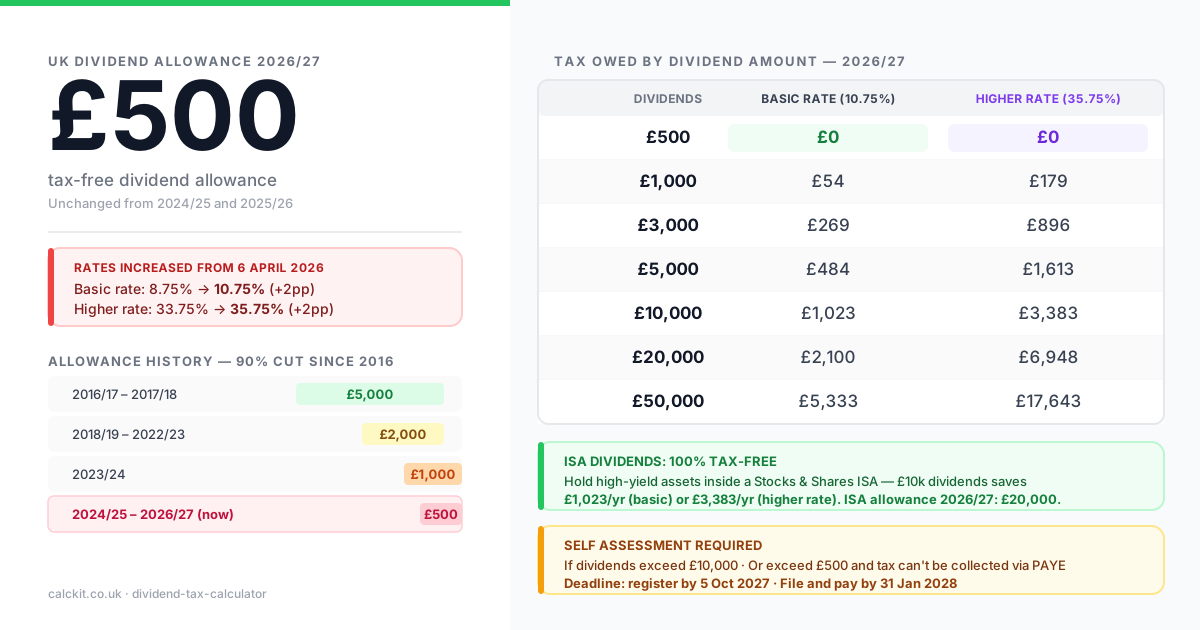
The UK dividend allowance has been cut from £5,000 to £500 over the past decade — and from 6 April 2026, both the basic and higher dividend tax rates rose by 2 percentage points. If you receive dividends from shares, funds, or your own limited company, here is exactly what changes and what you now owe.
💰Dividend Allowance 2026/27 — The Key Numbers
| 2026/27 | 2025/26 | Change | |
|---|---|---|---|
| Dividend allowance | £500 | £500 | No change |
| Basic rate (up to ~£50,270) | 10.75% | 8.75% | +2pp |
| Higher rate (£50,271–£125,140) | 35.75% | 33.75% | +2pp |
| Additional rate (above £125,140) | 39.35% | 39.35% | No change |
The allowance is frozen again — but the rate increase from April 2026 means taxpayers above the allowance pay more than last year on the same dividend income.
How the Allowance Has Shrunk Since 2016
The dividend allowance has been cut five times in ten years:
| Tax year | Dividend allowance | Change |
|---|---|---|
| 2016/17 – 2017/18 | £5,000 | Introduced |
| 2018/19 – 2022/23 | £2,000 | Cut by £3,000 |
| 2023/24 | £1,000 | Cut by £1,000 |
| 2024/25 | £500 | Cut by £500 |
| 2025/26 – 2026/27 | £500 | Frozen |
The current £500 allowance is 90% lower than the original 2016 figure. An investor who received £5,000 in dividends in 2016 paid no tax on them. The same investor in 2026/27 pays tax on £4,500 of those dividends.
How Much Tax Will You Pay? — At Every Income Level
Dividends are top-sliced — they sit on top of your other income (salary, pension, rental income) in the tax calculation. The table below shows dividend tax owed for a basic-rate taxpayer (income below £50,270 before dividends) and a higher-rate taxpayer (income already above £50,270).
| Dividend income | Basic-rate taxpayer | Higher-rate taxpayer |
|---|---|---|
| £500 | £0 (all within allowance) | £0 (all within allowance) |
| £1,000 | £54 (£500 × 10.75%) | £179 (£500 × 35.75%) |
| £2,000 | £161 | £538 |
| £3,000 | £269 | £896 |
| £5,000 | £484 | £1,613 |
| £10,000 | £1,023 | £3,383 |
| £20,000 | £2,100 | £6,948 |
| £30,000 | £3,178 | £10,513 |
| £50,000 | £5,333 | £17,643 |
Basic-rate taxpayer: assumes dividends fall entirely within the basic rate band. Higher-rate taxpayer: assumes dividends fall entirely in the higher rate band. Where dividends straddle the band boundary (income + dividends crosses £50,270), the first portion is taxed at basic rate and the rest at higher rate.
🏛The Top-Slice Rule — Why Your Salary Matters
Dividends sit on top of all other income. This is the most common source of unexpected higher-rate dividend tax.
Example: You earn a £35,000 salary. Your basic rate band runs from £12,570 to £50,270 — you have £15,270 of basic rate band left. If you receive £20,000 in dividends:
- £500 is covered by the dividend allowance → £0 tax
- £14,770 falls within the remaining basic rate band → £14,770 × 10.75% = £1,588
- £4,730 tips into the higher rate band → £4,730 × 35.75% = £1,691
- Total dividend tax: £3,279
Had you assumed all £20,000 would be taxed at 10.75%, you would have estimated £2,100 — an underestimate of £1,179.
For Company Directors — Salary + Dividend Strategy
For directors with no other income, taking a small salary and filling the rest of the basic rate band with dividends remains the most tax-efficient approach in 2026/27.
| Strategy | Salary | Dividends | Income tax | NI (employee) | Effective rate |
|---|---|---|---|---|---|
| All salary (PAYE) | £50,270 | £0 | ~£7,540 | ~£4,284 | ~23.5% |
| Salary to PA + dividends | £12,570 | £37,200 | ~£3,957* | ~£0 | ~7.9% |
| Salary to NI threshold + dividends | £9,100 | £40,670 | ~£3,957* | ~£0 | ~7.9% |
Dividend tax only on the £37,200 above the £500 allowance, all at 10.75% = £3,957.
The effective rate difference (7.9% vs 23.5%) persists even after accounting for corporation tax on company profits. At 25% CT rate, the combined burden on profits paid as dividends is approximately:
- 25% corporation tax on profit
- 10.75% on the dividend (basic rate)
- Effective combined rate on gross profit: ~35%
Compared with a salary equivalent (income tax + employer NI + employee NI) of ~45–47% on the same gross cost — still a significant gap, though smaller than it was before the 2026 rate rise.
Dividend voucher requirement: Every time a dividend is paid by a limited company, the company must issue a dividend voucher stating the company name, date, shareholder name, and dividend amount. HMRC can require these in an investigation. Keep records even for single-director companies.
When You Must File Self Assessment
You must register for Self Assessment and declare dividend income if:
| Situation | Action required |
|---|---|
| Total dividend income over £10,000 | Must file Self Assessment — mandatory |
| Dividend income over £500 (above the allowance) | Must notify HMRC; tax may be collected via PAYE code if under ~£3,000 |
| Director of a limited company | Expected to file Self Assessment regardless of dividend amount |
| Scottish taxpayer | Scottish rates apply; file Self Assessment to report correctly |
Deadline: Register for Self Assessment by 5 October 2027 for income received in the 2026/27 tax year. File and pay by 31 January 2028.
Failing to register can result in a late-registration penalty on top of any tax owed.
ISA Strategy — Sheltering Dividend Income
Dividends inside a Stocks and Shares ISA are entirely tax-free and do not count toward the £500 allowance. The annual ISA allowance is £20,000 in 2026/27.
For investors with significant dividend income, the tax saving from ISA sheltering is now substantial at the new 2026/27 rates:
| Annual dividend income (ISA) | Tax saved (basic rate) | Tax saved (higher rate) |
|---|---|---|
| £1,000 | £54 | £179 |
| £5,000 | £484 | £1,613 |
| £10,000 | £1,023 | £3,383 |
| £20,000 | £2,100 | £6,948 |
Strategy: Prioritise placing highest-yielding holdings inside the ISA first. Each £1,000 of dividend yield inside an ISA saves £108–£358 per year (at current rates) compared to holding the same asset outside the wrapper.
Quick Reference — 2026/27 Dividend Tax
| Tax-free allowance | £500 |
| Basic rate | 10.75% |
| Higher rate | 35.75% |
| Additional rate | 39.35% |
| Personal Allowance | £12,570 |
| Basic rate band limit | £50,270 |
| Higher rate band limit | £125,140 |
| ISA annual allowance | £20,000 |
| Self Assessment threshold | Dividends above £500 (or £10,000 if collected via PAYE) |
| Self Assessment registration deadline | 5 October 2027 |
| Payment deadline | 31 January 2028 |
Last updated November 2026. Rates and allowances based on 2026/27 HMRC figures. Scottish taxpayers pay different income tax rates, which affects the band into which dividends fall. This article is for information only; for personalised tax advice consult a qualified accountant or tax adviser.