
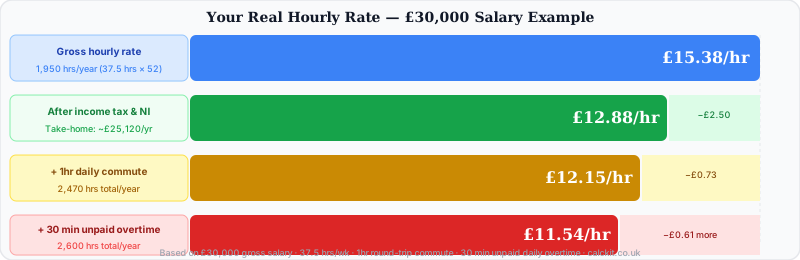
A £30,000 salary sounds like £15.38 per hour. But after income tax, National Insurance, and a one-hour daily commute, your real hourly rate drops to around £12.15. Add 30 minutes of unpaid overtime each day and you are effectively working for £11.54 an hour.
Knowing your true hourly rate is useful in several situations: comparing a salaried role to a freelance contract, evaluating a pay rise, checking you are above the National Living Wage, or simply understanding what an hour of your time is worth.
The method is identical whether you want to convert a yearly salary to an hourly rate, turn a monthly salary into hourly pay, or simply go from wage to hourly rate. This guide uses £30,000 a year as its running example and shows the gross and net figures at every salary level.
🕐The Formula: Calculate Your Hourly Rate From Annual Salary
The core calculation is straightforward:
Hourly rate = Annual salary ÷ (Hours per week × 52)
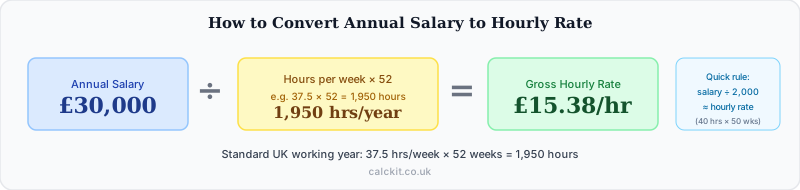
The standard UK working year is 37.5 hours per week × 52 weeks = 1,950 hours. Many office and professional roles use 37.5 hours. Manual, retail, and some public sector roles use 40 hours (2,080 hours per year).
Quick mental estimate: Divide your salary by 2,000. A £40,000 salary ≈ £20 per hour. Not exact, but close enough for back-of-envelope comparisons.
Worked Examples at Common UK Salaries
| Annual Salary | Hours/Week | Annual Hours | Gross Hourly | Gross Daily |
|---|---|---|---|---|
| £25,000 | 37.5 | 1,950 | £12.82 | £96.15 |
| £30,000 | 37.5 | 1,950 | £15.38 | £115.38 |
| £35,000 | 37.5 | 1,950 | £17.95 | £134.62 |
| £40,000 | 37.5 | 1,950 | £20.51 | £153.85 |
| £45,000 | 37.5 | 1,950 | £23.08 | £173.08 |
| £50,000 | 37.5 | 1,950 | £25.64 | £192.31 |
| £60,000 | 37.5 | 1,950 | £30.77 | £230.77 |
| £70,000 | 37.5 | 1,950 | £35.90 | £269.23 |
| £80,000 | 37.5 | 1,950 | £41.03 | £307.69 |
For non-standard hours, the same formula applies — just substitute your actual contracted hours:
- 40 hrs/week (2,080 hrs/yr): £30,000 ÷ 2,080 = £14.42/hr
- 35 hrs/week (1,820 hrs/yr): £30,000 ÷ 1,820 = £16.48/hr
Gross vs Net Hourly Rate — The Bit Most People Miss
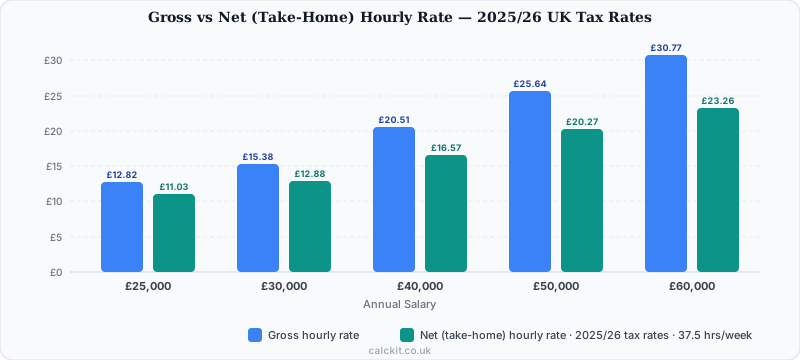
The figures above are gross — before tax. What actually hits your bank account per hour is meaningfully lower, especially as salary rises.
Using 2026/27 UK income tax and National Insurance rates (standard 1257L tax code, no student loan):
| Annual Salary | Gross Hourly | Annual Take-Home | Net Hourly | Tax kept (%) |
|---|---|---|---|---|
| £25,000 | £12.82 | £21,520 | £11.03 | 86% |
| £30,000 | £15.38 | £25,120 | £12.88 | 84% |
| £40,000 | £20.51 | £32,320 | £16.57 | 81% |
| £50,000 | £25.64 | £39,520 | £20.27 | 79% |
| £60,000 | £30.77 | £45,357 | £23.26 | 76% |
| £80,000 | £41.03 | £56,957 | £29.21 | 71% |
The gap between gross and net widens as salary increases. At £25,000 you keep 86% of your gross hourly earnings; at £80,000 you keep only 71%.
Scotland: Scottish taxpayers pay different income tax rates set by the Scottish Government. The intermediate rate (21%) and higher rate (42%) mean Scottish workers earning above roughly £33,500 keep slightly less than the figures above. Use our income tax calculator to see your exact Scottish take-home, or see our guide to the 2026/27 tax bands for the full breakdown of thresholds.
Use the calculator to get the precise net hourly figure for your own salary:
🕐UK Working Hours by Sector
Your hourly rate depends heavily on your contracted hours. The same £35,000 salary means something different at 37.5 hours versus 45 hours.
| Sector | Typical Weekly Hours | Annual Hours | £35k Gross Hourly |
|---|---|---|---|
| Office / professional | 37.5 hrs | 1,950 | £17.95 |
| NHS (standard) | 37.5 hrs | 1,950 | £17.95 |
| Public sector | 37 hrs | 1,924 | £18.19 |
| Retail / hospitality | 40 hrs | 2,080 | £16.83 |
| Manufacturing | 39 hrs | 2,028 | £17.26 |
| Finance (typical) | 42–45 hrs | 2,184–2,340 | £14.96–£16.03 |
Finance sector employees in London regularly work 45+ hours with no overtime pay, which means their effective hourly rate is considerably lower than the headline figure suggests.
Your Real Hourly Rate: The Effective Rate
Gross hourly rate tells you what your employer pays per hour of contracted work. It says nothing about the total time your job actually takes. Two factors routinely reduce the real rate: commuting and unpaid overtime.
Commuting: A one-hour round-trip commute means you spend an extra 260 hours per year on work-related travel. That time is uncompensated.
Unpaid overtime: According to TUC data, UK employees work an average of 7.7 hours of unpaid overtime per week. Even a conservative 30 minutes daily adds 130 hours to your work year.
For a £30,000 salary:
| Scenario | Annual Hours | Effective Hourly |
|---|---|---|
| Gross hourly (contracted only) | 1,950 | £15.38 |
| Net after tax and NI | 1,950 | £12.88 |
| + 1hr daily commute | 2,470 | £12.15 |
| + 30 min unpaid overtime/day | 2,600 | £11.54 |
The difference between £15.38 and £11.54 is significant. This calculation does not suggest working somewhere else — it clarifies the true value of your time when comparing job offers, negotiating pay, or deciding whether to take on freelance work evenings and weekends.
Part-Time and Non-Standard Hours
For part-time workers, the formula is identical — use your actual contracted hours:
Hourly rate = Annual salary ÷ (Contracted hours per week × 52)
Examples:
| Contract | Annual Salary | Hourly Rate |
|---|---|---|
| 4 days/week (30 hrs) | £28,000 | £17.95/hr |
| 3 days/week (22.5 hrs) | £21,000 | £17.95/hr |
| 20 hrs/week | £15,000 | £14.42/hr |
Note that part-time workers on the same job are often paid the same hourly rate as their full-time equivalent — the annual salary just scales down proportionally, which is exactly what pro rata pay means.
Zero-hours contracts: If your hours vary week to week, calculate your average hourly rate using recent payslips:
Hourly rate = Total earnings over 12 weeks ÷ Total hours worked over 12 weeks
This is also the method HMRC uses to check minimum wage compliance for workers with irregular hours.
Comparing Two Job Offers Using Hourly Rate
When comparing job offers with different salaries and hours, the hourly rate gives you a like-for-like comparison. But take it one step further and include benefits.
Example: Job A pays £38,000 for 37.5 hrs/week. Job B pays £35,000 for 35 hrs/week with a £5,000 pension contribution.
| Job A | Job B | |
|---|---|---|
| Annual salary | £38,000 | £35,000 |
| Employer pension (5%) | £1,900 | £1,750 |
| Annual value | £39,900 | £36,750 |
| Weekly hours | 37.5 | 35 |
| Annual hours | 1,950 | 1,820 |
| Effective hourly (incl. pension) | £20.46 | £20.19 |
Job A appears £3,000 better — but once you account for shorter hours and the pension, Job B is within 1.3% of Job A's total value and gives you 2.5 hours back each week.
Run both through the calculator to see the net (take-home) comparison:
🕐Checking Against the National Living Wage
From 1 April 2026, the rates are:
| Age group | Hourly rate | Annual equivalent (37.5 hrs) |
|---|---|---|
| 21 and over (National Living Wage) | £12.71/hr | £24,785 |
| 18–20 (National Minimum Wage) | £10.85/hr | £21,158 |
| Under 18 | £8.00/hr | £15,600 |
| Apprentice | £8.00/hr | £15,600 |
To check whether your pay meets the minimum, compare your gross hourly rate with the rate for your age group. If it falls below the rate for your age group, your employer is breaking the law. Report it to HMRC's National Minimum Wage team.
Unpaid overtime and minimum wage: If unpaid overtime pushes your average hours above your contracted hours, this can cause your effective hourly rate to fall below the minimum wage — even if your contracted hourly rate looks compliant. HMRC calculates compliance using total pay divided by total hours worked, including overtime.
Freelancers and Contractors: The 2× Rule
If you are considering going freelance, your hourly rate must be significantly higher than your employed equivalent. Here is why:
As an employee on £40,000 (£20.51/hr), your employer also pays:
- Employer NI at 15% above £5,000 = approximately £5,250/yr
- Employer pension (minimum 3%) = £1,200/yr
- 28 days paid leave (holiday + bank holidays) = £2,221 in paid-for-but-unworked time
The true cost of employing you is closer to £48,671 per year. As a freelancer, you absorb all of those costs yourself. You also have no sick pay, no income between contracts, and business overheads.
The rule of thumb: charge 1.5× to 2× your employed hourly rate as a freelance minimum. For £40,000 (£20.51/hr employed), your freelance floor should be £30–£41/hr. Add margin for experience and specialism. For the full formula, see our guide on how to set your freelance rates, and check how your target compares to UK freelance day rates in 2026.
Use the freelancer rate calculator to work out your specific floor rate:
👤Frequently Asked Questions
How do I convert my annual salary to hourly in the UK? Divide your annual salary by your total annual working hours. For a standard 37.5-hour week: annual hours = 37.5 × 52 = 1,950. A £30,000 salary ÷ 1,950 = £15.38 per hour gross. For the net (after-tax) figure, divide your annual take-home pay by the same number of hours.
How many working hours are in a UK year? At 37.5 hours per week: 1,950 hours. At 40 hours per week: 2,080 hours. Most office and professional roles use 37.5 hours. These figures assume you work all 52 weeks. If you exclude your 28 days of statutory annual leave (5.6 weeks), the working hours drop to roughly 1,755 (37.5 × 46.8 weeks) — this is the figure to use if you want to see your hourly rate across only the weeks you actually work.
Is £15 an hour a good wage in the UK? £15 per hour equates to £29,250 per year on a standard 37.5-hour week. That is above the legal minimum (£12.71/hr) and the real Living Wage (£13.45/hr, or £14.80/hr in London), but below the UK median for full-time employees of £39,039 a year (ONS, April 2025) — roughly £20/hr on a 37.5-hour week.
What is £12.71 an hour annually? The National Living Wage of £12.71/hr works out to £24,785 per year at 37.5 hrs/week, or £26,437 at 40 hrs/week. This is the legal minimum for workers aged 21 and over from 1 April 2026.
How do I calculate my hourly rate if I work irregular hours? For zero-hours contracts or irregular schedules, use a 12-week average: add up all your earnings over 12 weeks, then divide by all hours worked over the same period. This gives your average hourly rate and is also the method HMRC uses for minimum wage compliance checks.
How do I convert hourly rate back to annual salary? Multiply hourly rate × weekly hours × 52. For example: £18/hr × 37.5 hrs × 52 weeks = £35,100 per year gross.
Does my salary include employer pension contributions? No — your stated salary is your gross pay before deductions. Your employer's pension contribution (minimum 3% under auto-enrolment) is paid on top and does not appear in your contracted salary figure. When comparing job offers, always ask for the total compensation package including employer pension, not just the headline salary.