
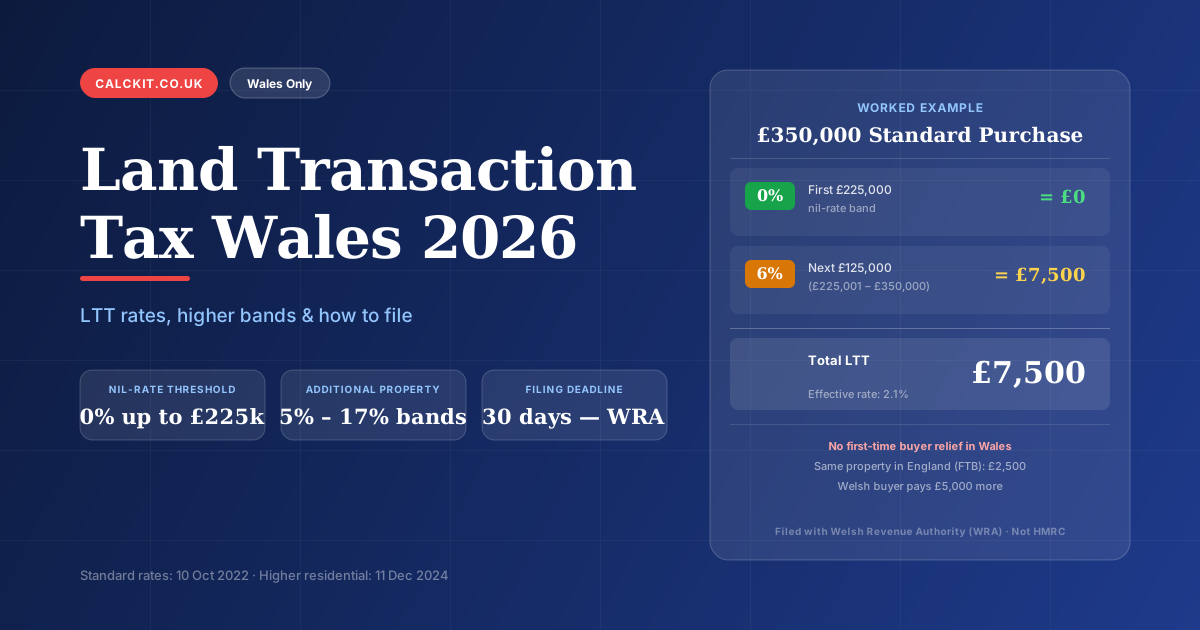
If you are buying property in Wales, you pay Land Transaction Tax — not stamp duty. The two taxes look similar on the surface but differ in ways that will cost you thousands if you assume they work the same way.
This guide covers the 2026 LTT rates in full, the December 2024 higher rate changes, why first-time buyers in Wales get a worse deal than buyers in England, and everything you need to file correctly.
🏴What is Land Transaction Tax?
Land Transaction Tax (LTT) replaced Stamp Duty Land Tax (SDLT) in Wales on 1 April 2018. It applies to the purchase of land and property in Wales and is administered by the Welsh Revenue Authority (WRA) — not HMRC.
The WRA is separate from HMRC. You file your return through the WRA's online portal, not through a self-assessment. Your solicitor will typically handle this as part of the conveyancing process, but understanding the tax helps you budget accurately before you make an offer.
LTT applies to:
- Residential property (houses, flats, second homes, buy-to-let)
- Commercial and non-residential property
- Land
- Leasehold transactions
- Property transfers (including some non-cash transactions)
Standard residential LTT rates 2026
These rates apply if you are buying a home and it will be your only property.
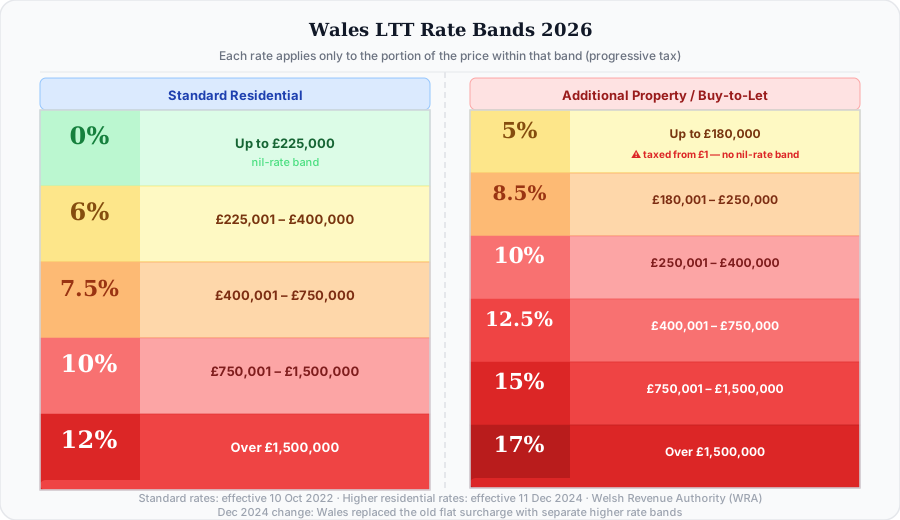
| Purchase Price Band | LTT Rate |
|---|---|
| Up to £225,000 | 0% |
| £225,001 – £400,000 | 6% |
| £400,001 – £750,000 | 7.5% |
| £750,001 – £1,500,000 | 10% |
| Over £1,500,000 | 12% |
Effective from 10 October 2022. No changes announced for 2026/27.
LTT is a progressive tax. You pay each rate only on the portion of the price that falls within that band — not on the whole purchase price. The 6% rate applies only to the amount above £225,000, not to the entire price.
Worked examples: standard residential
£200,000 property
- Up to £225,000 at 0% = £0
- Total LTT: £0
You pay nothing on properties at or below £225,000. This is the highest nil-rate threshold in the UK.
£280,000 property
- First £225,000 at 0% = £0
- Remaining £55,000 at 6% = £3,300
- Total LTT: £3,300
£350,000 property
- First £225,000 at 0% = £0
- Remaining £125,000 at 6% = £7,500
- Total LTT: £7,500
£500,000 property
- First £225,000 at 0% = £0
- £175,000 (£225k–£400k band) at 6% = £10,500
- £100,000 (£400k–£500k) at 7.5% = £7,500
- Total LTT: £18,000
£800,000 property
- First £225,000 at 0% = £0
- £175,000 at 6% = £10,500
- £350,000 (£400k–£750k) at 7.5% = £26,250
- £50,000 (£750k–£800k) at 10% = £5,000
- Total LTT: £41,750
| Property Price | LTT Payable | Effective Rate |
|---|---|---|
| £200,000 | £0 | 0% |
| £280,000 | £3,300 | 1.2% |
| £350,000 | £7,500 | 2.1% |
| £500,000 | £18,000 | 3.6% |
| £750,000 | £39,750 | 5.3% |
| £1,000,000 | £64,750 | 6.5% |
Use our Wales LTT calculator to check the exact figure for any property price — it applies every band automatically.
Wales has no first-time buyer relief
This is the most important difference between Wales and England — and the one most buyers discover too late.
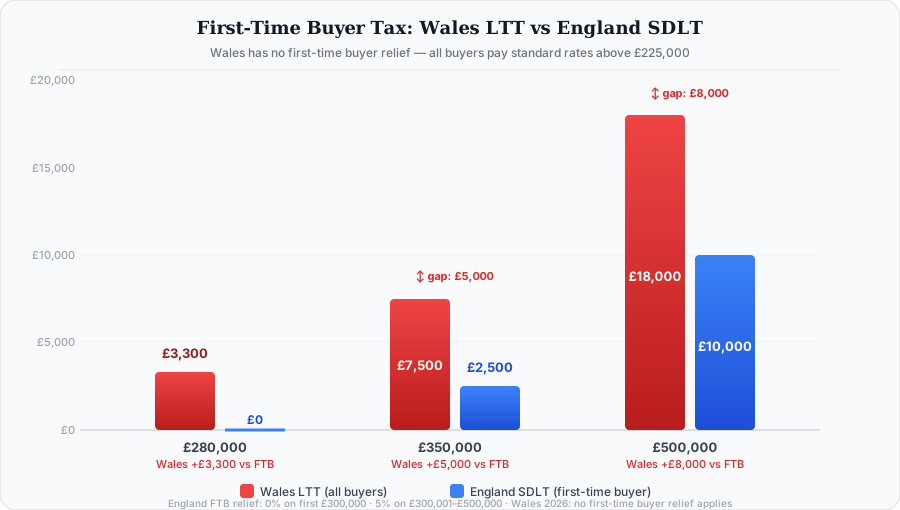
In England, first-time buyers pay no stamp duty on properties up to £300,000 and pay a reduced rate up to £500,000. In Wales, there is no such relief. Every buyer pays the same standard LTT regardless of whether it is their first home.
What saves many Welsh first-time buyers is the higher nil-rate threshold. Wales charges 0% up to £225,000. England charges 0% up to £125,000 for standard buyers. So if you are buying a property in the £125,000–£225,000 range, you actually pay less in Wales than in England (non-FTB).
But above £300,000, Wales becomes more expensive for first-time buyers.
| Property Price | LTT (Wales, all buyers) | SDLT England (FTB) | Difference |
|---|---|---|---|
| £225,000 | £0 | £0 | — |
| £280,000 | £3,300 | £0 | Wales +£3,300 |
| £350,000 | £7,500 | £2,500 | Wales +£5,000 |
| £450,000 | £13,500 | £7,500 | Wales +£6,000 |
| £500,000 | £18,000 | £10,000 | Wales +£8,000 |
England FTB relief: 0% up to £300,000, 5% on £300,001–£500,000. No relief above £500,000. Wales: standard rates apply to all buyers.
A first-time buyer purchasing a £350,000 flat in Cardiff pays £5,000 more LTT than someone buying the same-priced flat in Bristol. That is not a rounding difference — it is the equivalent of several months of mortgage payments.
Once you know your LTT figure, use our mortgage affordability calculator to work out the full picture — what you can borrow alongside this upfront cost.
Higher residential rates (additional properties)
If you already own a residential property worth £40,000 or more anywhere in the world, you pay higher residential rates on any additional Welsh property purchase. This typically covers:
- Second homes
- Buy-to-let properties
- Holiday lets
- Properties bought while your previous home has not yet sold
The higher residential rates changed significantly on 11 December 2024. Wales moved from a flat surcharge on top of standard rates to a completely separate set of bands. This matters because the new structure means you cannot simply add a percentage to the standard rate — you need to apply the higher rate table from scratch.
Higher residential rate table (from 11 December 2024)
| Purchase Price Band | Higher Rate |
|---|---|
| Up to £180,000 | 5% |
| £180,001 – £250,000 | 8.5% |
| £250,001 – £400,000 | 10% |
| £400,001 – £750,000 | 12.5% |
| £750,001 – £1,500,000 | 15% |
| Over £1,500,000 | 17% |
Note that these bands start from £0 — there is no nil-rate band for additional properties. Every pound of the purchase price is taxed.
Worked examples: higher residential rates
£200,000 second property
- First £180,000 at 5% = £9,000
- Remaining £20,000 at 8.5% = £1,700
- Total LTT: £10,700
Compare this to £0 LTT on a standard £200,000 purchase. The higher rate adds over £10,000.
£300,000 buy-to-let
- First £180,000 at 5% = £9,000
- £70,000 (£180k–£250k) at 8.5% = £5,950
- £50,000 (£250k–£300k) at 10% = £5,000
- Total LTT: £19,950
Standard rate on the same property would be £4,500. Higher rates add £15,450.
£450,000 holiday let
- First £180,000 at 5% = £9,000
- £70,000 at 8.5% = £5,950
- £150,000 (£250k–£400k) at 10% = £15,000
- £50,000 (£400k–£450k) at 12.5% = £6,250
- Total LTT: £36,200
| Purchase Price | Standard LTT | Higher Rate LTT | Extra Cost |
|---|---|---|---|
| £200,000 | £0 | £10,700 | £10,700 |
| £300,000 | £4,500 | £19,950 | £15,450 |
| £450,000 | £13,500 | £36,200 | £22,700 |
| £600,000 | £25,500 | £51,450 | £25,950 |
The 36-month replacement rule
Higher residential rates apply if you own another property — but there is an important exception for people who are moving home rather than adding to a portfolio.
If you sell your main residence and buy a new main residence on the same day (or within a short window), you pay standard rates, not higher rates. This handles the typical chain scenario.
The complication arises when completion dates do not align perfectly. If you buy your new home before selling your old one, you technically own two properties at completion and higher rates apply. You can then reclaim the higher-rate surcharge if you sell your previous main residence within 36 months of buying the new one.
To reclaim:
- File an amended LTT return with the WRA
- Submit within 12 months of selling the previous property
- The WRA refunds the difference between higher rates paid and standard rates owed
This reclaim process is straightforward but time-limited. If you exceed the 36-month window, you lose the right to reclaim.
Keep a record of your completion dates. The WRA will check them.
Non-residential and mixed-use LTT rates
If you are buying commercial property, farmland, or a property with both residential and commercial elements, different rates apply.
| Purchase Price Band | Non-Residential Rate |
|---|---|
| Up to £225,000 | 0% |
| £225,001 – £250,000 | 1% |
| £250,001 – £1,000,000 | 5% |
| Over £1,000,000 | 6% |
Mixed-use properties — those with both a residential and a commercial element, such as a flat above a shop — are charged at the non-residential rates. This can save money compared to the residential rates on a high-value mixed-use purchase. A solicitor familiar with LTT should assess whether mixed-use classification applies to your transaction.
Worked example: commercial purchase
£800,000 commercial property
- First £225,000 at 0% = £0
- £25,000 (£225k–£250k) at 1% = £250
- £550,000 (£250k–£800k) at 5% = £27,500
- Total LTT: £27,750
Leasehold transactions
LTT on leasehold purchases is calculated in two parts:
- Premium: Apply the standard residential or higher residential rate table to the upfront purchase price, the same as a freehold purchase.
- Net present value (NPV) of rent: If the annual rent exceeds £1,000, calculate the net present value of all rent payments over the lease term. LTT at 1% applies to the NPV above £225,000 for residential, or above £225,000 for non-residential.
For most residential flat purchases with a ground rent under £1,000 a year, the rent element triggers no LTT. High ground rent leases (historically common before the Leasehold Reform Act 2022 changes) may have triggered LTT on rent — your solicitor will calculate this.
Exemptions and reliefs
Not every property transaction triggers LTT. Common situations where LTT does not apply:
No LTT charged:
- Gifts of property with no mortgage and no payment involved
- Property inherited through a will or intestacy
- Property transferred as part of a divorce or dissolution of civil partnership
- Transactions under £40,000 (though some transactions this low still need a return)
- Property acquired by a charity for charitable purposes
- Certain social housing transactions
Reliefs that reduce LTT:
- Group relief: Companies within the same corporate group can transfer property at reduced rates
- Reconstruction and acquisition relief: Certain business reorganisations qualify
- Multiple dwellings relief: If buying six or more dwellings in a single transaction, you can apply the average dwelling price to the rate table, which often reduces the total
Multiple dwellings relief is worth knowing if you are buying a portfolio. A single transaction covering eight properties at £200,000 each (£1,600,000 total) would normally trigger 12% rates on the top slice. With MDR, you apply the per-unit average (£200,000 each) to the rate table — which may produce a significantly lower result.
Wales vs England: key differences at a glance
For a full breakdown of how England's version of property purchase tax works, see our complete stamp duty guide for England.
| Wales (LTT) | England (SDLT) | |
|---|---|---|
| Tax authority | Welsh Revenue Authority (WRA) | HMRC |
| Nil-rate threshold | £225,000 | £125,000 |
| First-time buyer relief | No | Yes (0% up to £300k) |
| Higher rates structure | Separate bands (5–17%) | Flat surcharge (+5%) |
| Filing deadline | 30 days from completion | 14 days from completion |
The filing deadline is worth highlighting: England requires SDLT within 14 days. Wales gives you 30 days. Your solicitor should know this, but it is worth confirming when they are filing on your behalf.
How and when to pay LTT
Effective date: This is almost always the completion date — the day you get the keys and the transaction legally completes. It is not the date of exchange. LTT is calculated based on the price paid on the completion date.
Who files: Your solicitor or conveyancer handles this as part of the standard conveyancing process. They file an LTT return through the WRA's online portal and remit any tax owed on your behalf.
Deadline: Within 30 days of the effective date.
What if there is no tax due?: You still need to file an LTT return in most cases, even if the purchase price falls under £225,000. Your solicitor will handle this but it does need to be done — it creates the official record of the transaction with the WRA.
Before committing to a property, budget for both LTT and your monthly repayments. Our mortgage affordability calculator shows exactly how much you can borrow based on your income, so you can factor in the full purchase cost before making an offer.
Penalties for late filing or late payment
The WRA takes late returns seriously. Missing the 30-day deadline results in:
- Automatic £100 penalty for a return filed 1–6 months late
- £200 penalty if more than 6 months late (on top of the £100)
- Tax-based penalty for returns over 12 months late — up to 30% of the LTT owed in some cases
- Interest: Charged daily on any unpaid tax from the day after the deadline
These penalties apply even if no tax is owed. If your property price was under £225,000 and LTT is nil, you can still receive a £100 penalty for filing late. Your solicitor manages this timeline, but if you are self-managing a commercial or unusual transaction, set a calendar reminder.
Frequently asked questions
Do I pay LTT on property outside Wales? No. LTT applies only to transactions where the land or property is in Wales. If you are buying in England, you pay SDLT — see our stamp duty guide for England. If buying in Scotland, you pay Land and Buildings Transaction Tax (LBTT). Each nation has its own tax and its own authority.
What counts as "owning another property" for higher rates? You trigger higher rates if, at the end of the transaction, you own two or more dwellings worth £40,000 or more each. The threshold is £40,000 — a low-value property still counts. Properties outside the UK count too.
Can I appeal an LTT assessment? Yes. If you disagree with a WRA assessment, you can first request an internal review, then appeal to the Tax Tribunal if the review does not resolve the issue. You must submit an appeal within 30 days of the assessment.
Does LTT apply if I am gifted a property? It depends. If the property is transferred with no money changing hands and no mortgage, LTT generally does not apply. If the transfer includes taking over a mortgage, the mortgage debt counts as chargeable consideration and may trigger LTT.
What if the purchase price changes after exchange? If the final price changes between exchange and completion (for example, following a renegotiation or survey), LTT is calculated on the final completion price. Your solicitor adjusts the return accordingly.
Is LTT on additional properties refundable if I sell my main home? Yes, provided you sell within 36 months of the additional property purchase and file an amended return within 12 months of the sale. Use our Wales LTT calculator to see the difference between standard and higher rates at your purchase price — that is the amount you could reclaim.
🏴All LTT rates and thresholds on this page are correct as of May 2026. Welsh Government confirms no changes to standard residential or non-residential rates for 2026/27. Higher residential rates reflect the bands effective from 11 December 2024. For complex transactions — particularly mixed-use, leasehold, corporate purchases, or multiple dwellings — consult a solicitor or chartered tax adviser with LTT experience.